
Last updated November 25, 2026
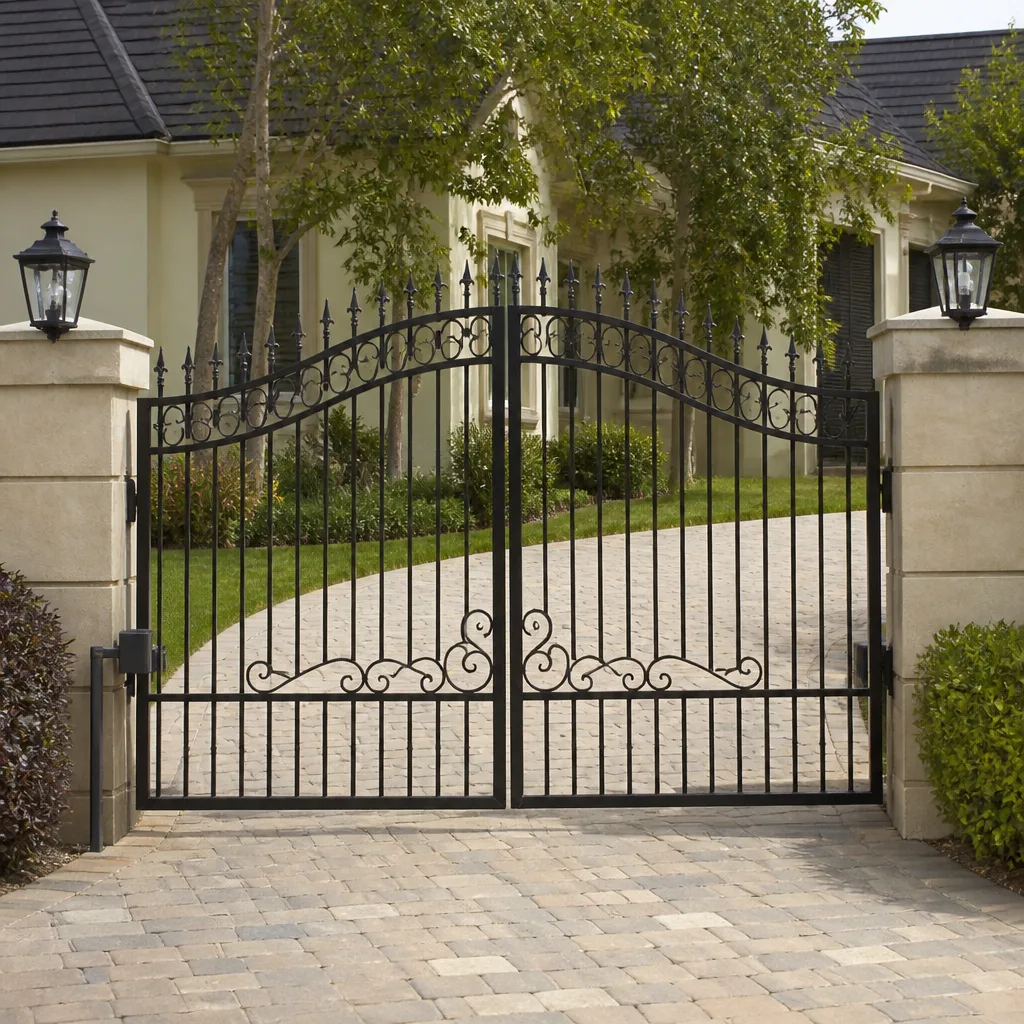 Wrought iron
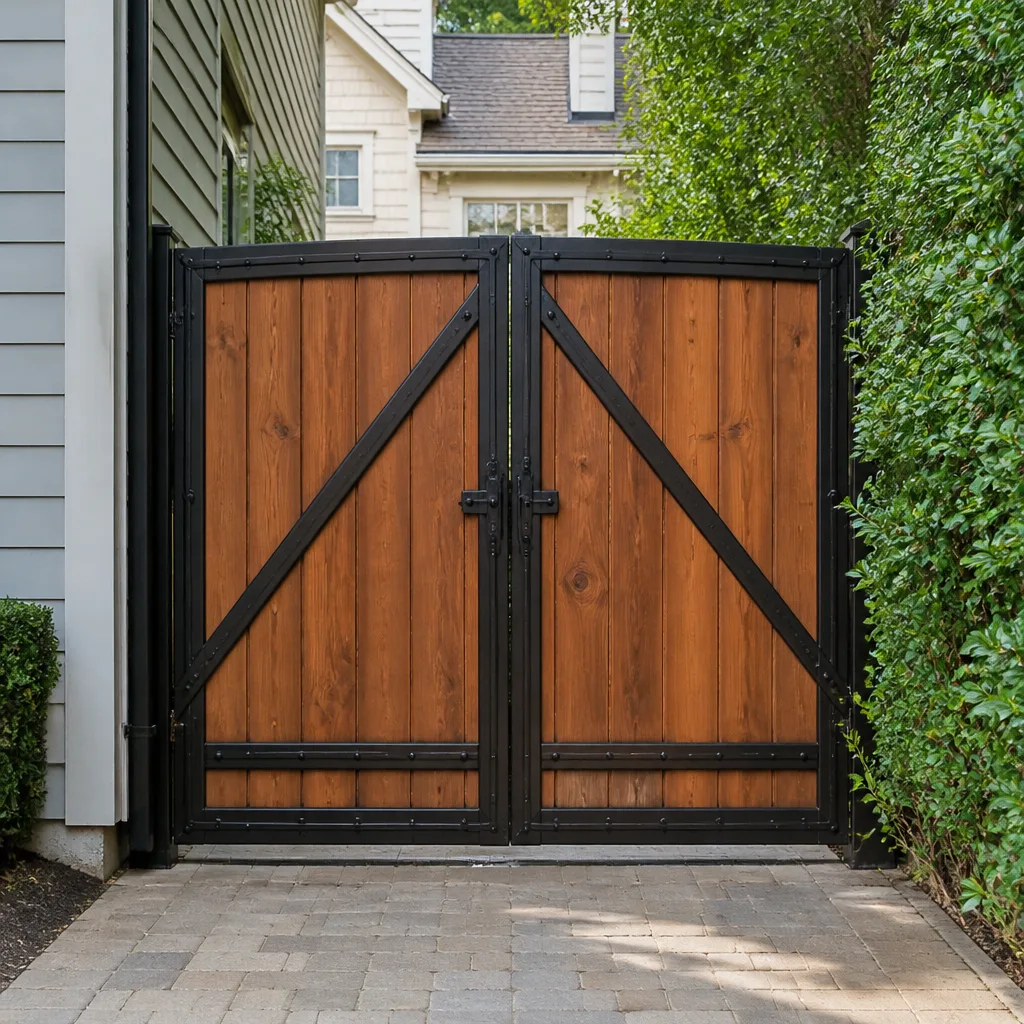 Wood & steel frame
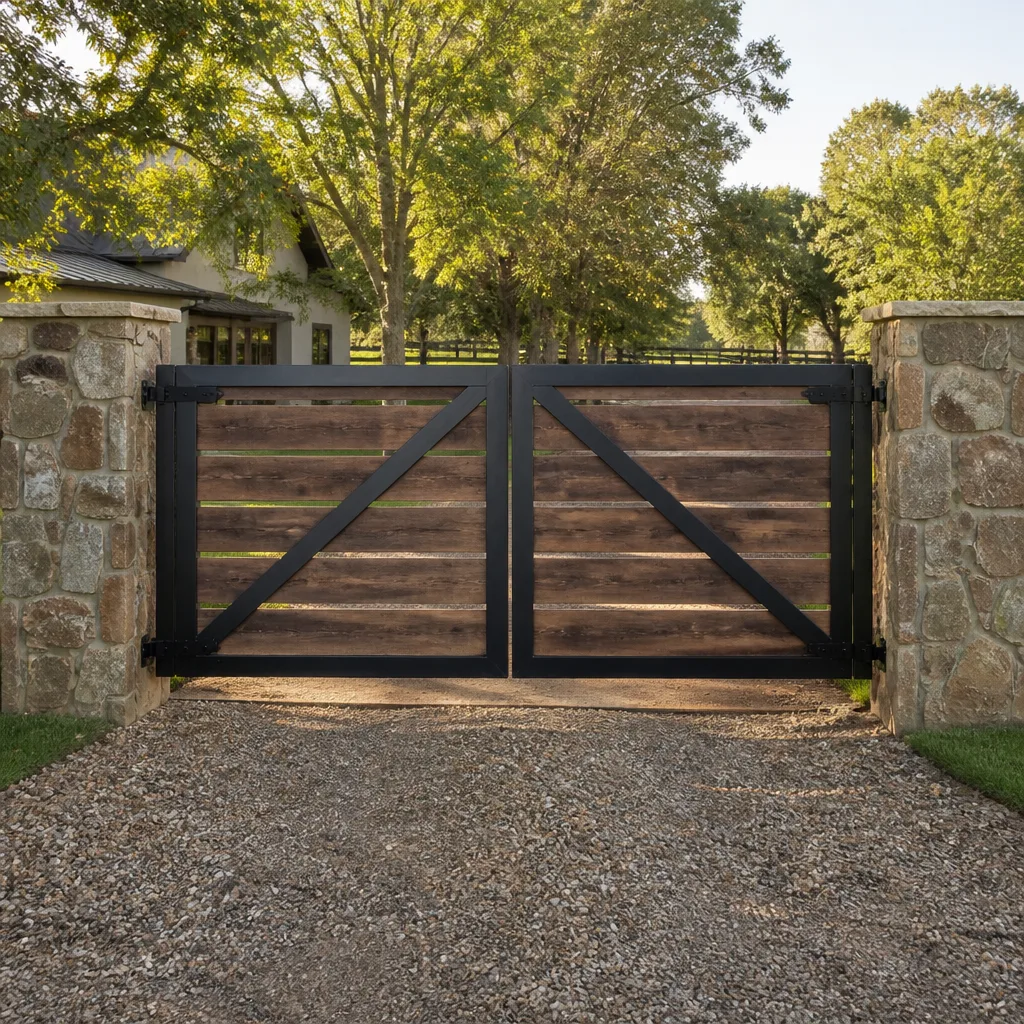 Farm & ranch
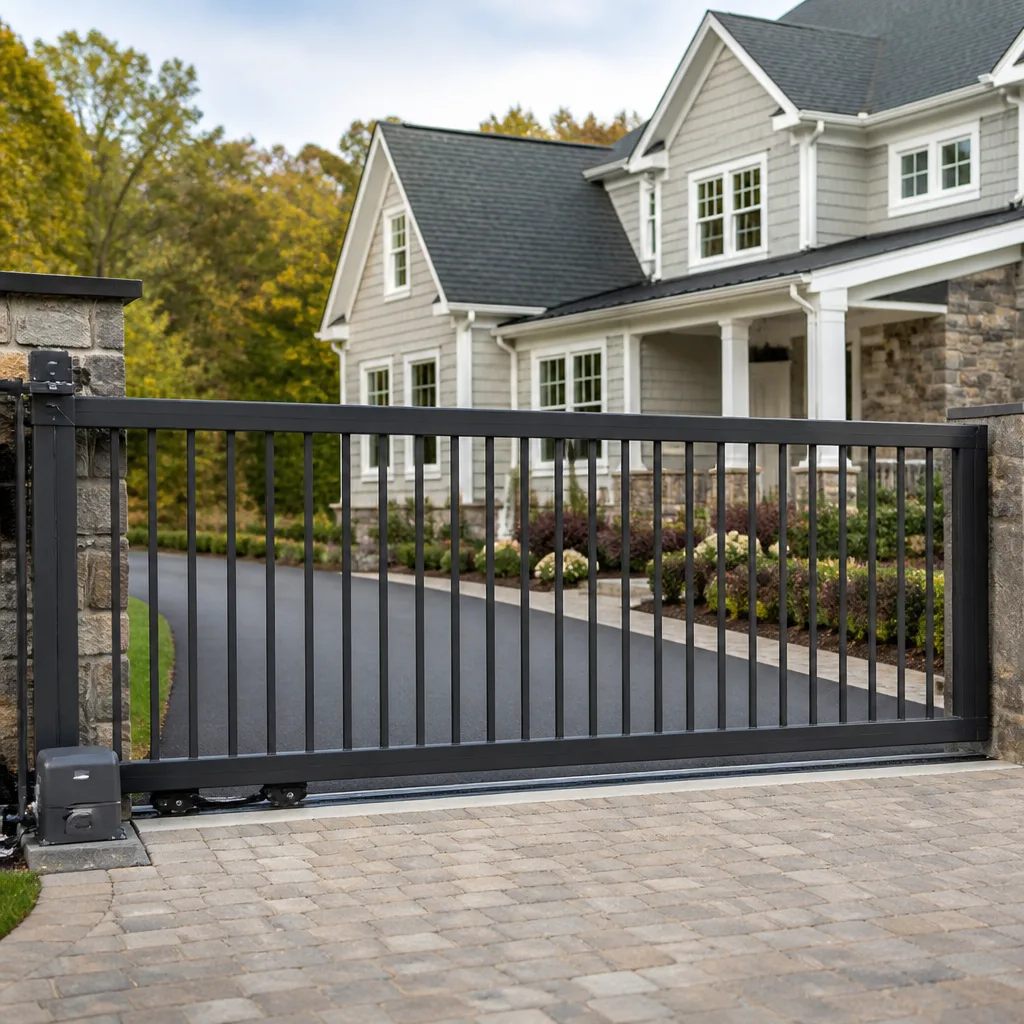 Sliding driveway gates
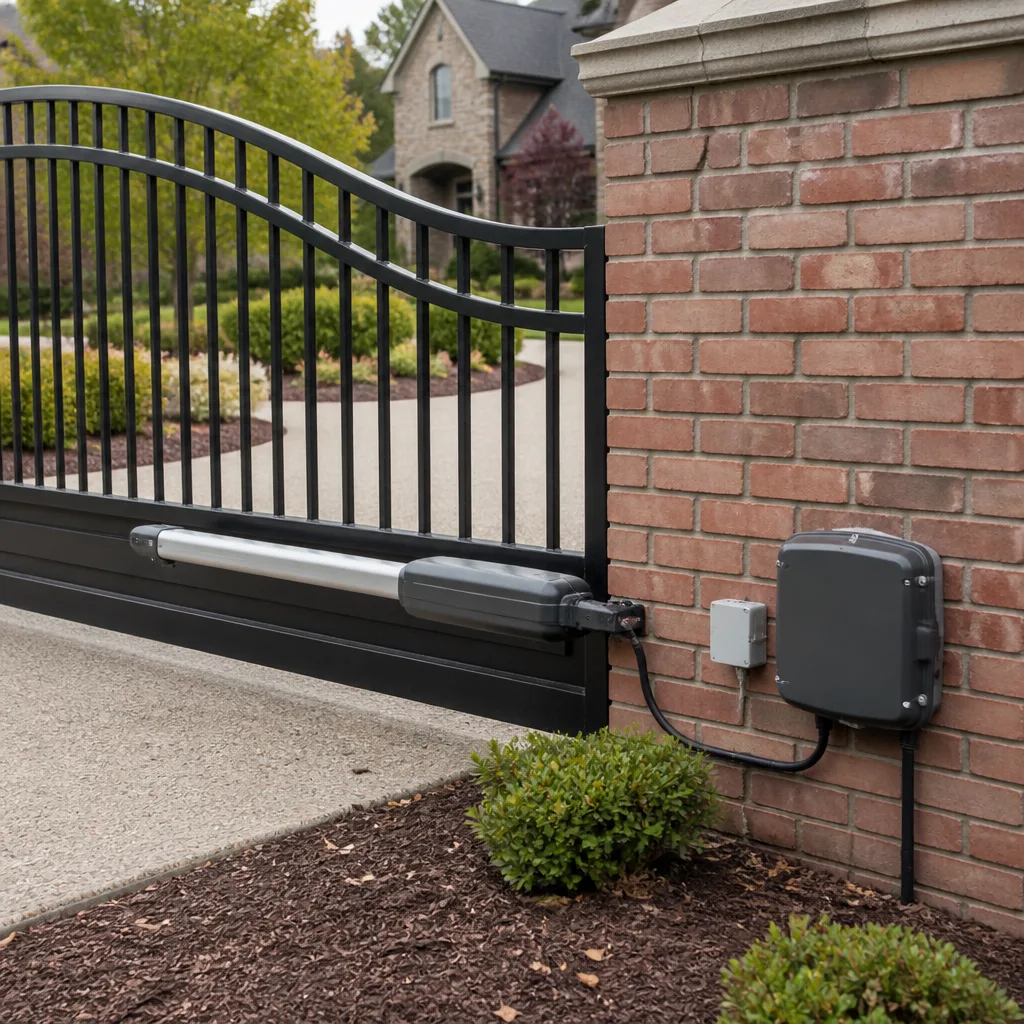 LiftMaster operators
Free on-site gate assessment - hinges, posts, and your LiftMaster or Nice gate operator checked before anything is quoted
The assessment is free and the quote is the invoice.
Get your free estimateHow to Hire a Gate Repair Contractor in Evanston: A Step-by-Step Guide
Illinois doesn’t issue a “gate repair contractor” license, which means anyone with a truck, a drill, and a magnetic sign can hand you a quote for your driveway gate. That’s the uncomfortable truth most hiring guides skip. The contractor who shows up might be a fence installer who occasionally wires a motor, or a garage-door company treating your slide gate like a big overhead door. The credential gap doesn’t appear on the invoice. It shows up months later, when the same gate fails again. This guide walks you through how to tell a gate specialist from a generalist before you sign anything, what a real scope of work looks like on paper, and the red flags that show up in Evanston’s contractor market.
Quick Answer
To hire a gate repair contractor in Evanston, confirm the company works on gates specifically (not fencing or garage doors as a side job), ask which actuator brands they service and whether they handle access control, get a written scope of work after an on-site visit, and verify their insurance covers electromechanical gate systems. A legitimate gate specialist diagnoses the motor, the mechanism, and the entry hardware in one visit. A generalist usually guesses at one and subcontracts the rest.
Styles & brands we work with
- Wrought iron
- Wood & steel frame
- Farm & ranch
- Sliding driveway gates
- LiftMaster operators
Table of Contents
- Why There’s No “Gate Repair License” in Illinois (and What to Check Instead)
- The Five Questions That Separate Gate Specialists From Generalists
- What a Legitimate Scope of Work Should Say in Writing
- How to Verify Insurance Covers Electromechanical Gate Systems
- Parts Warranty vs. Labor Warranty: Why Labor Matters More
- Red Flags Specific to Evanston’s Contractor Market
- How to Tell Whether a Gate Can Be Repaired or Should Be Replaced
- When to Call a Professional
Why There’s No “Gate Repair License” in Illinois (and What to Check Instead)
Illinois regulates electricians, plumbers, roofers, and a handful of other trades through state licensing. Gate repair isn’t one of them. That means the barrier to entry is low, and the quality gap between contractors is wide. What fills the gap is documentation: insurance certificates, contract language, brand experience, and the willingness to put a real scope of work on paper. That’s what you should be checking, and it’s what a serious Evanston gate company will offer without being asked.
Here’s the practical checklist. Ask for it before the technician arrives, not after:
- General liability insurance certificate. The certificate should name the policyholder (the contractor) and list a coverage amount. Ask for a certificate of insurance (COI) issued directly by the insurance carrier, not a photocopy from the contractor’s own file.
- Coverage that names gate and operator work. General fence installation coverage may not cover powered gate work. See the insurance section below.
- A local business address and phone number. A real Evanston or nearby suburban number. Not a toll-free line that routes to another state.
- Brand-specific experience in writing. A company that lists specific actuator brands on its site or in an email is telling you what they actually service. If the response is “we work on everything,” keep asking.
- References from powered gates, not just fences. A fence reference doesn’t tell you anything about motor diagnostics. Ask for a reference from a powered gate job.
- A written scope of work. Not an estimate on a napkin. Not a text message with a dollar figure. A line-item scope (details below).
None of these guarantees a good repair. But together, they filter out most of the generalists who take gate work as filler between fence jobs. If a company can’t produce three of these six items in a day, that’s your answer.
The Five Questions That Separate Gate Specialists From Generalists
In our experience, five minutes on the phone tells you more than a website ever will. Ask these questions before you book a visit. A gate specialist answers them cleanly. A generalist stalls, guesses, or pivots to “we’ll figure it out when we get there.”
1. Which actuator brands do you service, and are your technicians trained on them?
This is the fastest filter. Actuator brands like Elite, Mighty Mule, LiftMaster, and FAAC all have different controllers, limits, and diagnostic codes. A technician who regularly works these systems knows the difference between an Elite slide operator and a Mighty Mule swing arm without checking a manual. Ask them to name three brands they service and describe the last time they replaced a board on one. Vague brand lists mean vague experience.
2. Do you handle access control and keypads, or just the gate mechanism?
Most gate failures on a property with an entry system trace back to the keypad, the intercom, or the vehicle loop, not the motor. A repair-only company will fix the motor and leave you with a gate that opens but won’t let you in. Ask directly: “Do you service the keypad and access control hardware, or do you subcontract it?” If they subcontract, expect a two-visit repair and two invoices.
3. Do you do an on-site visit before quoting?
Any quote without a site visit is a guess. Slide gates fail differently than swing gates. A weak hinge, a misaligned track, or a failing limit switch all look similar on a phone call but require different fixes. Insist on the visit. Insist on a written quote after it.
4. What’s the warranty on labor (not just parts)?
Parts warranties come from the manufacturer. Labor warranties come from the contractor. Ask for the labor warranty in writing. See Parts vs. Labor Warranty below for why this matters more than the brand label on the box.
5. Who actually comes out, and what do they specialize in?
Gate-only specialists send a gate technician. General contractors send whoever is available. Ask who will show up and what they typically work on. If the answer is “a handyman who does fences and gates,” that’s not a gate specialist. That’s someone learning on your driveway.
What a Legitimate Scope of Work Should Say in Writing
A real scope of work answers three questions: what’s broken, what will be done about it, and what happens if the fix doesn’t work. A one-line estimate that says “fix gate – $X” answers none of them. Below is what a proper written scope of work looks like for a powered gate repair.
Vague version (what to reject):
- “Fix gate motor”
- “Replace operator”
- “Adjust gate”
Detailed version (what to ask for):
- The specific component diagnosed (e.g., “the control board on the slide operator is not receiving limit signals – tested with a multimeter at terminals 4 and 6”)
- The specific repair action (“replace control board with same model, reprogram limits, and test cycle 20 times”)
- The specific parts being used (brand and model, matching the existing operator)
- The labor cost separated from the parts cost
- The labor warranty term in writing
- What is explicitly not included (e.g., “does not include access control wiring; will diagnose separately on request”)
Then, before anyone starts work, the price is quoted and agreed. If the technician opens the operator housing and finds a second issue, they should stop and re-quote, not add it to the invoice at the end. Make that expectation clear up front. A gate repair specialist will agree to it. A generalist who planned to bill by the hour will push back.
If the scope reads like it was written before the technician saw the gate, it wasn’t a scope. It was a sales letter.
How to Verify Insurance Covers Electromechanical Gate Systems
General liability insurance for a fence installer is not the same as coverage for a contractor working on a powered gate. Electric gates combine high-voltage components, moving mechanisms, crush hazards, and property-access security. If something goes wrong, a general fence policy may not respond. That’s the gap you’re checking for.
Here’s how to verify it without being an insurance expert:
- Request a certificate of insurance (COI). The COI should include the policyholder name, coverage type, limit amounts, and the insurance carrier’s contact information.
- Look at the “description of operations” field. It should clearly list gate installation, service, or electrical work if the policy provides it. If it says “residential fence installation” with no mention of gates or operators, ask a direct question.
- Ask the contractor to confirm in writing. A phone assurance isn’t documentation. Ask them to email back confirming that electromechanical gate work (motor/operator replacement, control board repair, access control wiring) is covered under the current policy.
- Call the carrier if uncertain. The COI lists the insurance company. A call to their agent to confirm coverage for gate work is not unusual and not insulting.
- Ask about workers’ compensation separately. If a technician is injured at your property, workers’ comp is a different policy from general liability. Ask about both.
This step is boring, and most homeowners skip it. If a gate operator swings a heavy panel and something fails, the difference between “insured for gates” and “insured for fences” can be the difference between a covered claim and a lawsuit.
Parts Warranty vs. Labor Warranty: Why Labor Matters More
Part warranties sound great on paper. A replaced operator board comes with a manufacturer warranty spelled out on the box. But operator warranties are usually limited, and they almost never cover the labor to remove the failed part, ship it back, and install a replacement. If the board fails a year from now, you’ll get a new board for free and pay again for the labor. That’s the part most hiring guides leave out.
The labor warranty comes from the contractor, not the manufacturer. It’s the piece you actually want, and it’s the piece you should ask about explicitly.
What a good labor warranty covers:
- The diagnosis and repair the contractor performed (same failure, same location)
- A defined term (in months or years) – get it in writing
- Clear exclusions (e.g., failures caused by power surges, physical damage, or separate components not part of the original repair)
What to ask:
- “What’s your labor warranty on this repair, in months?”
- “If the same failure comes back inside that window, is the return visit covered, or do I pay a separate charge?”
- “Does the labor warranty cover the operator, the access control, or both?”
On a gate system, the labor warranty matters more than the parts warranty because the labor is what actually gets the gate working. A control board in a box on your porch doesn’t open your gate. A technician with the right tools and diagnostic knowledge, working under a written labor warranty, does.
Red Flags Specific to Evanston’s Contractor Market
Evanston’s housing stock is a mix of older single-family homes, two-flats, townhomes, and light-commercial properties, and a lot of those properties have powered gates serving driveways, alley access, or service entries. That mix draws contractors from all over the Chicago area, and a few patterns show up again and again in this market. Watch for these.
- Out-of-area companies responding after storms. Northwest Evanston and other tree-heavy neighborhoods routinely lose power or see gate failures after a storm. Door-knocking crews show up within days offering “storm pricing.” Ask where the business operates from. If the answer isn’t a real local presence in or near Evanston, don’t sign anything on the spot.
- Quotes without a site visit. On a slide gate in an older driveway with a track that runs slightly downhill, guessing at the problem from a photo rarely works. A quote without a visit is a placeholder, and the final invoice usually looks nothing like it.
- Pressure to replace the whole system rather than repair. Most gate failures are fixable. Control boards, limit switches, hinge welds, keypad wiring, and loop detectors are all individually repairable. A company that opens with “you need a new operator and it’s going to be $X thousand” has skipped the diagnostic step. Ask for a repair quote first. If they can’t explain why the repair won’t work, get a second opinion.
- No brand-specific knowledge. If the company can’t say what operator is on your gate and won’t name three actuator brands they work on, they’re not a gate specialist. See gate motor & opener for what real brand coverage looks like.
- Cash-only, no written estimate. On any gate job involving an electric operator or access control wiring, you should have a written scope of work and a written price before work starts. No exceptions.
None of these are unique to Evanston. But because the local market includes a lot of older gates with genuine mechanical wear, the generalist who shows up after a storm tends to find more problems than there are. That pattern shows up across the whole Chicago area. It’s part of why we’re cautious about quoting anything before a technician has actually looked at the gate.
How to Tell Whether a Gate Can Be Repaired or Should Be Replaced
Most gate repair quotes in Evanston fall into one of two categories: a repair that actually solves the problem, or a replacement pushed by a company that doesn’t want to diagnose it. This section gives you the framework to decide for yourself before a contractor decides for you.
Repair is usually the right call when:
- The gate mechanism (frame, hinges, rollers, track) is intact and moves freely by hand
- A single component fails (control board, limit switch, capacitor, keypad, motor brush)
- The operator is the right size and model for the gate (no sign of repeated failures from undersized equipment)
- The failure pattern is isolated (the gate worked fine until last week)
Replacement usually makes more sense when:
- The operator has failed repeatedly in the same spot even after multiple repairs
- The existing equipment is undersized for the gate weight and the same parts keep failing
- The gate structure itself has rusted or deformed (hinges, frame, track)
- Parts are no longer available for the existing model and every repair is a workaround
- Access control and the operator are incompatible and can’t be integrated cleanly
The rule of thumb
If the repair cost is a fraction of replacement cost and the existing equipment is the right size for the gate, repair. If the operator is failing in the same way every year because it’s undersized or incompatible with the gate it drives, replacement saves money over time. A legitimate contractor will explain which category your gate is in and why. If they open with “replace” and never mention “repair,” get a second quote. That’s true for a LiftMaster operator, a FAAC system, or anything else. A specialist diagnoses first and quotes second.
When to Call a Professional
Some gate problems are obvious: the gate won’t open, the keypad code doesn’t work, the motor hums but the gate doesn’t move. Others are subtler and more dangerous. Call a professional when the operator housing shows signs of moisture or corrosion inside the control box, when the gate has become sluggish or bangs at the end of travel (limits, gears, or hinges), when access control codes stop working on multiple keypads at once (a wiring or controller issue, not a code issue), or when the gate has shifted off the track or off its rollers. Unsafe parts on a powered gate include the operator wiring and power supply, heavy panels that can crush a person or vehicle, and slide gates that jump the track. Those are not DIY items. A technician working on an electric gate should be trained specifically on gate systems, not just willing to try. Gate Repair Evanston offers free estimates in Evanston. Call (855) 658-5171. We answer 24/7. Fast dispatch from 7am to 7pm, Sunday through Friday.
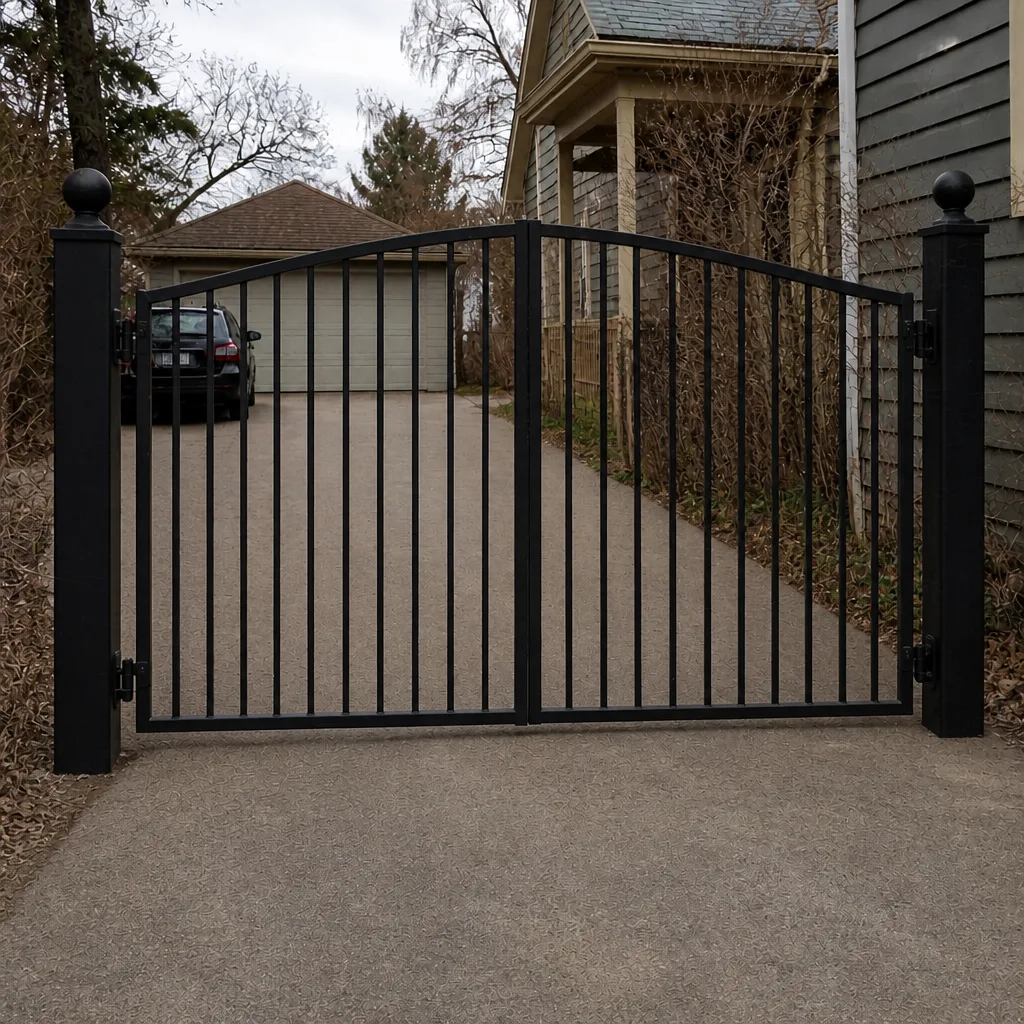
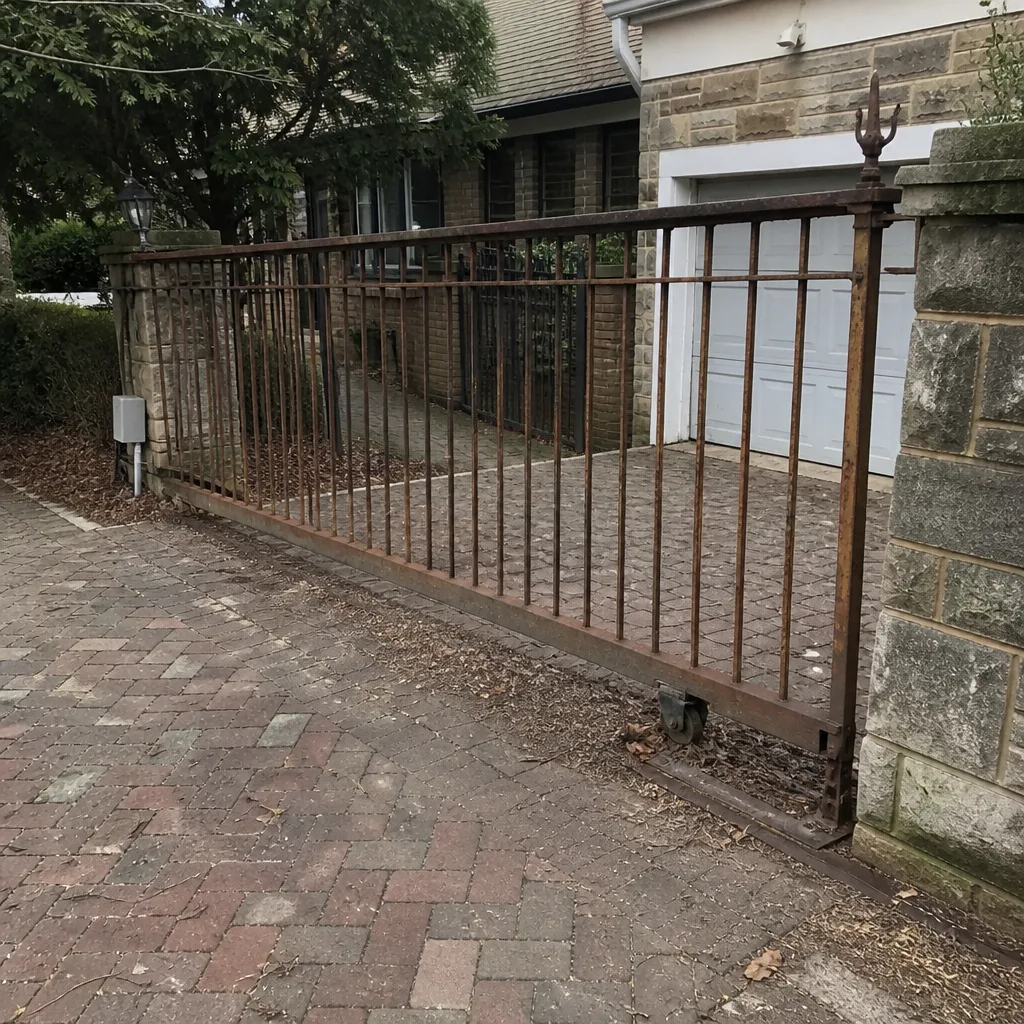
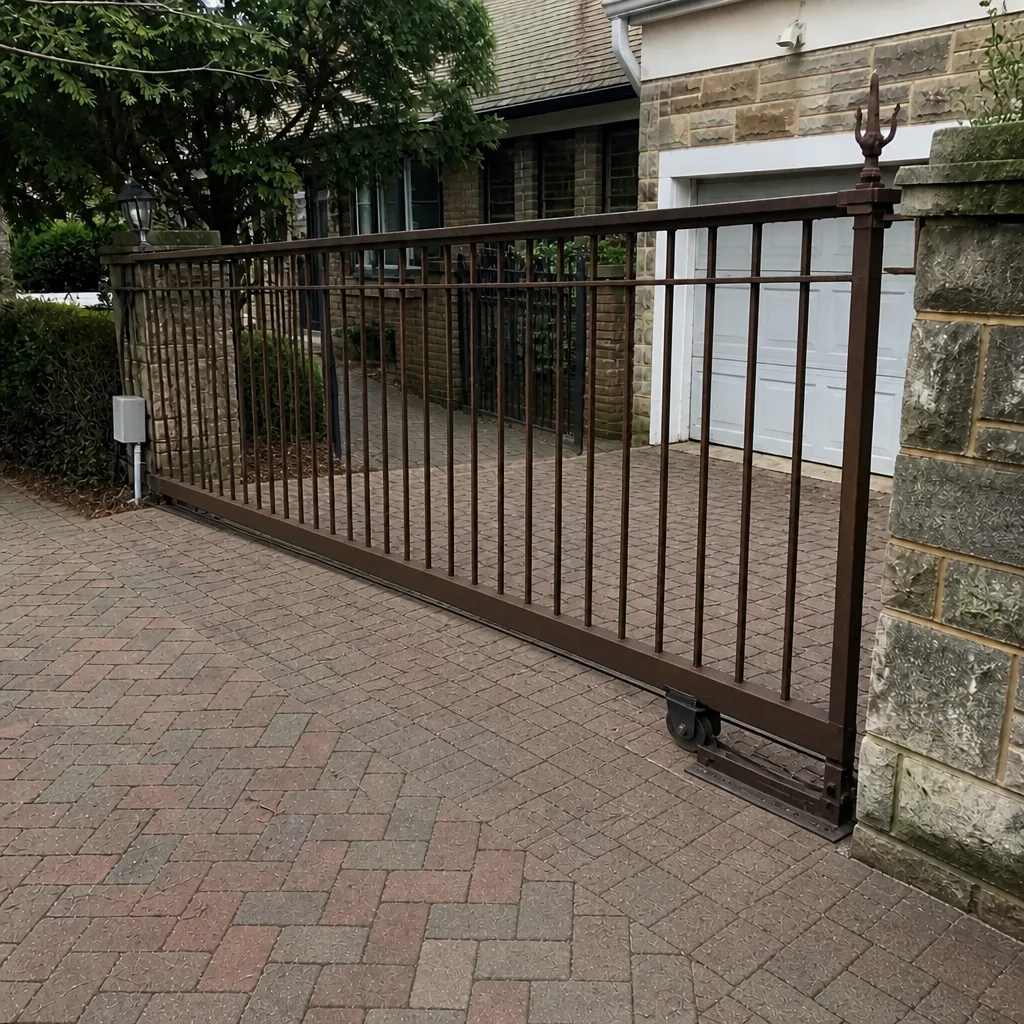
See the difference
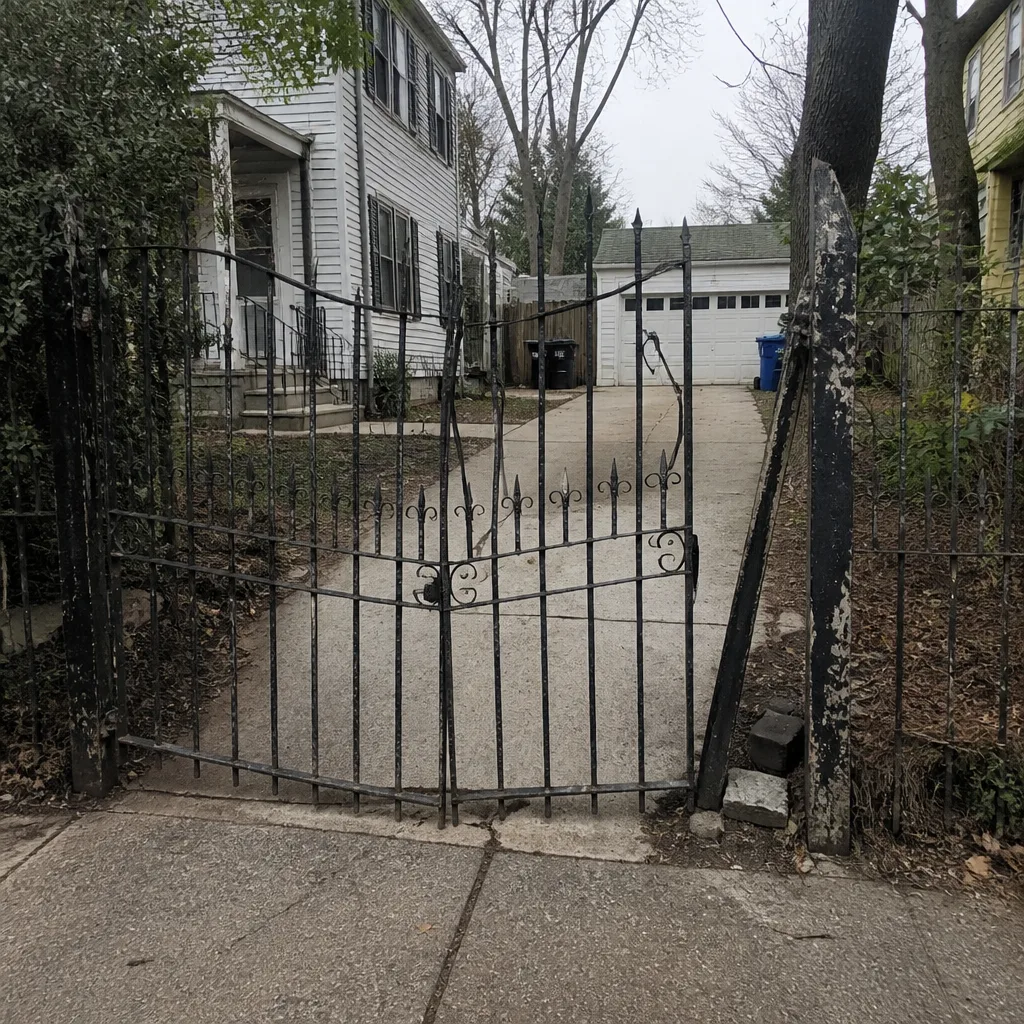 Before
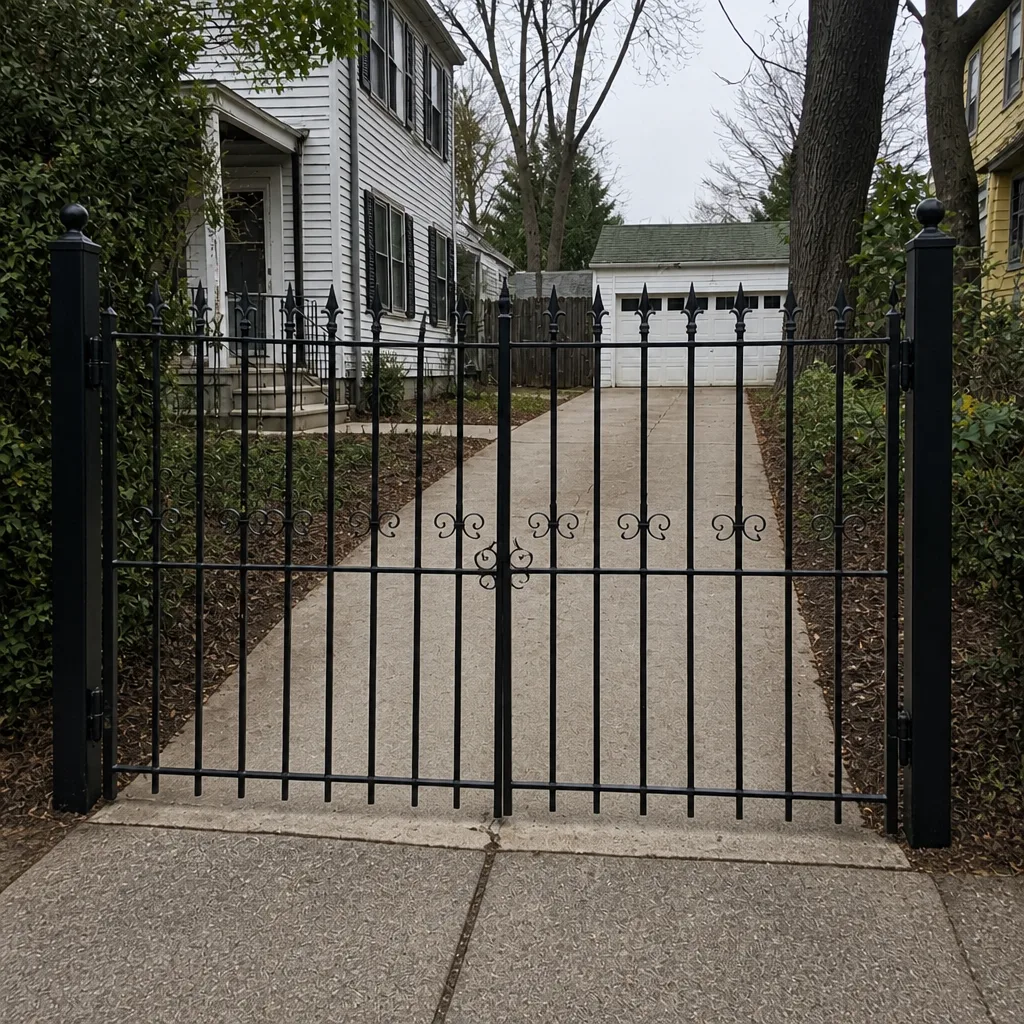 After
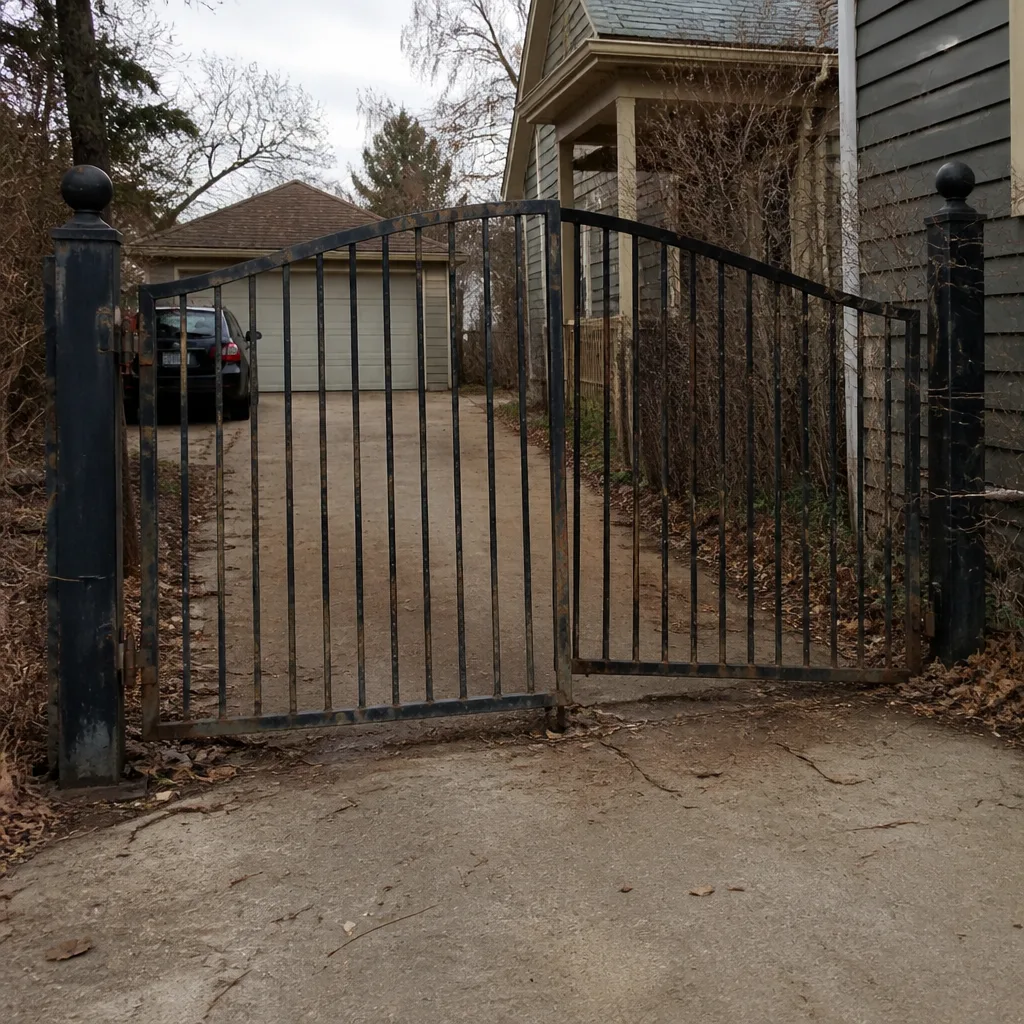 Before
 After
 Before
 After
Frequently Asked Questions
Illinois does not issue a “gate repair contractor” license, but electrical work on the operator or its power supply may require a licensed electrician depending on scope, and local permit requirements are worth checking with the City of Evanston before any structural gate work. For repair and operator replacement, ask your contractor for proof of insurance and a written scope of work instead of a specific license class. The right questions (brand experience, insurance, labor warranty) tell you more about a gate contractor than a license card does.
Gate repair cost depends on what fails: a keypad replacement, a limit switch adjustment, a control board swap, an operator motor replacement, and a full slide gate track rebuild all price differently. The number you’re quoted should be per job, based on a written scope of work after an on-site visit. Ask for the estimate in writing and confirm the price is agreed before any work starts. Call (855) 658-5171 for a free estimate.
Ask them to name three actuator brands they service and describe what they do when a control board fails on each. A gate specialist will list brands like LiftMaster, FAAC, DoorKing, or Elite and describe the diagnostic process. A fence installer who occasionally wires a gate will hedge. Also ask whether they handle gate access control directly or subcontract it. If they subcontract, they’re not a full-system gate company.
Repair is usually the right call when the gate mechanism itself is sound and a single component failed (control board, motor brush, limit switch, keypad). Replacement makes more sense when the operator has failed repeatedly in the same spot, when the equipment is undersized for the gate, or when parts are no longer available. Get a diagnostic first. A contractor who quotes replacement without diagnosing the failure hasn’t earned the job.
A proper warranty includes a labor warranty from the contractor (not just a parts warranty from the manufacturer) and a written term in months or years. Ask what happens if the same failure returns inside the warranty window and whether the return visit is covered. Get it in writing. Manufacturer warranties typically cover the part, not the labor to install it, and on gate systems the labor is usually the harder cost to absorb.
Because the diagnostic takes time and replacement pays more. It’s not always a scam; sometimes replacement genuinely is the right call. But if a contractor opens with “replace” without walking through what failed and why it can’t be repaired, ask for a repair quote in writing. If they can’t explain why repair won’t work, get a second opinion. That’s a pattern we’ve seen a lot in Evanston, and a specialist’s second look usually finds a repair.
Common Mistakes to Avoid
- Hiring the cheapest quote without checking brand experience. A $50 savings on a cheap quote isn’t a savings if the generalist misdiagnoses the control board and the gate fails again in three months. Ask about the actuator brand before you compare prices.
- Skipping the on-site visit. On an older Evanston home where the gate sits on a sloped alley driveway, a phone-quoted price is a placeholder. Insist on a technician looking at the gate before you sign anything.
- Accepting a one-line “fix gate” scope of work. That line tells you nothing about what’s broken or what’s being replaced. Ask for the component, the repair action, and the warranty in writing.
- Confusing a parts warranty with a labor warranty. The manufacturer covers the part. The contractor covers the labor. The labor is the piece that actually gets the gate open again. Get the labor warranty in writing.
- Believing “we work on everything.” A fence installer who handles an occasional gate job and a gate specialist who services LiftMaster, FAAC, BFT, and other manufacturers diagnose very differently. Single-trade focus shows in the accuracy of the first quote.
- Signing with a storm-chasing crew without verifying local presence. After a storm knocks out power or topples a tree near a gate, out-of-area contractors show up with “storm pricing.” Ask for a local address, a certificate of insurance, and a written scope before you commit to anything.
- Letting anyone work on an electric gate who isn’t trained on gate systems. The operator, its power supply, and the safety edges on a slide gate are genuinely dangerous to troubleshoot without training. A fence handyman doesn’t need to be on this job.
The Bottom Line
There’s no license in Illinois that separates a gate specialist from a fence contractor with a drill, so the verification has to happen on your end. Ask the five questions. Get the written scope of work. Confirm insurance actually covers electromechanical gate systems. Get the labor warranty on paper. Say no to quotes without an on-site visit, cash-only invoices, and replacement pressure with no diagnostic. When you do hire, look for a gate-only specialist who works on the brand you already have, from the motor to the keypad. If your gate needs a real diagnostic in Evanston, we’re happy to help. For gate repair, or the full range of gate and access control services for an Evanston property, call (855) 658-5171 for a free estimate. We answer 24/7. Fast dispatch from 7am to 7pm, Sunday through Friday. Our technicians have up to 12 years of experience, and the local pro is licensed and insured as their state requires. The estimate is free, the price is set per job by the written estimate, and the price is quoted and agreed before any work starts. Learn more about Gate Repair Evanston.
Written by the team at Gate Repair Evanston.