
Last updated November 25, 2026
 Wrought iron
 Wood & steel frame
 Farm & ranch
 Sliding driveway gates
 LiftMaster operators
Free on-site gate assessment - hinges, posts, and your LiftMaster or Nice gate operator checked before anything is quoted
The assessment is free and the quote is the invoice.
Get your free estimateSeasonal Gate Repair Care for Evanston: Year-Round Homeowner’s Guide
The gate that fails on the coldest January morning in Evanston usually showed a small symptom the previous October that was easy to dismiss. A slight drag on the swing. A half-second delay before the opener engaged. A hinge that needed an extra push to latch. None of those feel like an emergency in mild fall weather, so they get filed away. Then the first hard freeze arrives, the tolerances tighten, lubricant thickens, and a component that was already marginal stops working entirely. Evanston gates don’t wear evenly across the year. They take their worst punishment in a 90-day window from late November through February, and what you do in October and March decides whether that punishment turns into a repair bill. This guide walks through all four seasons, what to check, and how to build a simple log that makes next year’s inspection quick.
Quick Answer
Seasonal gate care in Evanston comes down to two transition points: a fall prep pass that finishes before the first hard freeze, and a spring recovery inspection after the ground thaws. Fall covers lubrication, battery backup testing on electric operators, hydraulic fluid checks, and hardware tightening. Spring covers post and anchor-plate inspection for frost heave, track alignment on sliders, and a full electrical check. Everything between those two points is monitoring. A gate serviced at both transitions typically runs through winter without a mid-season failure, while a gate that skips both tends to fail in the coldest weeks when repairs are least convenient.
Styles & brands we work with
- Wrought iron
- Wood & steel frame
- Farm & ranch
- Sliding driveway gates
- LiftMaster operators
Table of Contents
- Fall Prep: The Tasks That Must Finish Before First Freeze
- Winter Response: What to Do When Ice Locks Your Gate
- Spring Recovery: The Post-Thaw Inspection Sequence
- Summer Considerations: UV, Heat, and Pests
- Building a Service Log That Saves You Hours
- Electric Gate Care Through the Year
- The Evanston Seasonal Gate Calendar at a Glance
- Common Mistakes to Avoid
Fall Prep: The Tasks That Must Finish Before First Freeze
Fall prep is the single most valuable block of gate care in Evanston, and it has a hard deadline. Once the ground freezes, some of these tasks become either impossible or unsafe to attempt. The goal is to get every wear point into known good condition before cold weather raises the stakes. We work on the brand you already have, whether that’s a Linear slide operator on a driveway gate or a Viking swing opener on a side yard entrance, and fall prep looks similar across all of them: mechanical first, electrical second, then a functional test of the whole system.
Work through the mechanical list first:
- Lubricate hinges, rollers, and latches. Use a lubricant rated for cold temperatures. Standard light oil thickens below freezing and turns a smooth swing into a stiff one, which loads the opener motor more than it should.
- Check gate sag and swing clearance. Lift the gate at the latch end. Any noticeable play means the hinge or post is already worn and cold weather will make it worse. A gate that drags in October will bind in January.
- Tighten all hardware. Bolts on hinges, brackets, and anchor plates loosen over a season of use. Cold contraction opens gaps that were tight in summer.
- Inspect the tracks on slide gates. Clear debris, check for bent sections, and confirm the gate travels the full run without catching.
- Test the manual release. Every automated gate should have a manual release that works. Test it before winter, because a power failure in a cold snap is exactly when you’ll need it.
Then move to the electrical side. Test battery backup on any electric operator by cutting power at the breaker and confirming the gate completes at least a few open and close cycles on battery alone. A battery that’s marginal in October is a battery that’s dead in January. On hydraulic operators, check fluid level and condition: cold thickens hydraulic fluid, and a system already running thin fluid will struggle with the added viscosity. Look for leaks around fittings and seals while you’re there. Ghost Controls and Mighty Mule residential operators are common on Evanston driveway gates, and both reward a fall battery test more than almost any other single task.
Finish with a full functional test: open and close the gate several times, watch for hesitation, listen for new sounds, and confirm the safety edges and photo eyes stop the gate as designed. If anything feels off, that’s the moment to schedule gate repair rather than wait for a failure in the cold.
Winter Response: What to Do When Ice Locks Your Gate
A gate stuck by ice needs patience, not force. The two things homeowners do most often in this situation, prying the gate free by hand and repeatedly cycling the opener to break it loose, are also the two things most likely to cause real damage. Forcing a frozen gate can bend the frame, twist a hinge, or strip the gears in the operator. A gate that’s iced in is a waiting problem. A gate with a stripped gear set is a repair bill.
Here’s the correct response when ice locks a gate in Evanston:
- Stop cycling the opener. If the gate won’t move after one attempt, the operator is now working against a solid object. Repeated attempts load the gear train and the motor with forces it wasn’t designed for.
- Switch to manual and free the gate by hand. Use the manual release, then clear ice from the track, the hinges, and the ground contact points with warm water or de-icer, never a metal tool that can scratch or bend the gate or the track.
- Check the photo eyes and safety edges. Ice and packed snow on the sensors will cause intermittent or phantom faults. Clear them before restoring power.
- Test manually before re-engaging the opener. Once the gate moves freely by hand through its full travel, re-engage the operator and run a single slow cycle.
- Watch for repeat icing at the same spot. If the same corner ices every storm, that’s a drainage or ground-contact issue worth addressing in spring, not just a weather problem.
Cold also exposes electrical weaknesses. A Linear or DoorKing operator with a battery at the end of its life will typically show the first sign of failure in a cold snap, because cold reduces battery capacity. If your gate suddenly needs a manual release on the coldest mornings but works fine in the afternoon, battery capacity is the first thing to test. And if the operator’s control board is behaving erratically, or the keypad is unresponsive in the cold, that’s a job for someone who works on these systems daily. We answer 24/7. Fast dispatch from 7am to 7pm, Sunday through Friday, and we’re closed Saturday. A call outside dispatch hours gets booked into the next opening.
Spring Recovery: The Post-Thaw Inspection Sequence
Spring is when Evanston gates reveal what winter did to them. Freeze-thaw cycles move the ground, and gate posts and anchor plates take the load. The damage is often invisible until it cascades: a post that heaved slightly in February puts stress on the hinge, the hinge wears faster, the gate sags, and by summer the opener is working harder than it should. Catching it in March costs a fraction of catching it in July. Our technicians have up to 12 years of experience, and the inspection sequence below is the same one we’d use on any spring call, residential or light commercial.
Run the inspection in this order:
- Walk the post line and check for movement. Look for gaps between post and ground, fresh cracks in the surrounding pavement or soil, and any post that’s visibly out of plumb. Compare against a straightedge or level.
- Inspect anchor plates and mounting hardware. Frost heave often shows first at the anchor plate. Look for rust streaks, loose bolts, and any plate that has lifted from its footing.
- Check gate swing and alignment. Open and close the gate by hand. Note any drag, rub, or change in latch alignment compared to fall. A gate that latched cleanly in October and rubs in March has moved.
- Examine hinges and pivot points for wear. Worn hinges are the most common downstream effect of a post that shifted over winter.
- Test the electrical system end to end. Confirm battery health, run several full cycles, test the safety edges and photo eyes, and check every remote and keypad.
- Clean and reseal as needed. Wood gates need a post-winter look at finish condition. Metal gates need a check for rust at welds and hardware contact points.
If the post line shows movement, don’t wait. A post that’s out of plumb by even a small amount puts continuous stress on every component downstream, and the fix gets more involved the longer it goes. This is also the right time to schedule gate motor & opener service if the operator ran hard through winter, since motor brushes, gear lubrication, and control board condition all accumulate wear during the cold months.
Summer Considerations: UV, Heat, and Pests
Summer is the season most homeowners skip, and it’s where small problems quietly mature. Heat and UV do their damage slowly, and pest intrusion into control housings is invisible until something fails. A short summer check protects the fall prep you did and sets up the next season cleanly.
Three areas to watch in an Evanston summer:
- UV degradation on wood gates. Sun exposure breaks down wood finish and opens checking and cracks along the grain, especially on top rails and sun-facing panels. A gate that looked fine in spring can show surface cracking by August. Inspect finish condition and plan a reseal before fall, not after.
- Thermal expansion on metal slide gates. Metal gates expand in heat, and a track or frame installed tight in cool weather can bind on a hot afternoon. If your slide gate hesitates or drags only on hot days, expansion is the likely cause. Don’t force it; that’s an alignment adjustment, not a lubrication problem.
- Pest intrusion in control panel housings. Insects and rodents find their way into operator housings and control boxes, and their nests and debris cause shorts, sensor faults, and intermittent failures. A visual inspection of the enclosure, with the power off, catches this early. If you open the panel and see evidence of intrusion or damaged wiring, stop there. Control panel wiring carries real voltage and isn’t a homeowner repair.
Summer is also when most automatic gates in Evanston get the heaviest use, so watch for changes in sound and speed. An operator that sounds different in July than it did in May is telling you something.
Building a Service Log That Saves You Hours
A simple service log is the cheapest tool in seasonal gate care, and almost nobody keeps one. The purpose is straightforward: next season’s inspection should take 20 minutes instead of two hours, because you start from a known baseline instead of guessing what’s normal. When we work on a gate, the history in the log tells us what’s been replaced, what’s been adjusted, and what’s been a recurring problem, which shortens diagnosis and gets the gate back up and running faster.
Keep it in a notebook, a note on your phone, or a spreadsheet. The format matters less than the consistency. Log these fields every time you inspect or have work done:
- Date and season. Fall prep, spring recovery, or a mid-season issue.
- Gate type and operator brand. Swing or slide, manual or automated, and the operator brand. Write down the brand and model if you have it, since it saves time on any future call.
- What was checked. Lubrication, battery test, fluid level, post condition, track alignment, sensors, and keypad.
- What was found. Note even the small things, like a slightly loose hinge or a gate that swings a little stiffer than last time.
- What was fixed and by whom. Parts replaced, adjustments made, and whether the work was DIY or professional.
- Battery age. A separate line for when the backup battery was last replaced. This one entry alone prevents a lot of cold-morning surprises.
Once you have two seasons of entries, patterns show up. A gate that needs the same hinge tightened every fall is telling you the post has an issue. An operator that’s slower every cold snap is telling you the battery is aging. The log turns those hints into decisions instead of surprises.
Electric Gate Care Through the Year
Electric gates carry more seasonal variables than manual gates because they have batteries, control boards, and sensors that react to temperature. If your automated gate is your primary security layer, the operator isn’t an accessory. It’s the system. That’s why electric gate repair is a core part of what we do, and why the seasonal calendar below puts extra weight on the electrical checks.
Year-round, the electrical system needs attention at four points: battery capacity, control board condition, safety device function, and access control hardware. Battery capacity drops in cold and ages year-round, so testing in fall and again in spring is the pattern that works. Control boards are usually fine until they aren’t, but heat and pest intrusion in summer and condensation in winter are the two conditions that cause the failures we see most. Safety devices, including photo eyes and safety edges, need monthly clearing of debris and a functional test in every season. Access control hardware, whether that’s a keypad, intercom, or entry system, needs the same treatment as any outdoor electronics: clean contacts, clear housings, and a check after every storm.
If your gate system includes gate access control like a keypad or intercom, add it to the same log. Keypads and intercoms that fail tend to fail in exactly the conditions where you most want them working, and a seasonal check takes minutes. DoorKing systems on light-commercial properties are a good example: the access control side and the operator side interact, and a fault in one often presents as a fault in the other. Getting both checked in a single visit is faster than treating them as separate problems. Our full-spectrum approach means we handle the mechanical, the electrical, and the digital on one call, which keeps the whole system on one care schedule instead of three.
The Evanston Seasonal Gate Calendar at a Glance
The transition points matter more than the calendar date. Evanston winters arrive on their own schedule, so use the freeze and thaw as your signals rather than fixed dates. The table below is the working structure we recommend for any gate in Evanston, and it’s the structure this guide is built around.
- Early fall (before first freeze): Lubricate all moving parts with cold-rated lubricant, check gate sag, tighten hardware, inspect slide tracks, test manual release, test battery backup, check hydraulic fluid, run a full functional test of the opener and safety devices.
- Late fall (first freeze approaching): Final battery test, clear debris from tracks and control housings, confirm photo eyes and safety edges are clean, check drainage at ground contact points where ice tends to form.
- Winter (December through February): Monitor, don’t disassemble. Clear ice without force, never pry a frozen gate, use manual release when the operator won’t complete a cycle, watch for battery-related failures on cold mornings.
- Early spring (ground thaw): Post line inspection for frost heave, anchor plate and mounting hardware check, gate alignment and swing check, hinge wear inspection, full electrical test, wood finish assessment.
- Late spring: Correct any post or alignment issues found, adjust thermal expansion settings on metal sliders, reseal or refinish wood gates, test access control hardware.
- Summer: Watch for UV damage on wood, binding on hot days for metal sliders, pest intrusion in control housings, and changes in operator sound or speed. Log any changes for the fall inspection.
If you follow this structure, the fall prep and spring recovery become routine and the winter and summer become monitoring. A gate on a service schedule is a gate that mostly goes wrong at predictable moments, which is exactly when you can catch it early. A gate that only gets attention when it breaks tends to fail in the least convenient season. If you’re not sure where your gate stands right now, start with a full inspection and build the log from there. If you’re not sure which operator you have, write down the brand from the housing and check it against the list of systems we service: LiftMaster, FAAC, BFT, Linear, Viking, Ghost Controls, DoorKing, Elite, and Mighty Mule.
Common Mistakes to Avoid
- Prying a frozen gate free by hand. A frozen gate needs warmth and de-icer, not force. Prying bends frames and twists hinges, and it turns a wait into a repair.
- Cycling the opener repeatedly to break ice loose. Every cycle loads the gear train against a solid object. More than one attempt risks stripping gears in the operator.
- Skipping the fall battery test. A marginal battery in October is a dead battery in January. Test it before cold weather exposes the weakness, not after.
- Using summer-weight lubricants in cold weather. Lubricant that thickens below freezing drags on the gate and loads the motor on every cycle. Switch to a cold-rated product before the first freeze.
- Ignoring a slight drag on the swing. Drag in October becomes a bind in January, and a bind on an automated gate loads the operator every time it runs. Small symptoms are the point of seasonal inspection.
- Waiting until spring to deal with a post that moved over winter. The longer a post is out of plumb, the more wear it puts on hinges, brackets, and the operator. Catch it at thaw, not in summer.
- Never looking inside the control housing. Pest intrusion and debris cause intermittent electrical faults that look mysterious until you see the nest. A visual check with the power off is quick and safe; touching the wiring inside is not.
- Keeping no record of what’s been done. Without a log, every inspection starts from scratch and every diagnosis takes longer. Two seasons of notes turn a two-hour inspection into twenty minutes.
See the difference
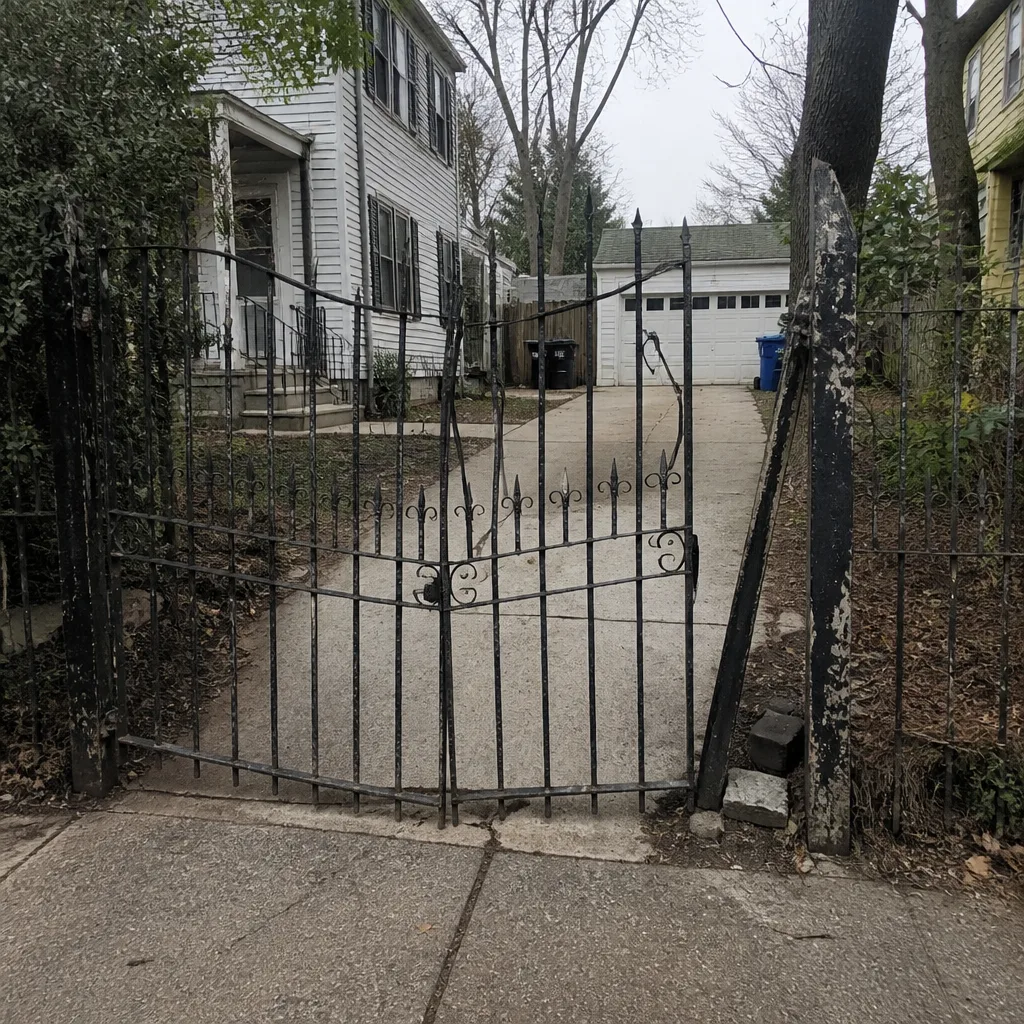 Before
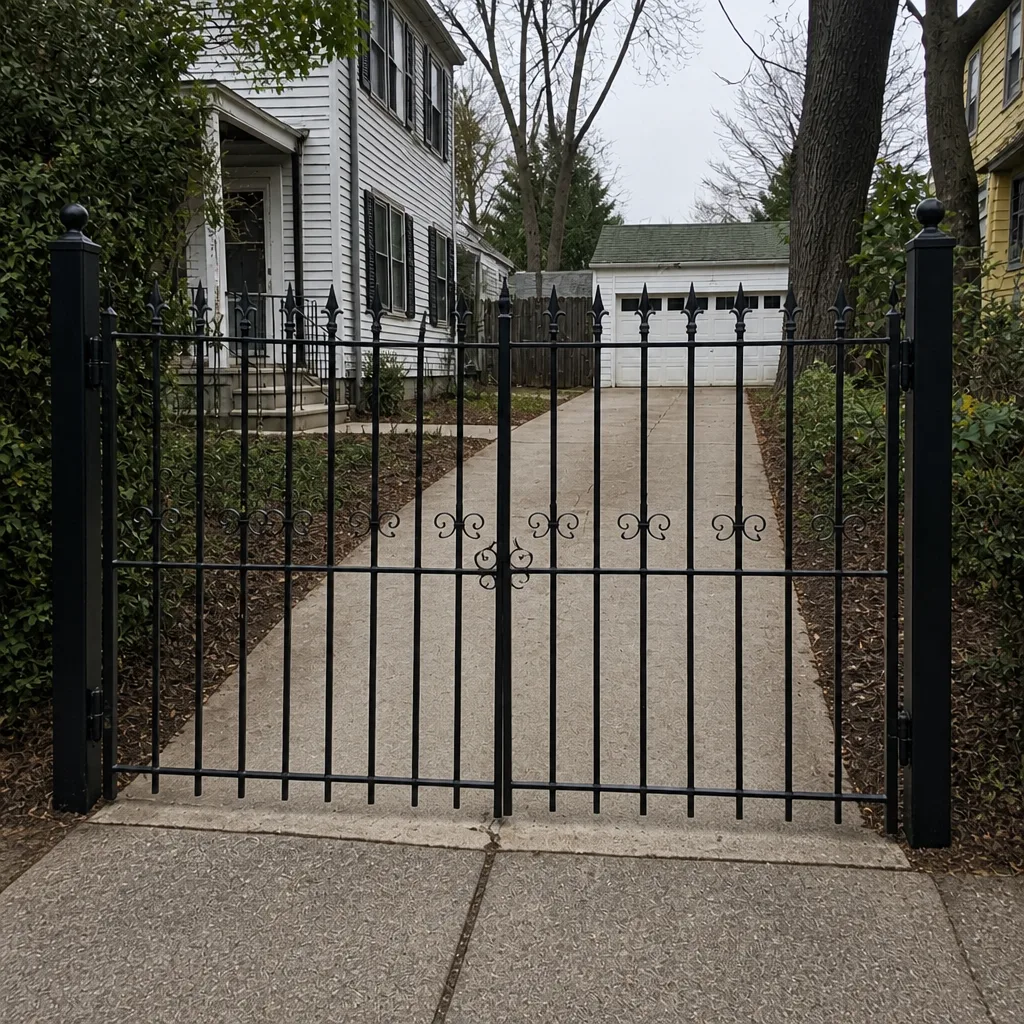 After
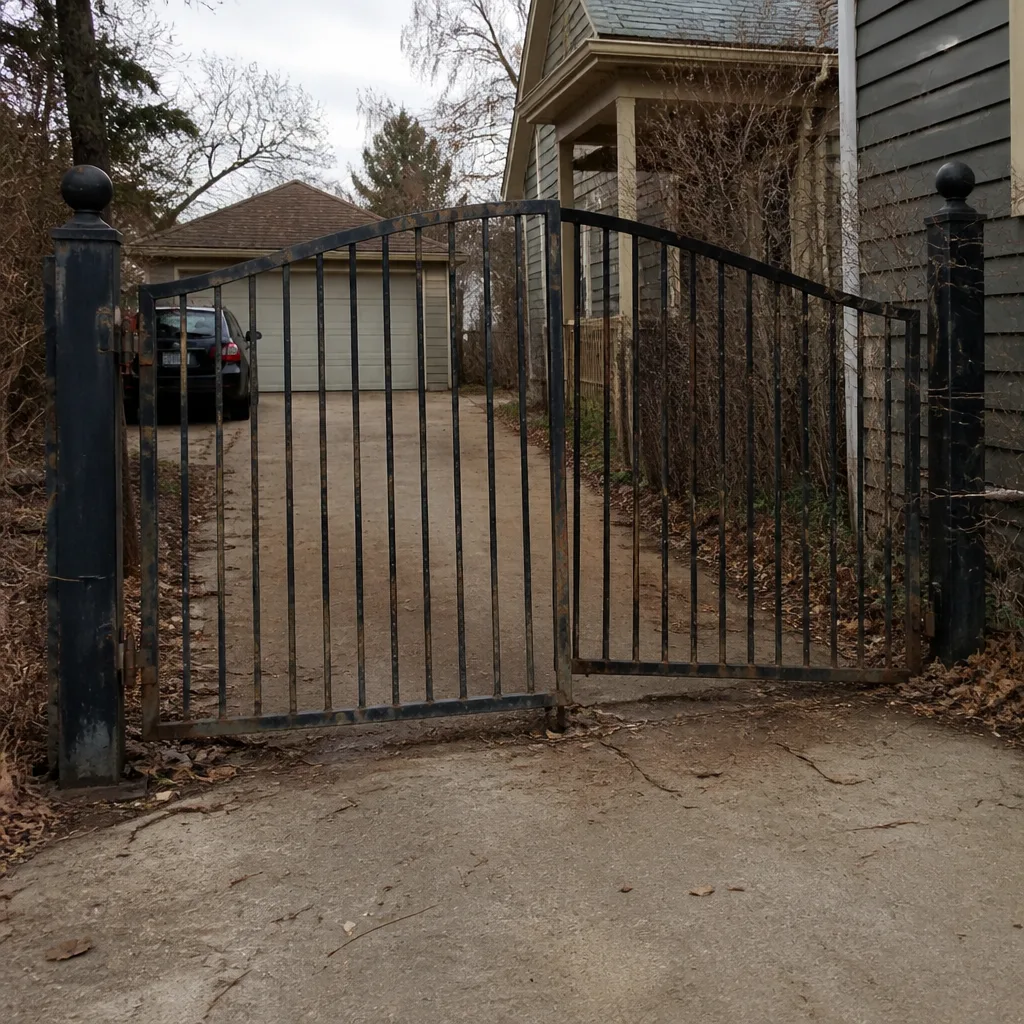 Before
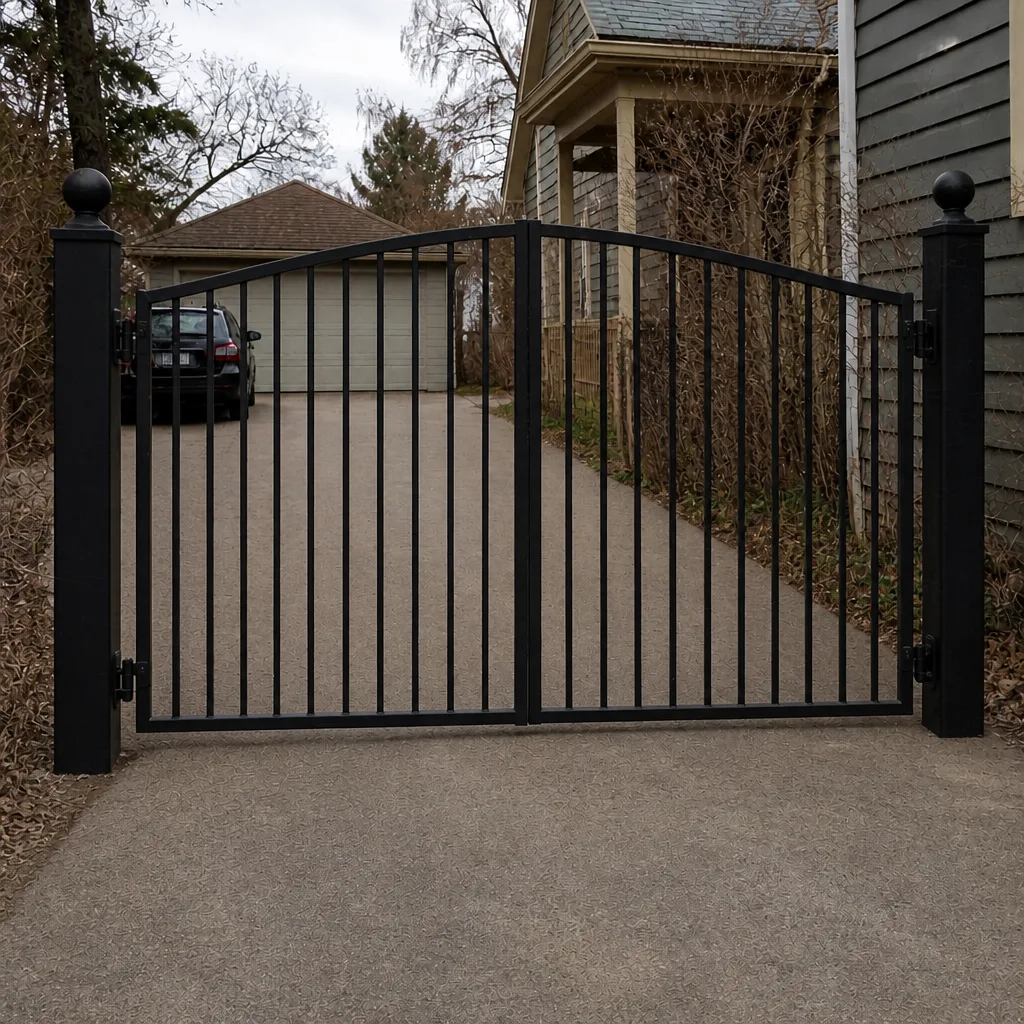 After
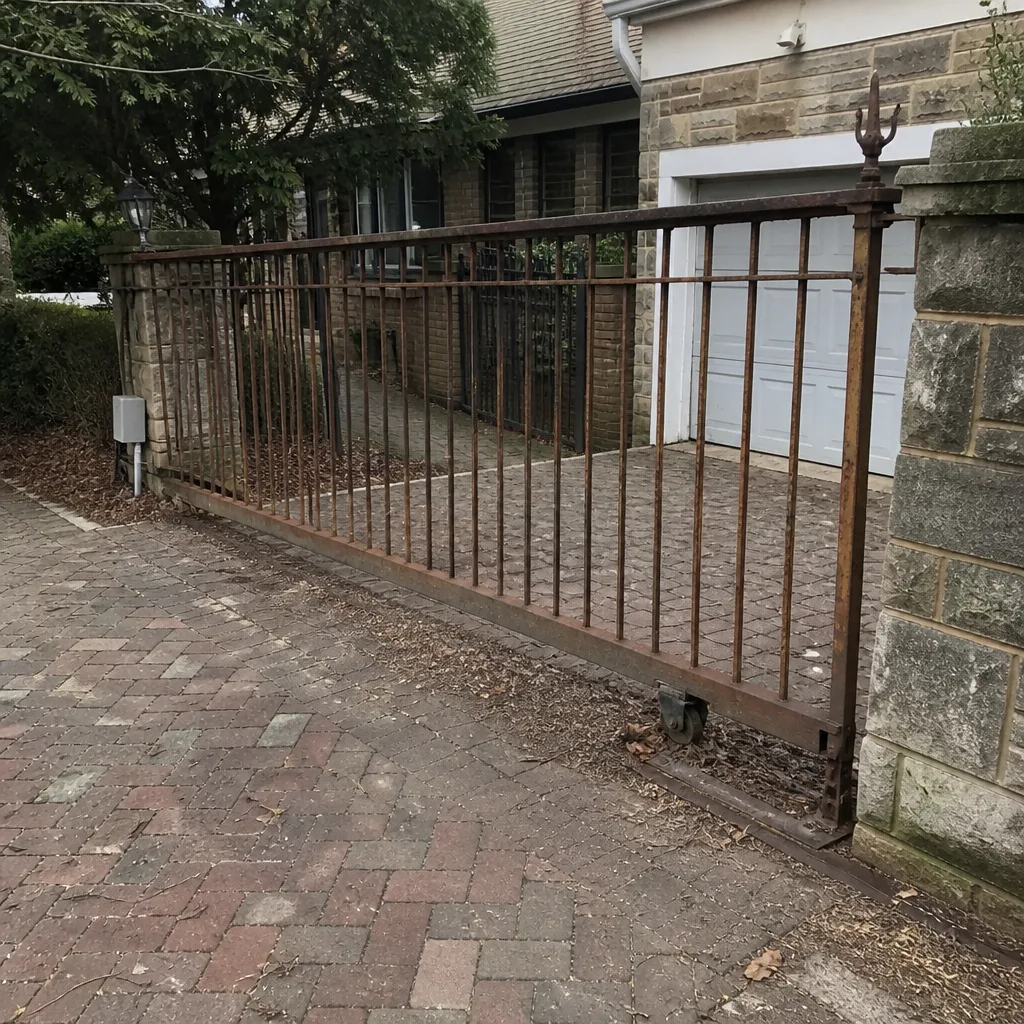 Before
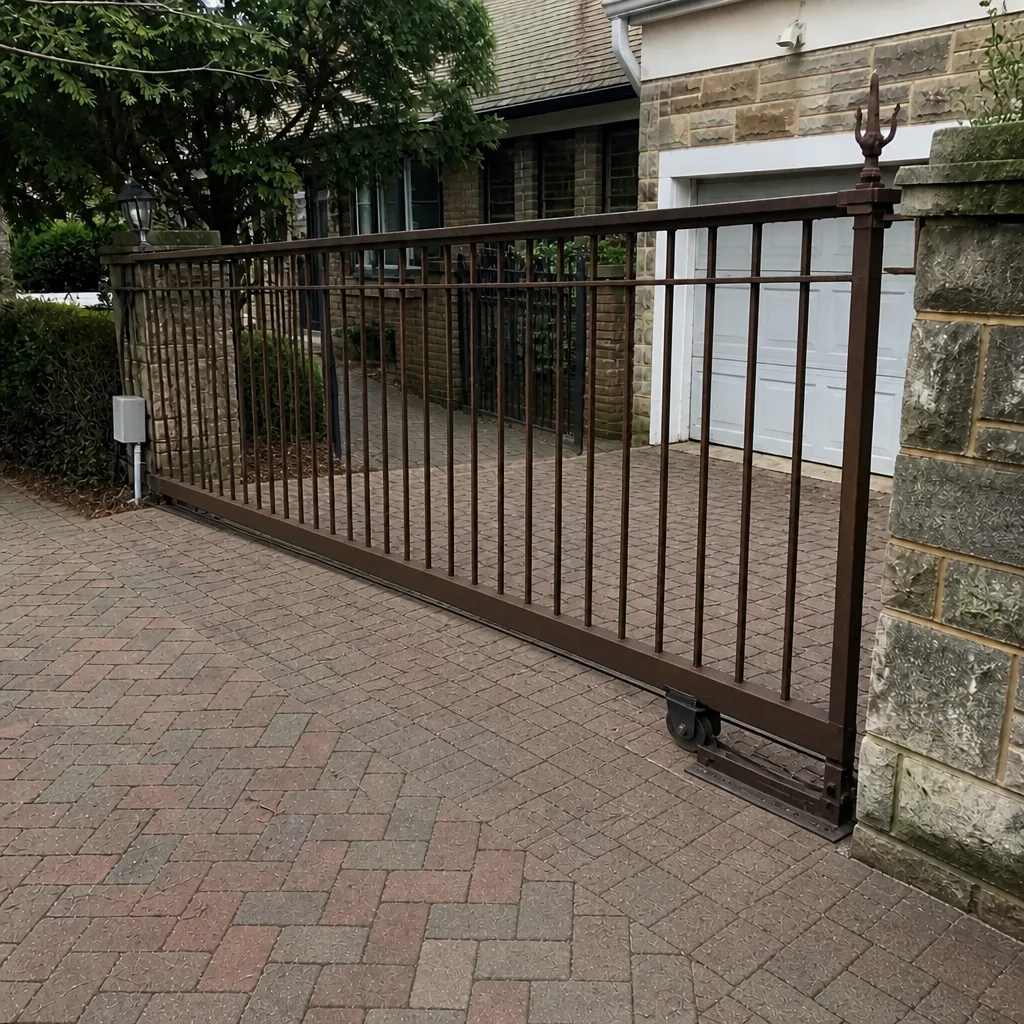 After
When to Call a Professional
Some work belongs on your list, and some doesn’t. Clearing debris, lubricating hardware, testing the manual release, and logging the results are all reasonable homeowner tasks. A post that’s out of plumb, a control board acting erratically, a hydraulic system that’s leaking, a slide gate that binds only on hot days, or anything that requires opening a live electrical enclosure is a professional call. The same is true for any frozen gate that has already been forced, and for any operator that has run hard after a bad winter. The safety side matters here too: gate operators and control panels carry mains voltage, and a heavy gate panel that’s come off its track or lost a hinge can crush, so don’t work under or inside a gate you can’t hold. Gate Repair Evanston offers free estimates in Evanston, and our technicians have up to 12 years of experience. Call (855) 658-5171. We answer 24/7. Fast dispatch from 7am to 7pm, Sunday through Friday. We’re closed Saturday, and a call outside dispatch hours is booked into the next opening.
Frequently Asked Questions
Fall prep is the highest-value block of work, because it’s the last chance to fix marginal components before cold weather turns them into failures. Lubrication, battery backup testing, and hardware checks done before the first freeze prevent most of the mid-winter failures we see. If you can only do one thing, test the battery backup and get a cold-rated lubricant on every hinge and roller. Call (855) 658-5171 for a fall prep visit – estimates are free.
No. Forcing a frozen gate can bend the frame, twist hinges, or strip the operator’s gears. The right response is to switch to manual release, clear the ice with warm water or de-icer rather than a metal tool, and confirm the gate moves freely by hand before re-engaging the operator. If you’ve already forced it, stop and get it inspected. Call (855) 658-5171 for a same-day look during dispatch hours.
Test the full system at least twice a year, at the fall transition and at spring thaw, with a quick functional check monthly. Battery backup, photo eyes, and safety edges are the components that fail most often, and each one is quick to test. The seasonal tests catch battery aging before it strands you on a cold morning. Call (855) 658-5171 to schedule an operator check.
Frost heave shows up as a gate that latches differently than it did in fall, visible gaps at the post base, lifted anchor plates, or rust streaks on mounting hardware. Check the post line in early spring with a level and compare gate swing to your fall notes. Any post that’s out of plumb should be evaluated before the wear cascades to the hinges and operator. Call (855) 658-5171 for a spring inspection – estimates are free.
Yes, and summer gets skipped most often. Watch for UV cracking and finish breakdown on wood gates, binding on hot days for metal slide gates, and evidence of pests inside control housings. Log any change in operator sound or speed, since those hints make the fall inspection faster and more accurate. Call (855) 658-5171 for a summer check, and we’ll review the whole system in one visit.
Log the date, gate type, operator brand, what you checked, what you found, what was fixed, and the age of the backup battery. Two seasons of entries turn next season’s inspection from a two-hour guessing game into a 20-minute check against known baseline. Include the brand name from the operator housing so any future call starts with the right information. Call (855) 658-5171 if you’d like us to run the first inspection and set the baseline.
The Bottom Line
Seasonal gate care in Evanston is a two-date problem with year-round monitoring in between. Get the fall prep done before the first freeze, run the full spring recovery sequence after the ground thaws, and monitor through summer and winter without forcing anything. The 90-day stretch from late November through February is when gates fail, and the work you do on either side of it is what prevents those failures. Keep a simple log, test the battery twice a year, and don’t ignore a slight drag on the swing. If you want the whole system checked on one visit, from the motor to the keypad, we’re a gate-only specialist and we work on the brand you already have. Gate Repair Evanston is here to get you back up and running.
Call (855) 658-5171 for a free estimate. We answer 24/7. Fast dispatch from 7am to 7pm, Sunday through Friday.
Written by the team at Gate Repair Evanston.