
Last updated November 25, 2026
 Wrought iron
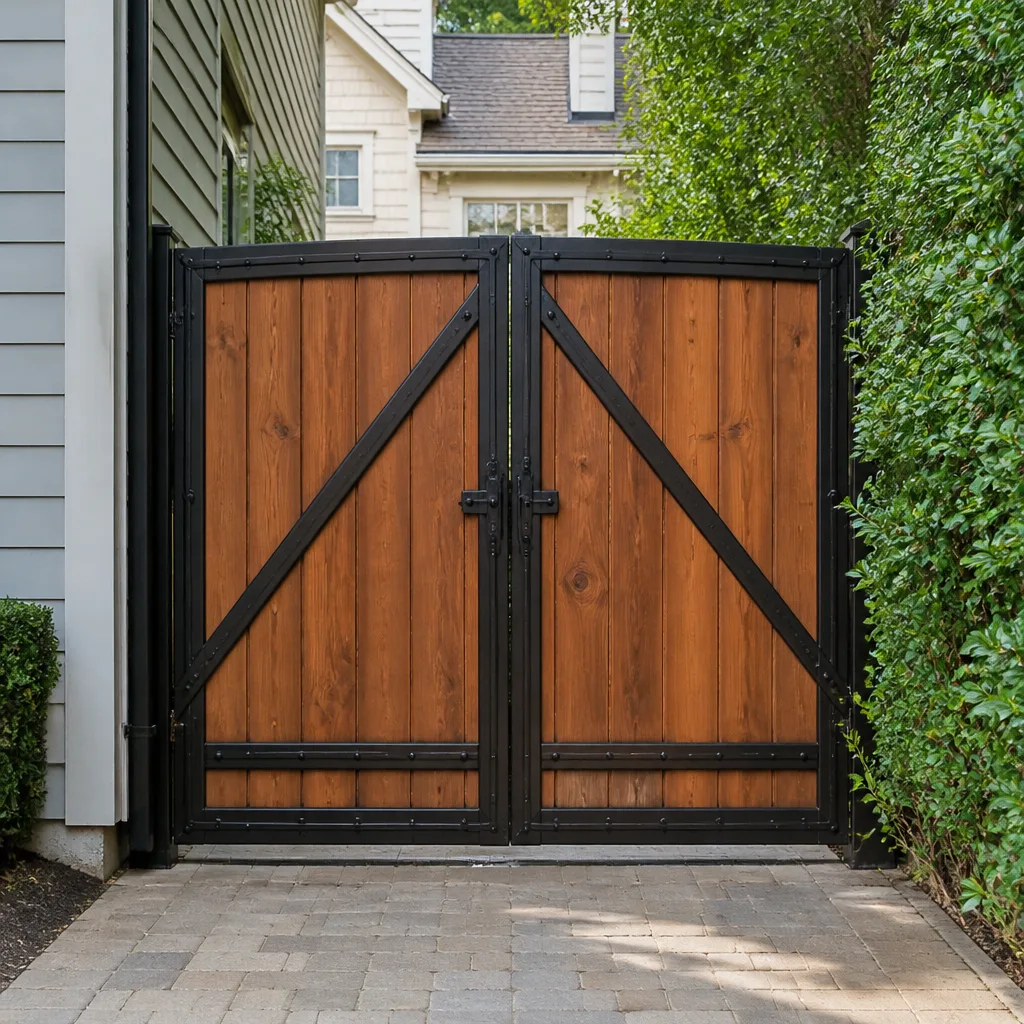 Wood & steel frame
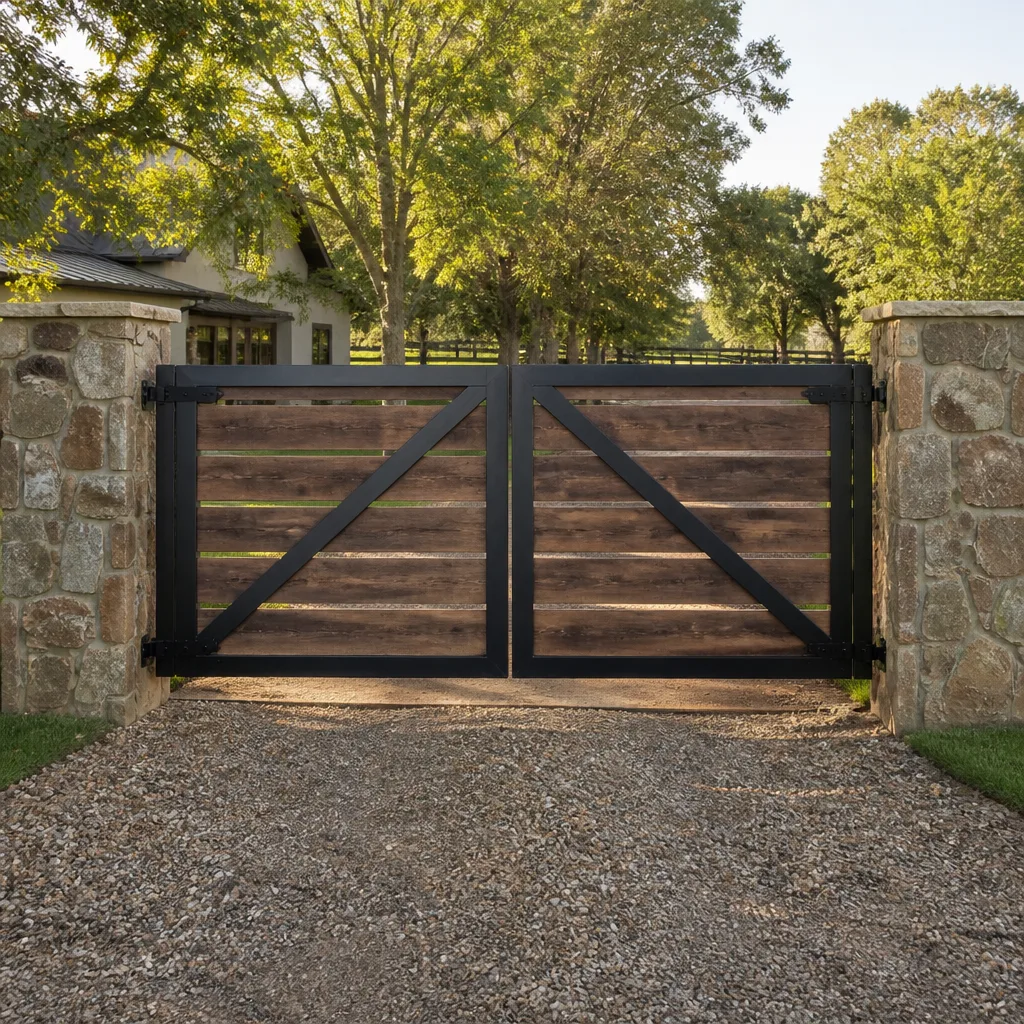 Farm & ranch
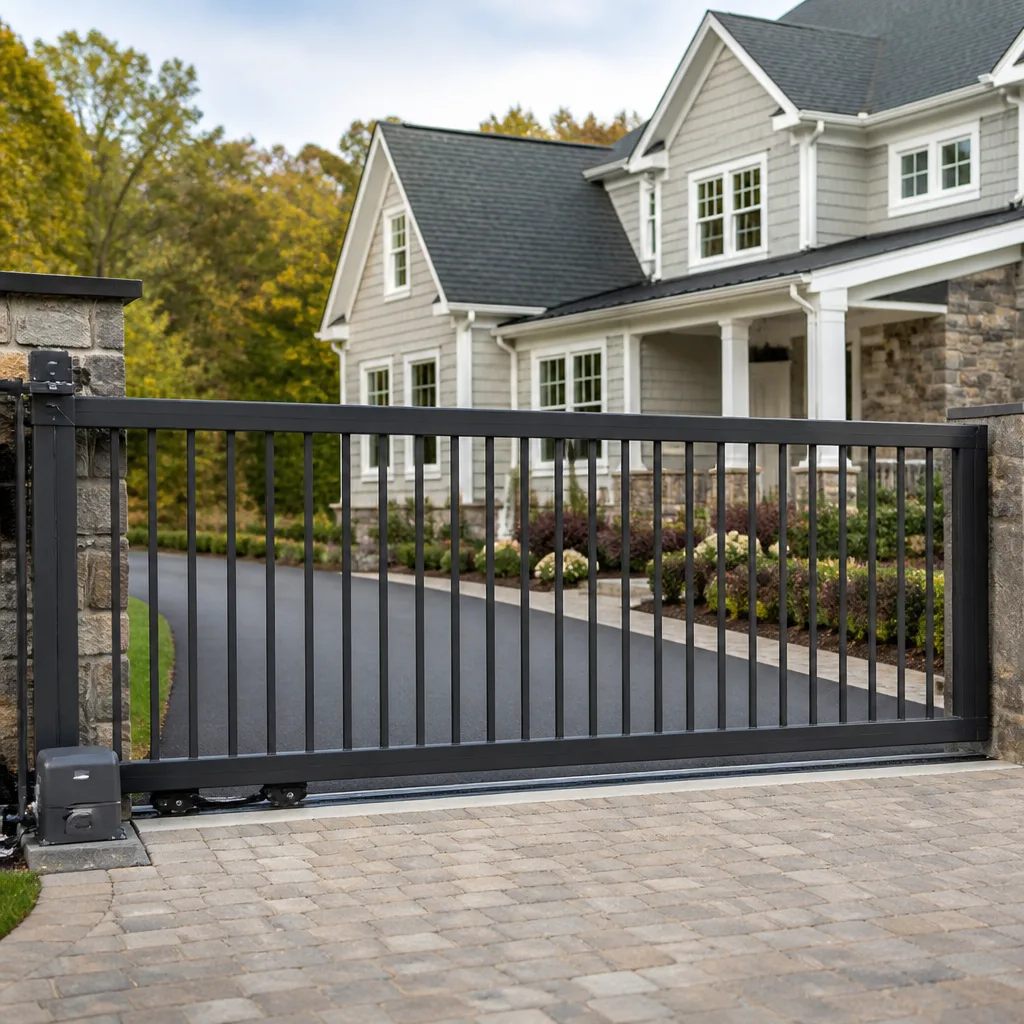 Sliding driveway gates
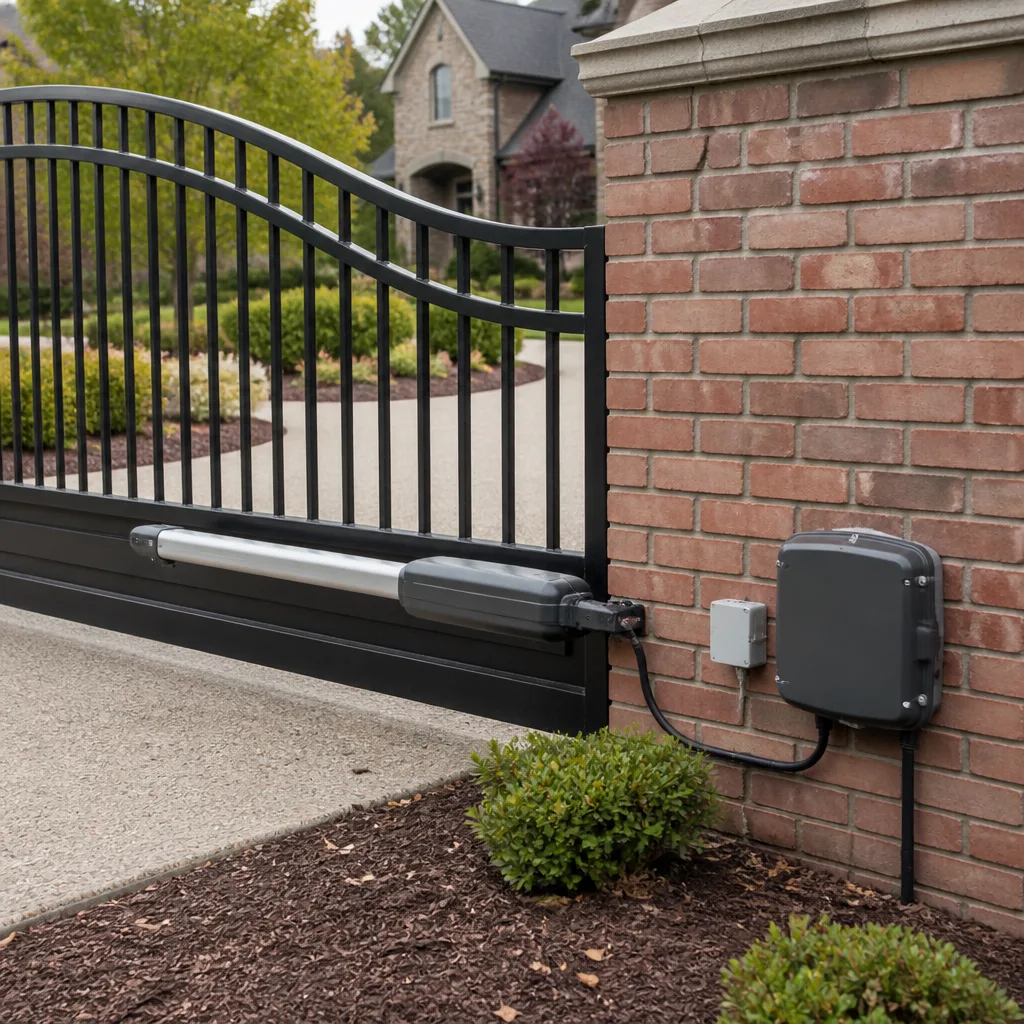 LiftMaster operators
Free on-site gate assessment - hinges, posts, and your LiftMaster or Nice gate operator checked before anything is quoted
The assessment is free and the quote is the invoice.
Get your free estimateDIY vs Professional Gate Repair: The Evanston Homeowner’s Decision Guide
Adjusting a sticky hinge on a manual swing gate is a genuinely reasonable DIY job. Adjusting the sensitivity on the entrapment sensor of a powered gate is not. Those two tasks look similar from the outside – both involve a gate that isn’t moving the way it should – but only one of them can be handled safely by someone with a socket set and a free afternoon. The line between them isn’t about how handy you are. It’s about the system, the components, and what happens if the fix is wrong. In Evanston, where electric gates with keypads and access control are common, that line is specific and knowable. This guide draws it clearly, so you can decide which parts of your gate work belong to you and which parts belong to a trained technician.
Quick Answer
Safe DIY gate work is limited to manual gates: tightening hinges, adjusting latches, clearing a slide track, and re-hanging a sagging panel on a non-powered gate. Anything on a powered or access-controlled gate – motor adjustment, limit switches, entrapment sensors, auto-reverse, wiring, control boards, or keypads – belongs to a professional. The dividing line is the gate type, not the homeowner’s confidence level.
Styles & brands we work with
- Wrought iron
- Wood & steel frame
- Farm & ranch
- Sliding driveway gates
- LiftMaster operators
Table of Contents
- Why Gate Type, Not Skill Level, Decides the DIY Question
- The Three-Column Task List: Safe DIY, DIY With Risk, and Professional-Only
- The UL 325 Safety Components You Should Never Adjust Yourself
- What a Competent DIYer Actually Needs for Manual Gate Adjustments
- How DIY Repairs Can Affect Insurance and Liability
- When Calling for a Diagnosis First Saves Money
- What Makes Evanston Gates Different From the Suburbs
- One-Time Fix vs Recurring Symptom: Reading the Difference
Why Gate Type, Not Skill Level, Decides the DIY Question
Most home repair advice is organized around the person: beginner, intermediate, advanced. Gate repair doesn’t work that way. A competent woodworker who has framed a house can still create a serious hazard by touching the wrong part of a powered gate, and a homeowner who has never picked up a wrench can safely tighten a hinge on a manual gate. The system decides, not the person.
This matters in Evanston because the mix of gates is unusually wide. The city has a lot of older homes with manual swing gates on wrought-iron or wood panels, a large stock of rental properties with powered slide gates where security matters, and newer multi-unit buildings with access-controlled entries that run on keypads and intercoms. Each of those systems has a different set of tasks that are safe to touch.
On a manual gate, the components are mechanical and visible. You can see a hinge, a latch, a track, a post. If you loosen a bolt and the gate sags, you tighten it back. The consequences of a mistake are visible and reversible.
On a powered gate, most of what matters is inside a control box. The motor, the limit switches, the entrapment sensors, the control board, and the access control wiring all interact in ways that aren’t visible from the outside. A powered gate that looks like it’s closing correctly may have its safety edges set too high, or its auto-reverse disabled by mistake, or its limits drifted just enough to stress the motor. None of those show up until something goes wrong.
In our experience, the calls that start with “we tried to adjust it ourselves and now it won’t open” almost always involve a powered gate, and almost always involve a part of the system that a homeowner didn’t realize was connected to something else. The fix is usually straightforward once a technician is on-site. The lesson is that the powered system has more moving parts than it appears to.
For a deeper look at how we approach gate repair as a dedicated trade, this is the core of it: the mechanical, electrical, and digital sides of a gate are one system, not three.
The Three-Column Task List: Safe DIY, DIY With Risk, and Professional-Only
The most useful way to decide what you can do yourself is to sort the task by the gate type it belongs to and the consequence if it goes wrong. Here’s how we’d lay it out for an Evanston homeowner.
Column 1: Safe DIY
- Tightening or replacing a hinge on a manual swing gate
- Adjusting a manual latch so the gate closes flush
- Clearing debris or snow from a manual or powered slide track
- Re-hanging a fallen gate panel on a manual gate with posts that are sound
- Oil or lubricate a manual hinge or exposed slide track
- Tightening a loose handle or pull
- Touching up rust on a manual wrought-iron or steel gate
These tasks have visible outcomes. If the gate still doesn’t close right, you can see it and call a professional. Nothing about these can create a hidden safety fault.
Column 2: DIY With Risk
- Adjusting the tension on a manual gate closer or a spring-assisted manual swing
- Replacing a manual gate post in soft or frozen ground
- Adjusting the opener arm’s physical position on a powered gate without changing limits
- Replacing a battery in a keypad or remote
- Cleaning a photo-eye lens on a powered gate
These sit in a gray zone. Some are fine for a careful homeowner. Others – especially gate closers and any post work in Evanston’s winter ground – are worth a second thought, because a post that isn’t set to proper footing depth will lean within a season and a closer adjusted too tight strains its mounting.
Column 3: Professional-Only
- Any adjustment to entrapment sensors, safety edges, or auto-reverse on a powered gate
- Limit switch adjustment on any powered gate operator
- Motor, control board, or battery-backup work inside the operator housing
- Any 120-volt wiring, conduit, or power run installation
- Access control wiring, keypad programming, intercom, or entry system work
- Replacing an operator or swapping to a different brand
- Any work on a powered gate that has previously failed to reverse
These are the tasks where a mistake can be invisible to you and dangerous to someone else. A powered gate that closes with more force than its sensors allow is a liability, not a convenience.
The UL 325 Safety Components You Should Never Adjust Yourself
UL 325 is the safety standard that governs automatic gate operators in the United States. It’s the reason a powered gate has to be designed to detect an obstruction and reverse or stop, and it’s the reason those specific components should not be touched by anyone who isn’t trained to test them.
The three components that matter most:
- Entrapment protection (photo-eyes, edge sensors, or gate-mounted sensors). These detect a person, vehicle, or object in the gate’s path and trigger a stop or reverse. Sensitivity that’s too high causes nuisance trips. Sensitivity that’s too low means the gate closes on something it shouldn’t.
- Safety edges. A pneumatic or electric strip along the closing edge of the gate that signals the operator the moment it contacts an obstacle. The edge itself rarely fails. The wiring and the sensor that interprets the edge does, and that’s exactly the kind of fault a homeowner won’t notice until it matters.
- Auto-reverse and stop-and-reverse logic. The behavior the operator follows once a sensor trips. If the operator’s control board has been reset, reprogrammed, or had its limits nudged, this logic can drift out of spec without any visible symptom – until the gate is closing on a child or a pet and it doesn’t reverse.
Here is where Illinois specifics matter. Illinois follows comparative negligence rules for personal injury, which means that in a case where someone is injured by a powered gate, the condition of the safety components on the date of the incident is part of the analysis. A gate whose sensors have been disconnected, taped over, or adjusted to be less sensitive by a non-certified person creates an exposure that wouldn’t exist on an unmodified gate. Setting entrapment sensitivity higher because “it was beeping too much” is the single most common version of this we run into.
If your gate’s sensors are beeping, tripping, or failing to hold, that is not a DIY problem – it’s a symptom of a specific fault in the sensor, wiring, or operator, and it should be diagnosed by a technician trained on that brand. When we handle gate access control alongside the safety sensors on the same call, the whole system gets checked instead of only the piece that was complaining.
What a Competent DIYer Actually Needs for Manual Gate Adjustments
If you’re going to handle the Column 1 tasks on a manual gate, the tool list is shorter than people expect. It’s not a gate-repair kit – it’s a basic set of hand tools with a few gate-specific add-ons.
- Socket set in the range your gate’s bolts use (most hinge and bracket bolts fall between 3/8″ and 5/8″ or the metric equivalents)
- Adjustable wrench for the odd-sized nut
- Level, ideally 2-foot, for checking a post or panel
- Tape measure for gap and clearance checks
- Penetrating oil for seized hinge pins – apply, wait, then try again rather than forcing the bolt
- Gate-specific lubricant (silicone or lithium grease, not WD-40 as a long-term solution) for hinge pins and exposed slide track
- Shims if you’re adjusting a hinge on a post-mounted gate
- Replacement hinge pins, bolts, and nuts in the sizes your gate uses – bring a sample to the hardware store if you’re not sure
Notice what isn’t on the list: no multimeter, no wire strippers, no operator manual. Those belong to powered gate work.
Two Evanston-specific notes on tools and materials. First, ground freeze matters for post work. If you’re replacing a manual gate post, the footing needs to go below the frost line, which in Evanston is well below what a typical hand-dig will comfortably reach in winter. Second, a sliding gate on a track that ices up in January isn’t broken – it’s frozen. Clearing the track with a stiff broom and applying a silicone-based lubricant that won’t hold water is a legitimate DIY task. Replacing the rollers on a slide gate is a professional task, because the panel has to come off the track and getting it back on safely is where most DIY slip-ups happen.
How DIY Repairs Can Affect Insurance and Liability
This part gets skipped in most DIY-versus-pro comparisons, and in Evanston it’s the part worth reading twice.
Your homeowners or property insurance covers you against certain losses, but it’s written on the assumption that you maintain the property to a reasonable standard. If a powered gate fails and causes property damage or injury, the insurer’s investigation will look at who worked on the gate, when, and whether the work was done by someone reasonably qualified for it. A gate with a documented professional repair history is easier to defend than a gate whose sensors were adjusted by the homeowner three weeks before an incident.
The bigger concern is liability. In Illinois, a property owner who has a powered gate that isn’t safely maintained can face a negligence claim if someone is hurt. The legal standard turns on whether the owner acted reasonably. Adjusting an entrapment sensor to be less sensitive, or disconnecting an edge sensor that was nuisance-tripping, is hard to defend as reasonable – it’s a known modification that reduces safety on the exact component designed to prevent injury.
Two practical rules follow from this:
- Keep a record. If a technician works on your gate, keep the invoice. It’s evidence the gate was serviced, and it shows what was done.
- Don’t disable a safety feature, ever. If a sensor is tripping repeatedly, that’s a fault to fix, not a feature to turn off. If you or a family member has already disconnected, taped over, or bypassed a sensor to stop it beeping, that should be addressed by a technician trained on that system – not left in place.
In our experience, this is where landlord and property-manager customers are more cautious than homeowners, and rightly so. A single-family home with a powered gate has one household relying on the sensor. A rental property with an access-controlled gate has every tenant and every visitor relying on it. The liability math is different at that scale.
When Calling for a Diagnosis First Saves Money
There’s a legitimate hybrid strategy that doesn’t get talked about enough: call a professional for the diagnosis, then do the work yourself if the fix turns out to be within the safe-DIY range. This works because the expensive part of gate repair is usually the diagnosis, not the part.
Here’s when that strategy makes sense:
- You’re not sure what’s wrong with a manual gate (is it the hinge, the post, the latch, or the frame shifting?), and guessing could make it worse
- The gate drags, sags, or sticks and you’ve already tightened everything you can find without improvement
- A manual gate that used to swing freely has started to bind, and you don’t want to force it
- You’re considering a repair and want a written estimate before deciding whether to tackle it yourself
Here’s when it doesn’t:
- Anything on a powered gate or access control system. A diagnosis without the follow-through repair usually leaves the system in an incomplete state, and getting an operator back into spec requires the technician who diagnosed it.
- Any repair on a gate that has already failed once. The second failure is usually a sign of a deeper issue, and diagnosis-and-fix by the same technician is more reliable than diagnosis-then-someone-else’s-work.
- Any job that requires taking a powered gate panel off its track, dismantling an operator housing, or working with 120-volt wiring.
When we handle gate motor & opener work, the diagnosis is part of the job, not a separate service. We don’t bill diagnosis as a standalone fee – the written estimate sets the price for the work itself, and the estimate is free. If the fix is something a homeowner can reasonably handle, we’ll tell them. If it isn’t, we’ll say so plainly.
What Makes Evanston Gates Different From the Suburbs
Evanston gates see conditions that a lot of the surrounding area doesn’t. Some of that is housing stock. Some is weather. Some is the type of gate that shows up here.
Housing stock. Evanston has a large inventory of older homes with original wrought-iron and wood gates, alongside newer multi-unit buildings with powered slide gates and access control. That means the repair calls split roughly in two: older manual gates on mature posts (which need re-hanging, hinge work, and occasional post replacement), and newer powered gates on controlled entries (which need operator, sensor, keypad, and intercom work). We work on both, and the tools and skills required are very different.
Weather. Lake-effect winters push frost deep into the ground, and that has two practical consequences for gate owners. First, posts set to the wrong footing depth will lean within a season – a shallow post in an Evanston February is a summer job, not a winter one. Second, slide tracks that iced up over a winter can hold the gate’s rollers off-center, and by spring the whole track needs realignment rather than just clearing.
Powered gates on residential streets. In much of the Chicago area, a powered gate is a luxury feature on a large property. In parts of Evanston, it’s the primary security layer on a residential lot with an alley-facing entry or a shared driveway. When that gate comes down, the household or building loses its security layer, not just a convenience. That’s why electric gate repair is a primary service for us, not a sideline – and why we handle it as one call, from the motor to the keypad.
Brands matter here too. Evanston gate stock includes a lot of DoorKing, LiftMaster, Elite, and Mighty Mule systems, plus a fair number of DIY-installed residential gates on Ghost Controls operators. We work on all of these, along with FAAC, BFT, Linear, and Viking. The point isn’t the list – it’s that when a powered gate fails on a residential street in Evanston, the technician on-site needs to know the specific brand and model, or the diagnosis will stall. We don’t subcontract power gate work, and we don’t hand it off to a generalist. Both Gate Repair Evanston and our work on gate access control follow the same pattern: one technician, one call, both the hardware and the digital side checked.
One-Time Fix vs Recurring Symptom: Reading the Difference
The most reliable signal of whether a repair is a one-time fix or a symptom of something deeper is repetition. This is true for manual and powered gates, but the consequences differ.
One-time fix. The gate was working fine, then something changed – a car backed into the gate, a storm branch dropped on it, a hinge pin finally seized, a post finally shifted. After the repair, the gate returns to normal and stays that way. You don’t think about it again.
Recurring symptom. The gate works, then doesn’t, then works again. Or the same part keeps needing adjustment. Or the gate has “helpful” quirks that you’ve learned to work around. This is where a repair is papering over something deeper.
Patterns to watch for:
- The same hinge keeps loosening after adjustment – likely a post or frame issue, not a hinge issue
- A manual gate feels “heavier” every season – post settling, or a post that wasn’t set deep enough for Evanston frost
- A powered gate stops short, then works, then stops short again – limit switch drift, or a sensor starting to fail
- The gate reverses on nothing – a photo-eye is out of alignment, dirty, or the sensor is failing
- The gate closes but won’t latch – a limit switch set just past spec, or a mechanical latch adjustment needed
- Any pattern where a sensor “beeps too much” and gets turned down – never a fix, always a safety compromise
If any of these describe your gate, the repair isn’t the adjustment. The repair is finding out why the gate needs adjustment repeatedly. A technician trained on gates – specifically on gates, not fences or garages – can identify the underlying fault faster than a generalist, because the diagnosis pattern is one they run on every call.
Common Mistakes to Avoid
- Adjusting entrapment sensors to stop nuisance beeping. The beeping is a signal, not a nuisance. Turning it down lowers the gate’s safety response and creates real liability exposure. If a sensor is tripping repeatedly, it needs to be diagnosed and fixed.
- Disconnecting a safety edge to “make it work.” A gate that works without a safety edge isn’t fixed – it’s unsafe. This is the single most common DIY gate mistake we see, and it’s the one with the biggest consequences.
- Forcing a powered gate by hand. If the gate won’t open electrically, releasing it manually is a designed feature – but forcing it against the motor can damage the operator’s gear train. If manual release doesn’t work smoothly, stop and call.
- Burying a new post above the frost line in Evanston. A post that isn’t set to proper footing depth will shift with the first hard freeze, and the gate will start sagging again within a season. Footing depth is not a place to cut corners.
- Replacing the operator without checking the sensors. A new operator on failing sensors will keep failing. If a gate isn’t reversing properly, the sensors and wiring are part of the diagnosis, not an afterthought.
- Using WD-40 as a long-term gate lubricant. It’s a penetrant, not a lubricant. It works to free a seized hinge, but it doesn’t stay and it collects dust. Follow with a proper silicone or lithium grease.
- Not checking whether the gate’s power is on a dedicated circuit. A powered gate sharing a circuit with something else will trip that circuit when the motor draws current, and the “motor problem” is really an electrical one. This is worth a look before assuming the operator has failed.
See the difference
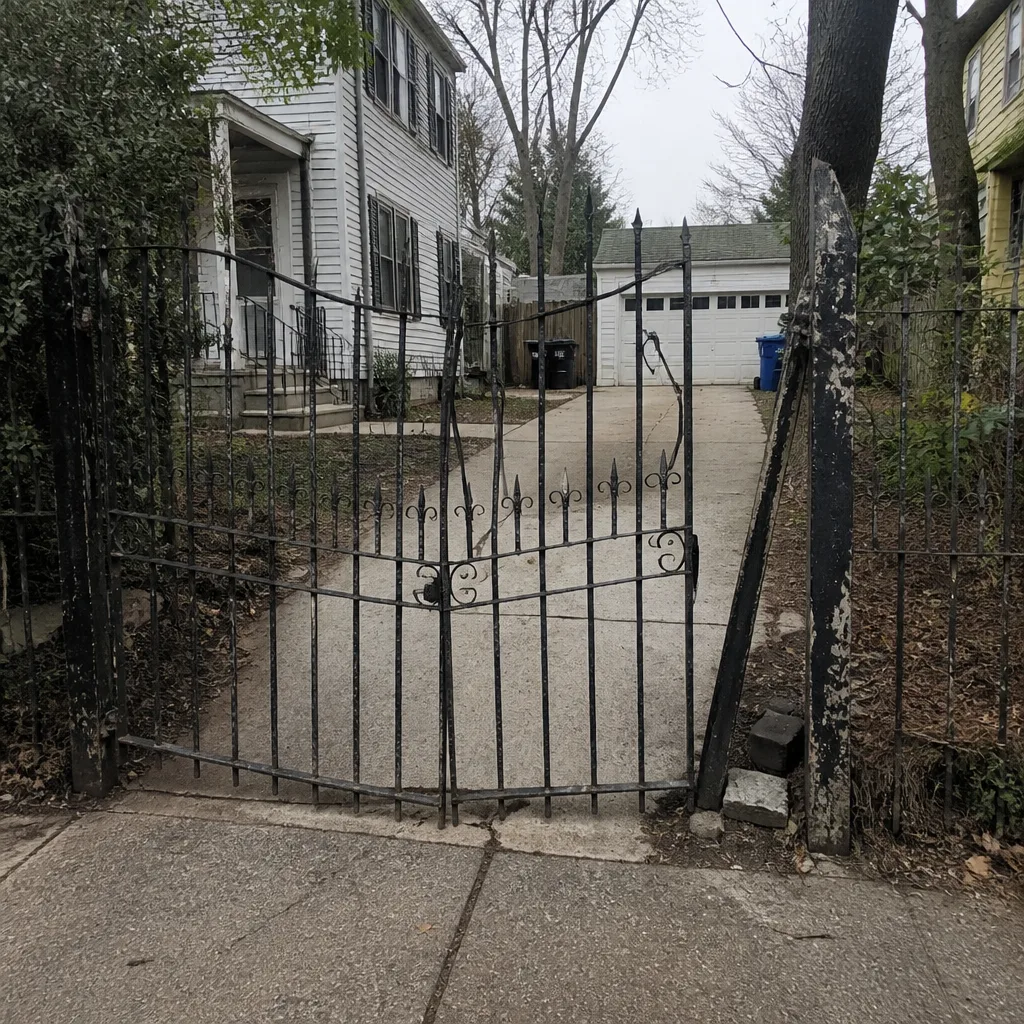 Before
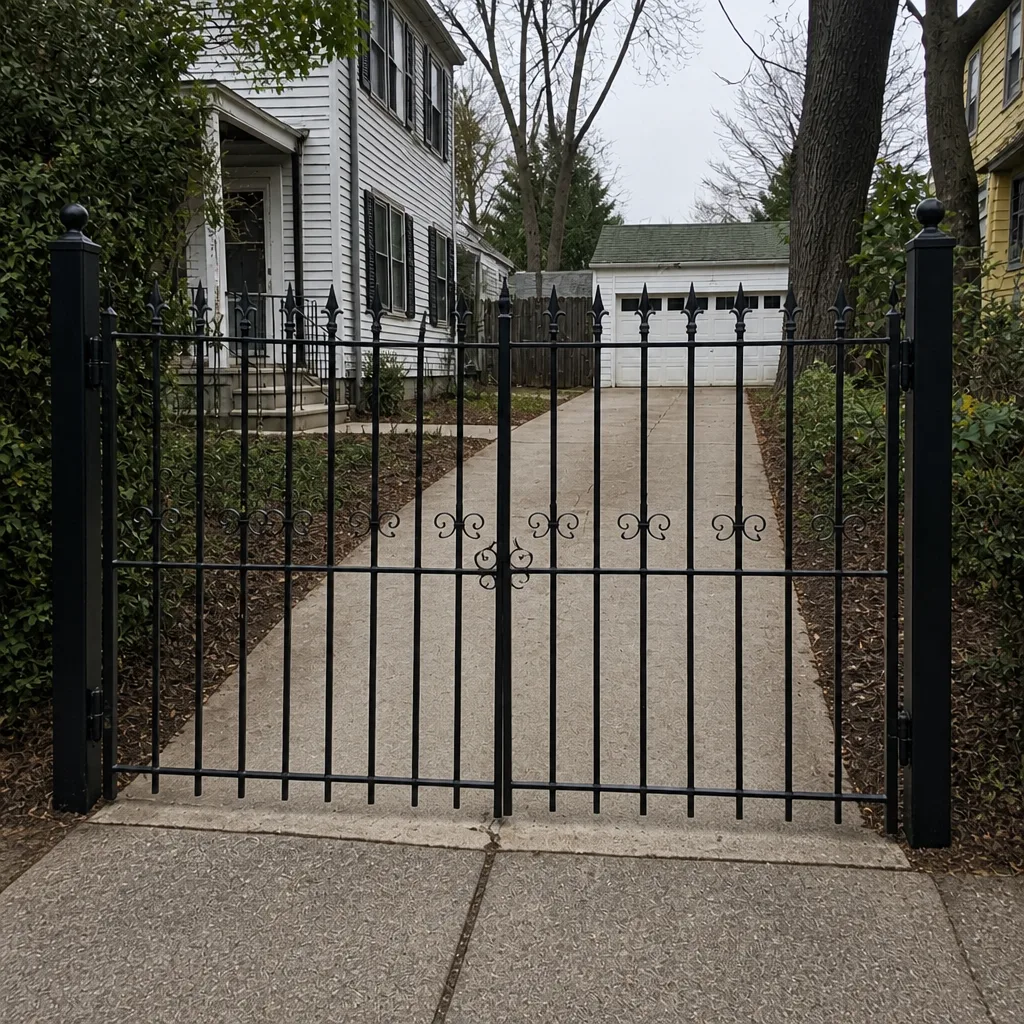 After
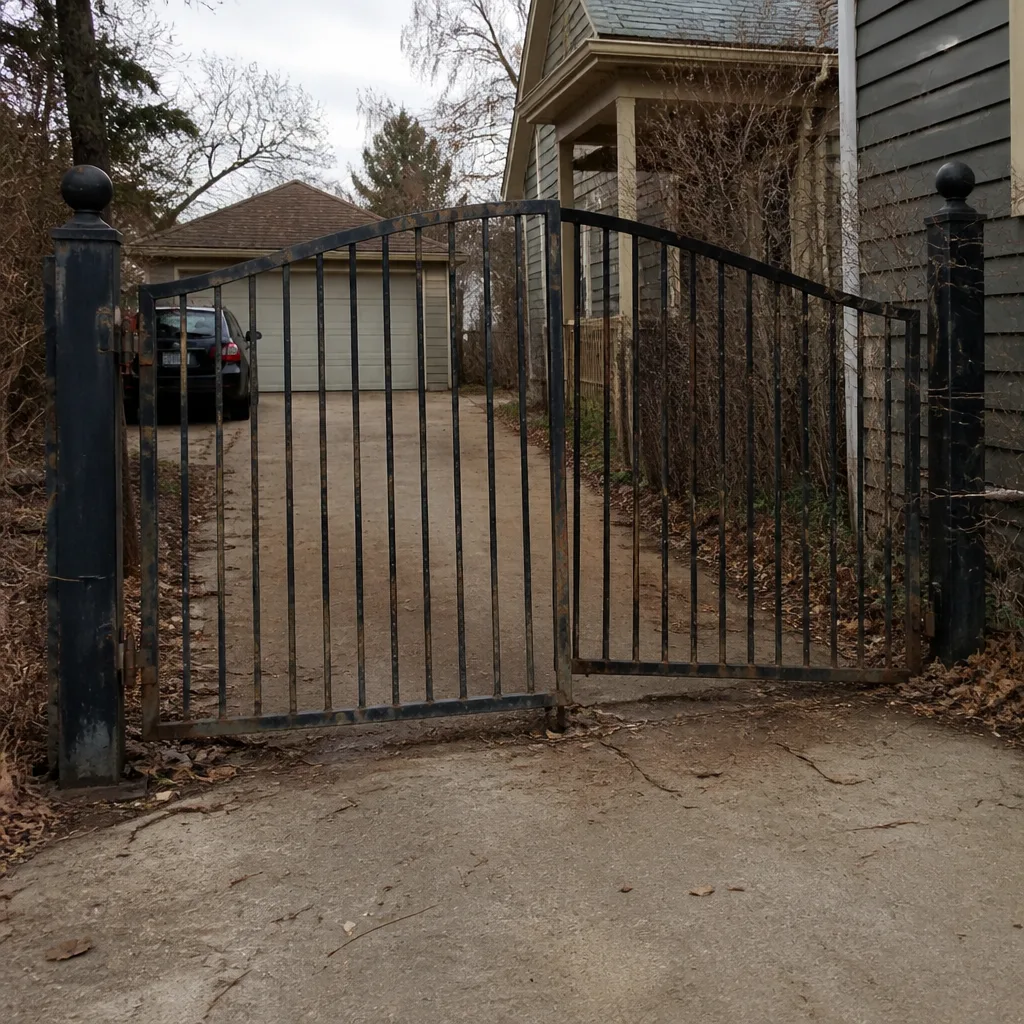 Before
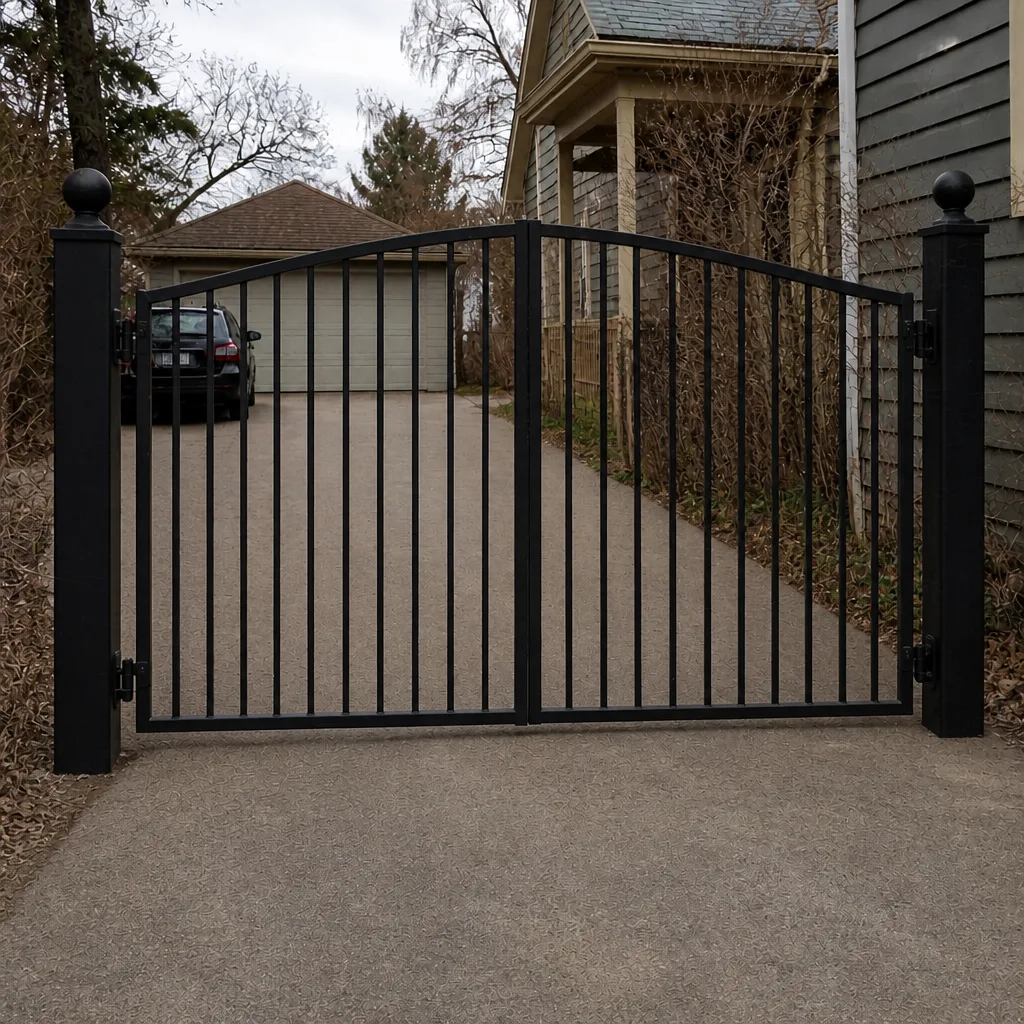 After
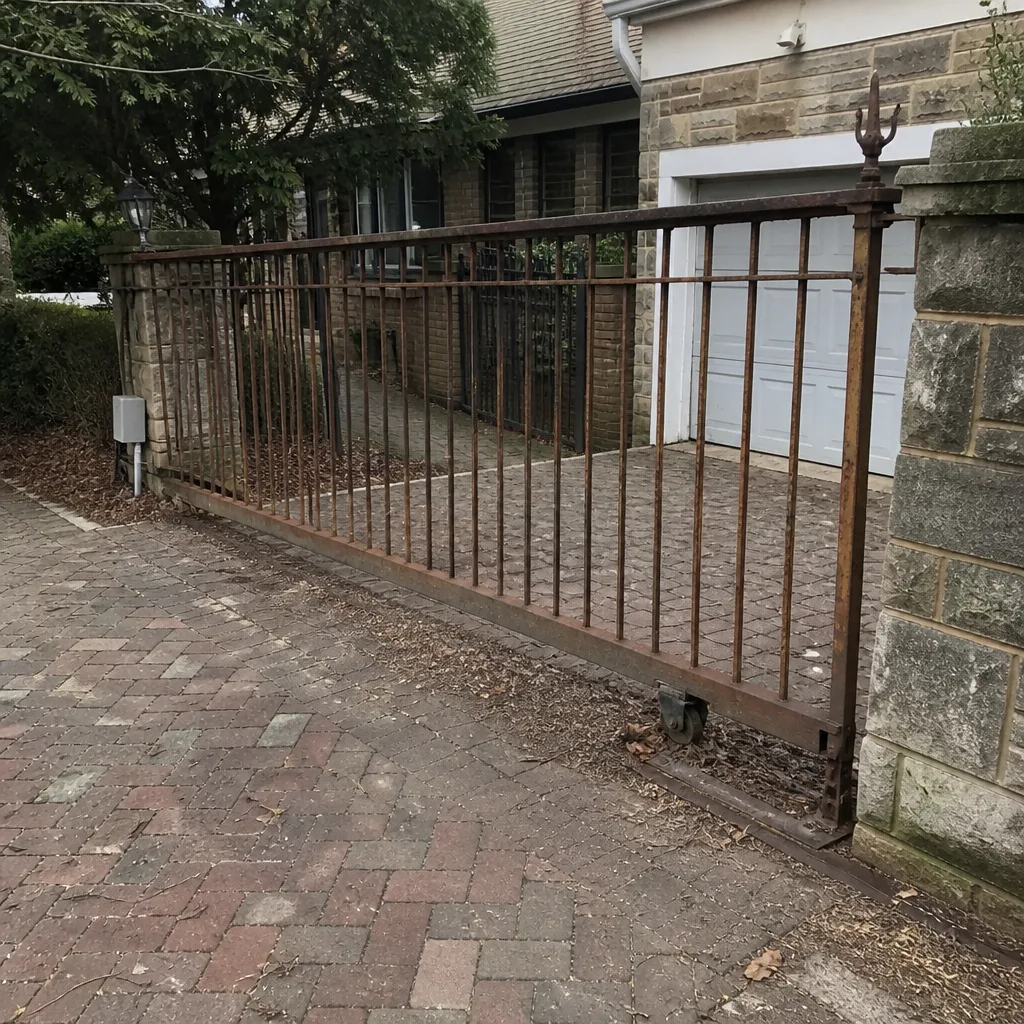 Before
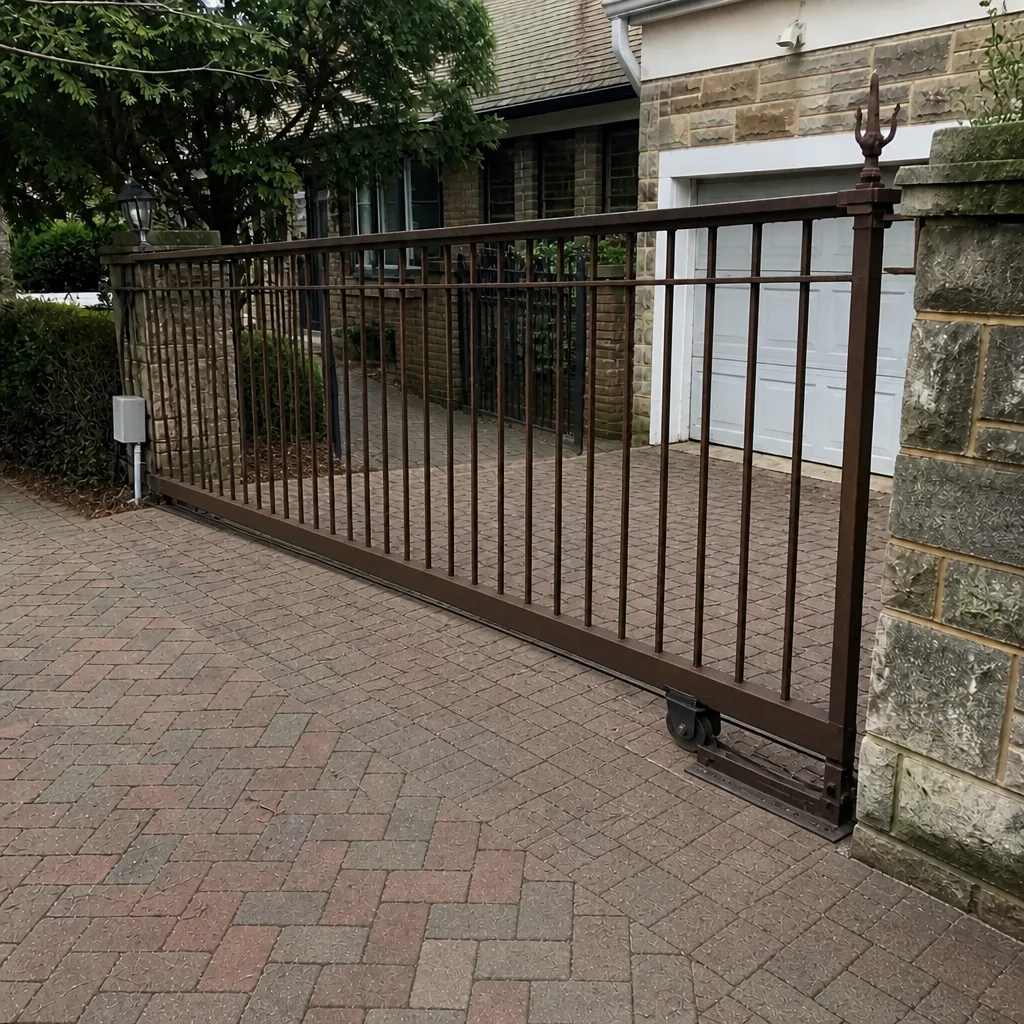 After
When to Call a Professional
Call a professional gate technician when any of these describes your situation:
- Your gate is powered, and anything besides cleaning or clearing the track needs to happen
- A sensor, safety edge, or auto-reverse function is involved on any gate, manual or powered
- The gate has failed to reverse when something is in its path
- The gate has been worked on before and the same problem has returned
- A gate operator or access control system (keypad, intercom, entry system) is part of the problem
- A manual post needs replacement, or a manual gate panel needs re-hanging on posts you’re not sure are sound
- The property is a rental or a multi-unit building, where the gate is relied on by more than one household
Gate Repair Evanston offers free estimates in Evanston – call (855) 658-5171. We answer 24/7. Fast dispatch from 7am to 7pm, Sunday through Friday. Our technicians have up to 12 years of experience, and we work on the brand you already have.
Frequently Asked Questions
You should hire a professional for any powered gate adjustment involving the motor, limits, entrapment sensors, safety edges, control board, or wiring. On a powered gate, the only DIY tasks that are safe are cleaning the track, clearing debris, and changing a keypad or remote battery. Everything else belongs to a technician trained on that system, because a mistake can be invisible and dangerous.
A UL 325 safety edge is a specific monitored sensor that the gate operator interprets as part of its safety logic – it signals the operator to stop or reverse when the edge contacts an obstacle. A generic rubber bumper on the outside of a gate that isn’t wired to the operator does nothing safety-wise. If you’re not sure which one your gate has, have a technician check: an unmonitored bumper is a real liability on a powered gate.
It can, especially on a powered gate. If a gate fails and causes property damage or injury, an insurer’s investigation will look at who worked on it and whether the work was done by someone reasonably qualified. A documented professional repair history is easier to defend than a DIY repair that reduced a safety feature. Disabling or adjusting a sensor down is the most common version of this we see.
Gate repair in Evanston is priced per job by a written estimate, and the estimate is free. Because the price depends on the gate type, the brand, and whether the fault is mechanical, electrical, or digital, there’s no single number that applies. Call (855) 658-5171 for an exact quote – the price is agreed before any work starts.
We service and repair LiftMaster, FAAC, BFT, Linear, Viking, Ghost Controls, DoorKing, Elite, and Mighty Mule gate systems. That covers most of the powered and access-controlled gate stock in Evanston, including DIY-installed residential gates on Ghost Controls and Mighty Mule operators. If you don’t know the brand on your gate, that’s fine – the technician can identify it on-site.
Call (855) 658-5171 – we answer 24/7. Crews dispatch Sunday through Friday, 7am to 7pm, and we’re closed on Saturday. A call that comes in outside dispatch hours is booked into the next opening, Sunday through Friday, 7am to 7pm.
Yes, for some manual gate issues. If you’re not sure what’s wrong with a manual gate, a professional diagnosis can save you from making it worse, and if the fix turns out to be a Column 1 task (a hinge, a latch, a track clear), you can reasonably do it yourself. For powered gates, access control, or any gate that has failed before, diagnosis and repair by the same technician is the safer and more reliable path.
A gate specialist works on gates, every day, on the specific brands and systems that show up in Evanston. A general handyman may be able to tighten a hinge but will usually stop at the motor, sensors, wiring, or access control – the parts where gate repair actually gets complicated. When you call a gate-only specialist, the diagnosis pattern is one we run every day, and a repair is usually done right the first time.
The Bottom Line
The DIY-versus-professional question for Evanston gate repair isn’t about whether you’re handy. It’s about what kind of gate you have. Manual gate owners can safely handle hinges, latches, and track clearing. Powered gate and access control owners should hand the work to a trained technician, because the safety components – sensors, safety edges, auto-reverse, and operator wiring – can fail invisibly and create real liability. Check your gate type, use the three-column task list, and when in doubt, call for a free estimate. The written estimate sets the price, and the price is agreed before any work starts.
Call (855) 658-5171 for a free estimate. We answer 24/7. Fast dispatch from 7am to 7pm, Sunday through Friday.
Written by the team at Gate Repair Evanston.