
Last updated November 25, 2026
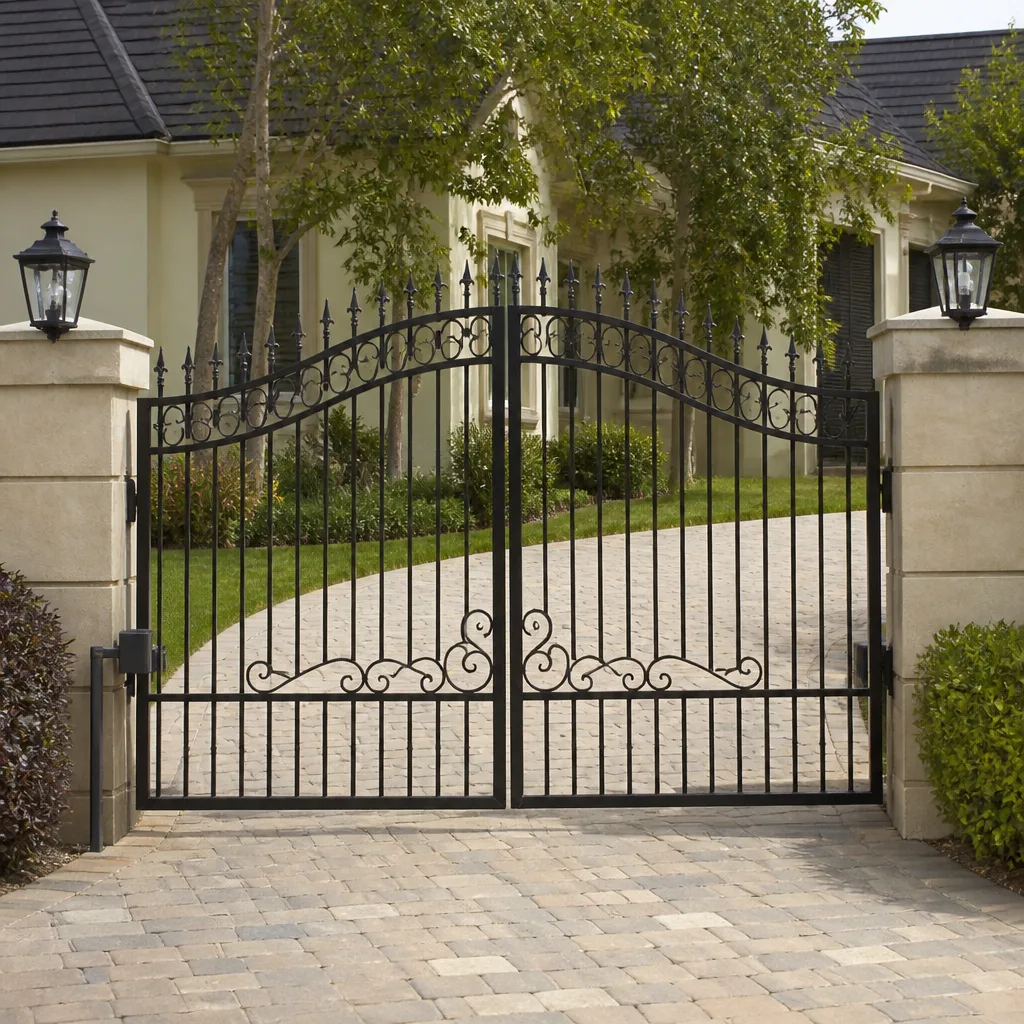 Wrought iron
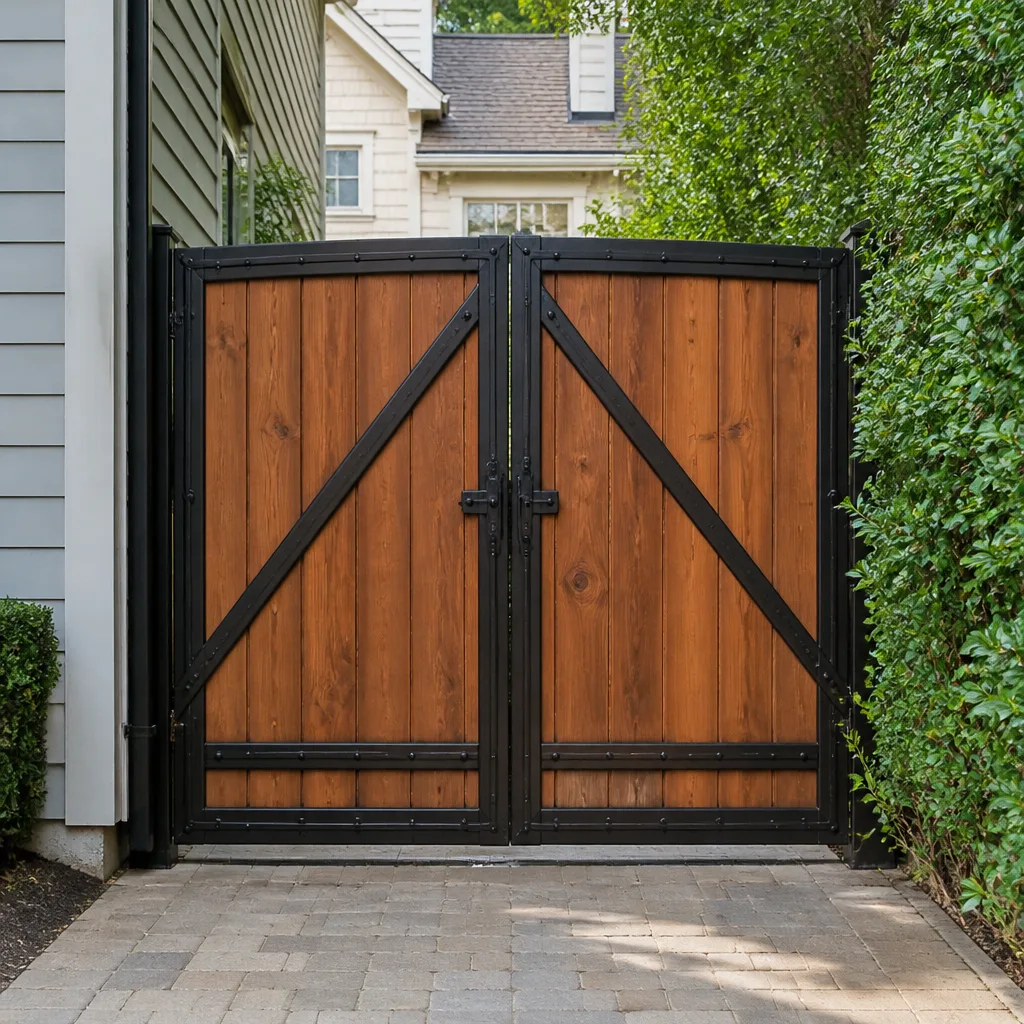 Wood & steel frame
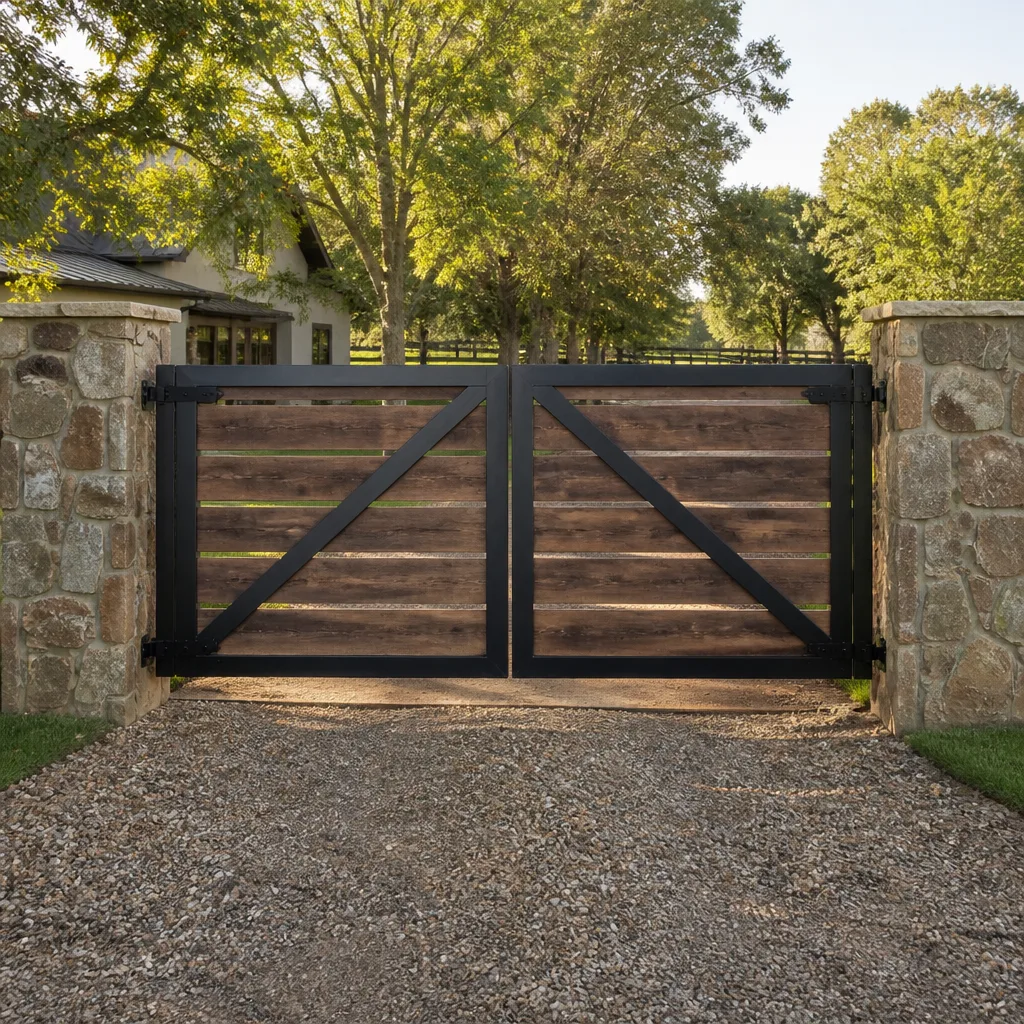 Farm & ranch
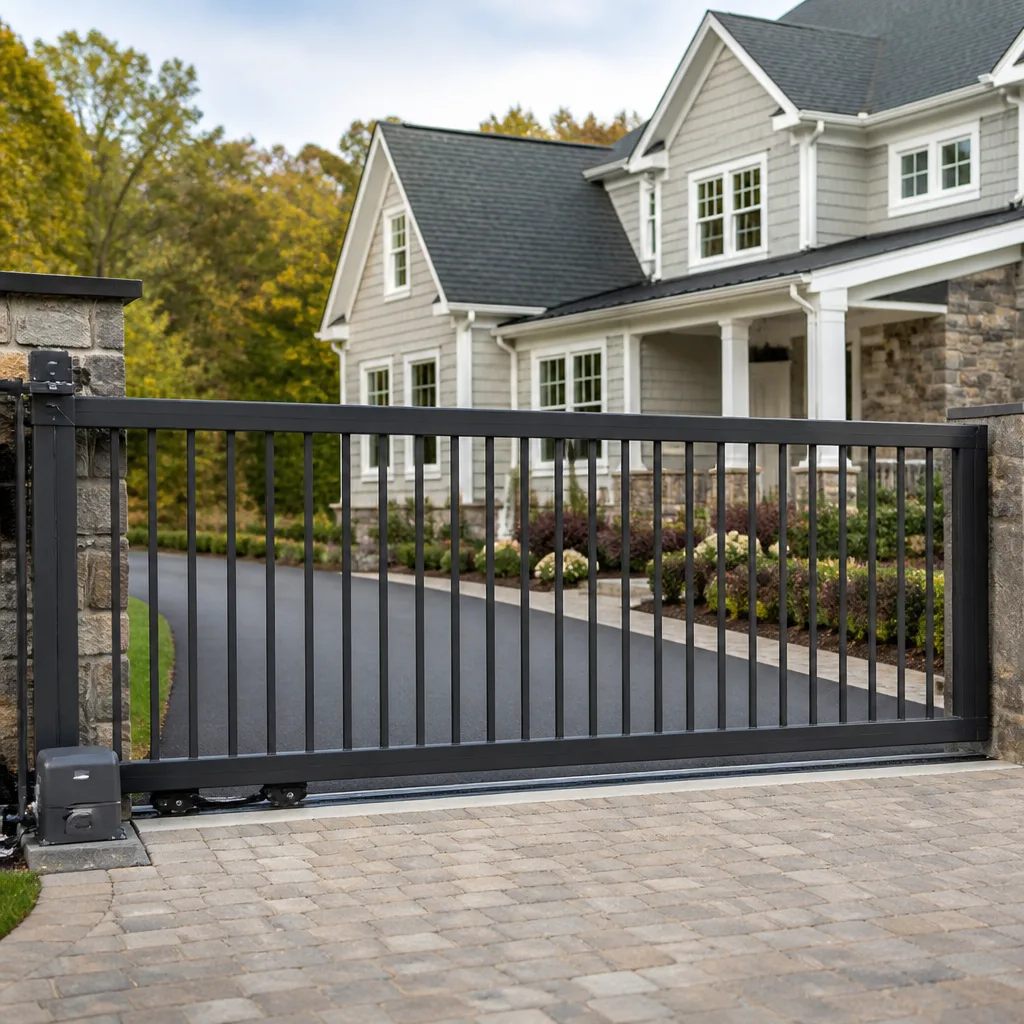 Sliding driveway gates
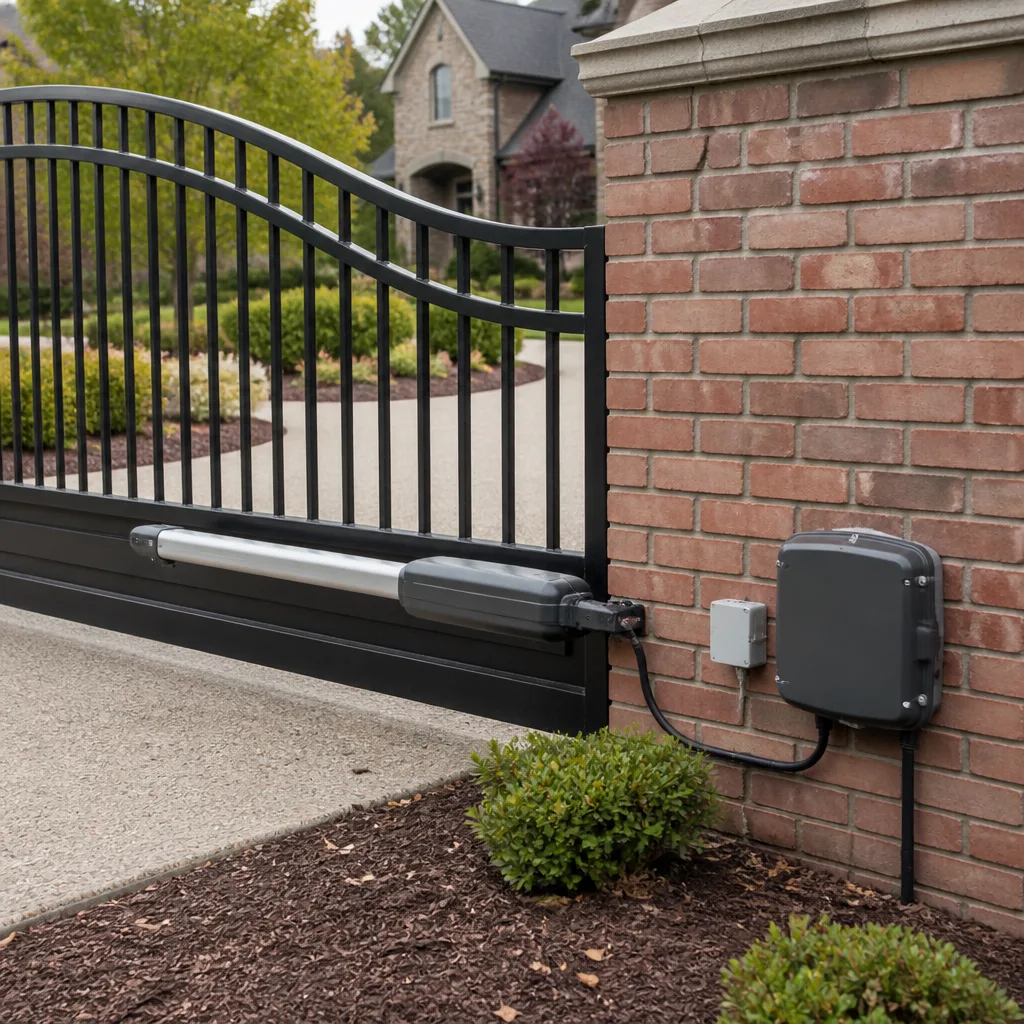 LiftMaster operators
Free on-site gate assessment - hinges, posts, and your LiftMaster or Nice gate operator checked before anything is quoted
The assessment is free and the quote is the invoice.
Get your free estimateGate Repair Troubleshooting in Evanston: Common Problems and How to Fix Them
A gate that “just stopped working” almost never stopped for one reason. In our experience, it’s usually a chain of two or three small failures that stacked up slowly – a hinge that loosened, a photo eye knocked out of line, a battery fading through a cold snap – and the final straw is only the last link. Fix that last link and the gate runs for a few weeks, then quits again, because the real cause was never touched. That’s why guessing gets expensive. This guide maps symptoms to root causes across five categories, so you can tell the difference between a five-minute adjustment and a job for a technician. We’ll cover Evanston’s freeze-thaw cycle, safe manual release, and the five symptoms that mean stop and call.
Quick Answer
Most gate failures in Evanston trace back to one of five root causes: mechanical (hinges, tracks, alignment), electrical (power, wiring, batteries), sensor (photo eyes, safety edges, loops), software/programming (limits, remotes, control boards), or weather (frost heave, ice, freeze-thaw movement). Match the symptom to the category first, then decide if it’s a DIY adjustment or a technician call. The five symptoms that mean stop troubleshooting immediately are: a sparking or burning smell, a gate that moves on its own, a bent or cracked hinge or post, exposed or damaged wiring, and a gate that won’t reverse when something blocks it.
Styles & brands we work with
- Wrought iron
- Wood & steel frame
- Farm & ranch
- Sliding driveway gates
- LiftMaster operators
Table of Contents
- The Five Root-Cause Categories of Gate Failure
- Symptom-to-Cause Matrix
- How Evanston’s Freeze-Thaw Cycle Breaks Gates
- How to Perform a Manual Release Safely
- Misaligned Gate vs. Structural Problem
- What Voids a Manufacturer Warranty (and What Doesn’t)
- DIY-Friendly Fixes vs. Call-the-Tech Fixes
- Five Symptoms That Mean Stop Troubleshooting
The Five Root-Cause Categories of Gate Failure
Every gate problem falls into one of five buckets, and knowing the bucket is half the diagnosis. When we roll up to a gate in Evanston, the first question is always the same: is this mechanical, electrical, sensor, software, or weather? Each category has its own tell, and each fails on its own timeline.
- Mechanical: hinges, rollers, tracks, latches, gate frame. Symptoms: sagging, dragging, grinding, a gate that rubs the ground or the post. These get worse slowly and are visible to the eye.
- Electrical: power supply, wiring, batteries, transformers, motor. Symptoms: nothing happens when you trigger it, the motor hums but doesn’t move, or it moves slowly and stalls.
- Sensor: photo eyes, safety edges, loop detectors, limit switches. Symptoms: the gate reverses mid-travel, won’t close, or starts and stops in a stutter.
- Software/programming: control board, remote pairing, limit settings, timer. Symptoms: the gate works from the keypad but not the remote, or the travel limits drift over time.
- Weather: frost heave, ice in the track, freeze-thaw shifting. Symptoms that appear in cold snaps and vanish in mild weather, or appear only after a hard freeze.
Here’s the part most people miss: these categories overlap. A frost-heaved post shifts the gate, which knocks a hinge loose, which throws off the photo-eye alignment. You’ve got a mechanical problem and a sensor problem caused by a weather problem, all at once. That’s why fixing one link in the chain brings the gate back for a few weeks and then it fails again. For full-service diagnosis across all five, our Gate Repair Evanston team starts with the chain, not the last link.
Symptom-to-Cause Matrix
Before you touch anything, match the symptom you’re seeing to the cause it most often points to. This table is the fastest way to know what kind of problem you’re dealing with. It’s not a guarantee, but it’s where a technician starts, and it’s where you should too.
- Gate won’t open at all, no sound: electrical or power (tripped breaker, dead battery, bad transformer) or software (control board fault). Check power first.
- Motor hums but gate doesn’t move: mechanical binding (hinge, track, obstruction) or a failing motor. If you can’t push it by hand with the operator disengaged, it’s mechanical.
- Gate reverses immediately after starting to close: sensor (photo eye misaligned, safety edge tripped, loop detector issue). This is the most common electric gate call.
- Gate stops partway and won’t finish travel: limit switch out of adjustment or a programming issue, sometimes a weak battery under load.
- Remote works sometimes, not others: battery in the remote, antenna position, or interference from nearby electronics. Rarely the control board.
- Gate drags on the ground or rubs the post: mechanical (sagging hinge, shifted post, frost heave). Purely mechanical.
- Motor runs hot, smells electrical: stop immediately. Electrical fault or failing motor. This is a stop-now symptom.
- Gate works in warm weather, fails in cold: weather (ice, frost heave, cold battery capacity) plus whatever mechanical or sensor weakness the cold exposes.
Write down what you see before you call. A specific symptom (“reverses half-closed, photo eye LED flashing”) cuts diagnosis time by half. If you’d rather skip the matrix and get a technician out, our gate repair page lays out how a same-day visit works.
How Evanston’s Freeze-Thaw Cycle Breaks Gates
Evanston’s winters are hard on gate hardware in a way that milder climates never see. The freeze-thaw cycle – where daytime temperatures rise above freezing, snow and ice melt into the ground, then refreeze overnight – does more damage to gate posts and hinges than any single cold snap. When moisture gets into cracks in the pavement or soil around a gate post and refreezes, it expands. Repeat that fifty times over a winter and the post shifts a quarter inch. That quarter inch shows up as a gate that drags, a latch that won’t line up, or a photo eye that suddenly won’t read.
What we see across Evanston in late winter and early spring:
- Heaved posts on slide gates: the track bows and the gate binds at the same spot every time.
- Frozen hinges on swing gates: ice packs into the hinge gap and the gate won’t close fully, straining the opener.
- Ice in the track: the operator forces the gate against an obstruction, trips the safety, or in bad cases burns out the motor over time.
- Cold-weakened batteries: a battery that works fine at 45°F can fail to hold a charge at 15°F, and the gate looks “dead” when it’s just the backup battery.
- Ground-loop detector failures: moisture in the loop saw-cut or a shifting slab breaks the loop, and the gate thinks a car is always there.
The fix isn’t waiting for spring. A gate that drags on ice all winter grinds its rollers, strains its motor, and loosens its hinges – and by the time the ground thaws, you’ve got three problems instead of one. Clear ice from the travel path, don’t force a stuck gate, and get a dragging gate looked at before the damage compounds. It’s one reason we keep our gate motor & opener work focused on cold-climate strain, not just the electrical side.
How to Perform a Manual Release Safely
Every powered gate has a manual release, and knowing how to use it is the single most useful troubleshooting skill. If the operator fails, you need to move the gate by hand to see whether the problem is in the operator or in the gate itself. But a manual release done wrong on a heavy gate can let it fall, swing uncontrolled, or jam the operator. Here’s the safe sequence.
- Cut the power at the breaker or the operator’s disconnect switch. Never release a gate with the operator still energized.
- Chock or support the gate. For a slide gate, block the gate so it can’t roll. For a swing gate, have someone hold the gate leaf or prop it.
- Find the release mechanism. On most residential operators it’s a keyed release, a lever, or a manual release key on the operator housing. On Viking and Ghost Controls units it’s typically a keyed release on the operator arm or a manual bypass lever. On DoorKing slide operators, look for the release handle on the operator chassis.
- Engage the release per the manufacturer’s procedure – turn the key, pull the lever, or insert the release key and rotate it. Don’t force it. If it won’t release, stop; you’re about to damage the gearbox.
- Move the gate slowly by hand. Feel for binding, grinding, or resistance. A gate that moves freely by hand is telling you the operator is the problem. A gate that binds by hand is telling you the gate itself is the problem.
- Re-engage the release and restore power only once the gate is clear and the travel path is safe.
If the release won’t engage, or if the gate won’t hold position once released, that’s a mechanical failure in the operator, and it needs a technician. On unfamiliar brands, call first. We work on the brand you already have, and a quick call can save you a broken gearbox. For gate access control and keypad issues that lock you out, our gate access control team handles the digital side.
Misaligned Gate vs. Structural Problem
Here’s a distinction that changes the whole repair: a gate that’s simply out of alignment versus a gate whose operator is fighting a structural problem. They look similar – both make the gate drag, bind, or fail to latch – but they need completely different fixes.
Misalignment is the easy one. The gate has drifted out of square, a hinge has loosened, the track has shifted a fraction of an inch, or the latch has moved. The fix is an adjustment: tighten the hinge, realign the track, adjust the latch. A misaligned gate usually moves freely once you correct the geometry and shows no damage to the frame or posts.
A structural problem is what happens when the operator is working against a bent frame, a rotted post, a heaved footing, or a cracked hinge. The operator does its job, but the gate resists, so the motor strains, the safety trips, and the gate stops. Tightening the hinge won’t fix this – the post itself has moved or failed. If you adjust alignment and the gate goes out again within weeks, you’re looking at a structural cause, and no amount of adjustment will hold.
How to tell them apart:
- Check the post and footing. A post that rocks, leans, or shows a gap at the base is structural. A post that’s solid points to misalignment.
- Check the gate frame for bends or cracks. Any bent or cracked metal is structural, not alignment.
- Check whether the gate moves freely by hand. Free movement plus a latch that doesn’t line up is misalignment. Resistance in the travel path is structural.
- Watch the operator. If the motor strains even when the gate is unlatched and unobstructed, the gate is fighting something structural.
One of the most common Evanston calls we get is a chain of failures: frost heave shifted the post (structural), the gate bound against the track (mechanical), the operator tripped the safety and stopped (sensor). Three categories at once. Fixing only the sensor means the gate quits again after the next frost. That’s why we treat the chain, not the last link.
What Voids a Manufacturer Warranty (and What Doesn’t)
A lot of homeowners avoid calling a technician because they’re afraid of voiding the warranty. In most cases, that fear is misplaced. Here’s the split, based on how manufacturers typically treat their coverage. It’s a general guide – your specific brand’s terms are worth reading – but it holds for most residential gate operators.
DIY steps that usually don’t void the warranty:
- Cleaning the track, hinges, or photo-eye lenses.
- Replacing the remote battery or the operator’s backup battery (a consumable).
- Repositioning or realigning a photo eye that’s been knocked out of line.
- Replacing a remote or keypad that isn’t part of the operator’s internal electronics.
- Clearing ice, debris, or snow from the travel path.
- Re-pairing a remote to the operator using the manufacturer’s documented procedure.
DIY steps that can void the warranty:
- Opening the operator housing to adjust internal limit switches, control boards, or wiring.
- Replacing the motor, gearbox, or internal wiring yourself.
- Drilling into the operator housing or cutting into a sealed component.
- Using aftermarket parts or a universal battery not approved by the manufacturer.
- Reversing or modifying the operator’s internal safety settings.
- Cutting into the power run or the control wiring to the gate.
The line generally sits at the sealed housing: touch what’s outside it (remotes, batteries, photo eyes, cleaning) and you’re fine. Open it and adjust what’s inside, and you’ve usually crossed into void territory. When in doubt, call before opening the housing. A licensed technician working on a name-brand operator is the safer path for anything inside the gearbox.
DIY-Friendly Fixes vs. Call-the-Tech Fixes
The practical question for anyone troubleshooting a gate is simple: what can I safely try, and what should I hand off? Here’s the split we give homeowners in Evanston, based on what a careful non-technician can do without special tools or risk.
Safe to try yourself:
- Push the gate by hand (operator disengaged) to see if it moves freely.
- Clear ice, snow, leaves, or debris from the track and the swing path.
- Check the breaker and the operator’s power switch.
- Check the remote battery and re-pair the remote per the manual.
- Wipe the photo-eye lenses with a soft cloth and check they point at each other.
- Look for obvious damage: loose hinge, bent frame, cracked post, missing lock.
Call a technician:
- Any electrical fault – sparking, burning smell, exposed wiring, tripped breaker that won’t reset.
- Motor hums but doesn’t move, or runs hot.
- The gate moves on its own or reverses erratically when nothing is in the path.
- The manual release won’t engage or the operator won’t hold position.
- Limit switches, control board, or internal wiring needs adjustment.
- A structural problem (bent frame, heaved post, cracked hinge).
- Access control or keypad programming you can’t reset.
The pattern to remember: if it’s outside the sealed housing and can be reached with a cloth and a hand, it’s probably DIY-friendly. If it involves power, the operator’s internals, the control board, or the gate frame being structurally wrong, call. Trying to force a stuck gate or a stubborn release is how a small adjustment turns into a bent gate or a broken gearbox.
Five Symptoms That Mean Stop Troubleshooting
Some symptoms call for a technician immediately, not a careful next step. If you see any of these five, stop and call. Each one points to a problem that can injure someone, cause a fire, or turn a repairable gate into a replacement project.
- Sparking, smoking, or a burning electrical smell. This is a power or control board fault. Cut the breaker and call. Operating through it risks fire or serious shock.
- The gate moves on its own, or opens without a trigger. A control board fault, a failed limit, or a shorted sensor is enabling the gate. A gate that moves unpredictably can crush or trap, especially with kids or pets nearby.
- A bent, cracked, or rotated hinge, post, or frame. A structural failure means the gate’s weight is held by something compromised. Forcing it can cause a collapse or a heavy gate to fall.
- Exposed or damaged wiring, or a wet operator after flooding. Water plus electricity in gate wiring is a shock hazard. Don’t touch it or reset the breaker until it’s dry and checked.
- The gate won’t reverse when something blocks it. This is a failed safety device. A gate that won’t reverse on a blocked path has lost its most important safety feature and should not be run until it’s fixed.
If you see any of these, stop, keep people and pets away from the travel path, cut the breaker if it’s electrical, and call. The five symptoms are the difference between a repair and an accident. When in doubt, treat any of these as a stop-now. Call (855) 658-5171 and we’ll get a technician out to diagnose it properly.
Common Mistakes to Avoid
- Forcing a stuck gate or a stubborn manual release. A gate that won’t release or won’t move is telling you something is structurally wrong. Pushing harder bends the gate, snaps a hinge, or wrecks the gearbox – and turns a small fix into a big one.
- Fixing the last symptom and ignoring the chain. If the gate “just stopped” again a few weeks after your fix, you fixed the last link, not the cause. Look for the two or three problems behind it before touching the symptom again.
- Running a gate on a failing battery all winter. A backup battery that’s fine in mild weather can fail in an Evanston cold snap. If the gate looks dead on a cold morning, check the battery before assuming the motor’s gone.
- Opening the operator housing to “adjust” the limits. This is the most common way homeowners void a warranty. Limit switches and internal boards are inside the sealed housing for a reason.
- Ignoring a gate that won’t reverse on a blocked path. A gate that won’t reverse has lost its safety edge and can cause serious injury. Don’t run it or leave it operating until that’s fixed.
- Cutting into the power run or control wiring. Any rework of the electrical wiring is a licensed job. A DIY splice on gate wiring is a shock and fire risk, and in Evanston’s cold and wet cycles, an exposed splice fails fast.
- Waiting until spring to fix a gate that’s dragging on ice. Every winter week a dragging gate runs grinds the rollers and strains the motor. Fix the drag in the cold, not after the damage compounds.
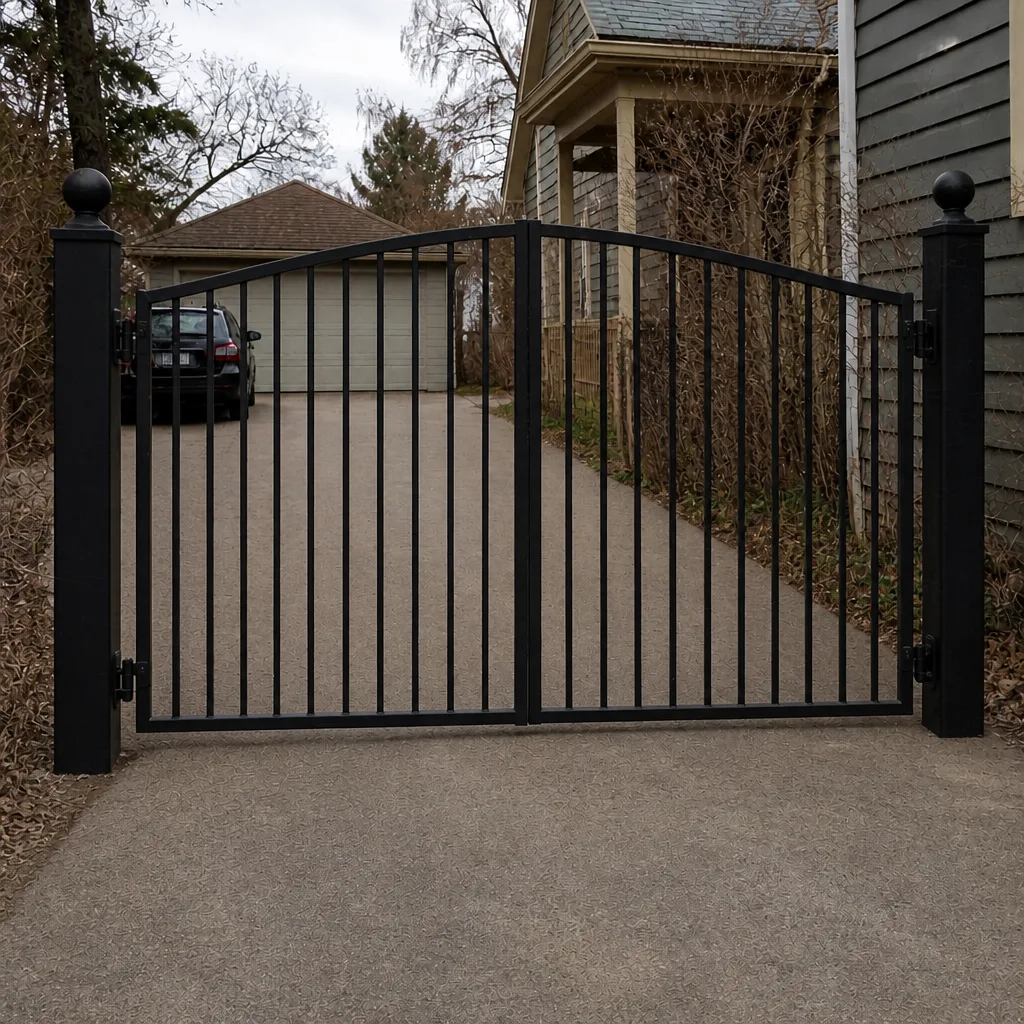
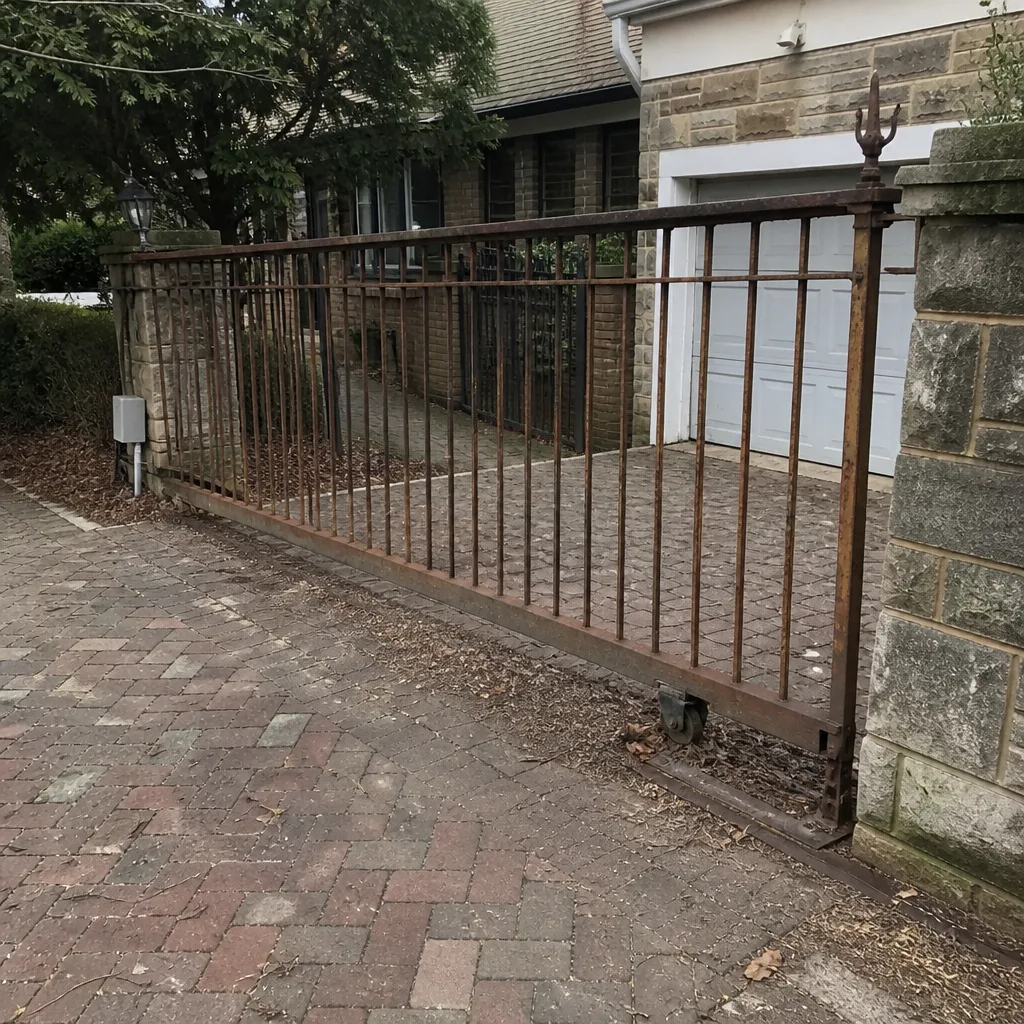
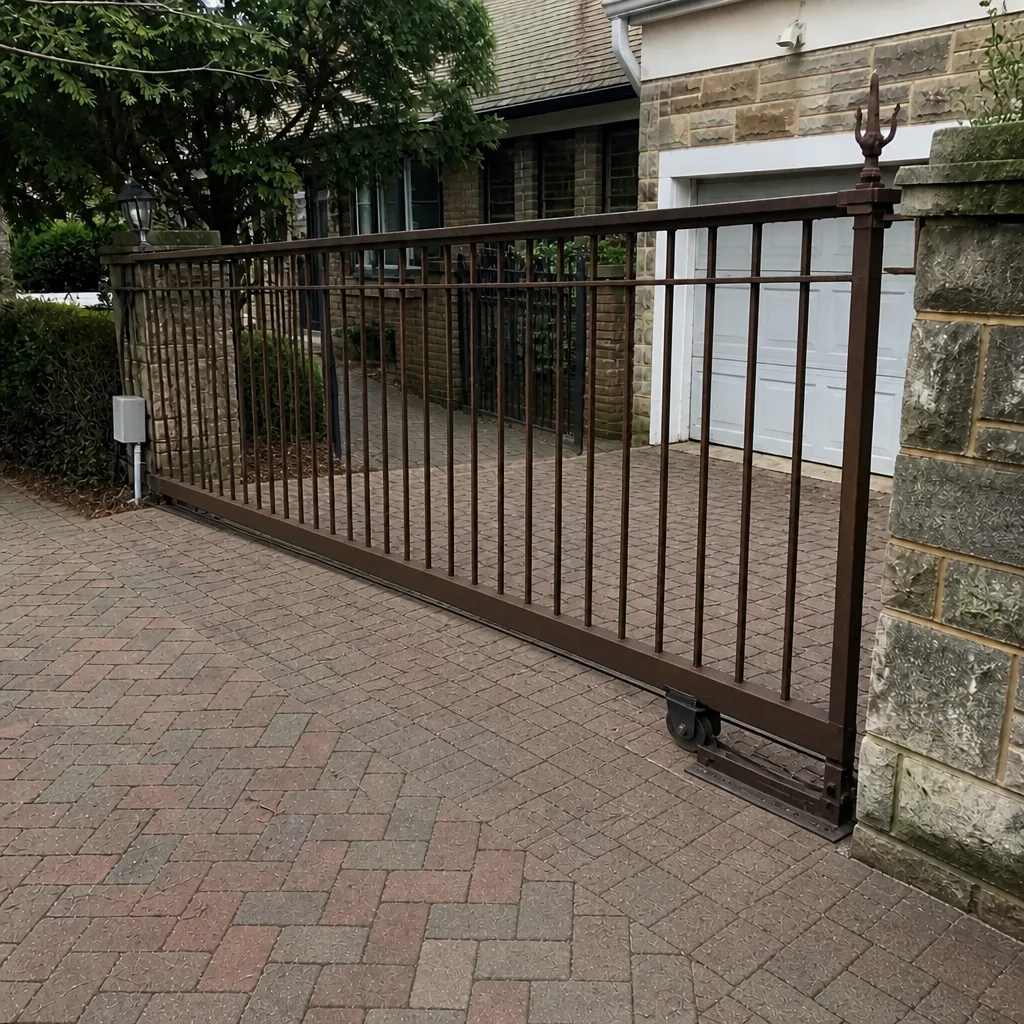
See the difference
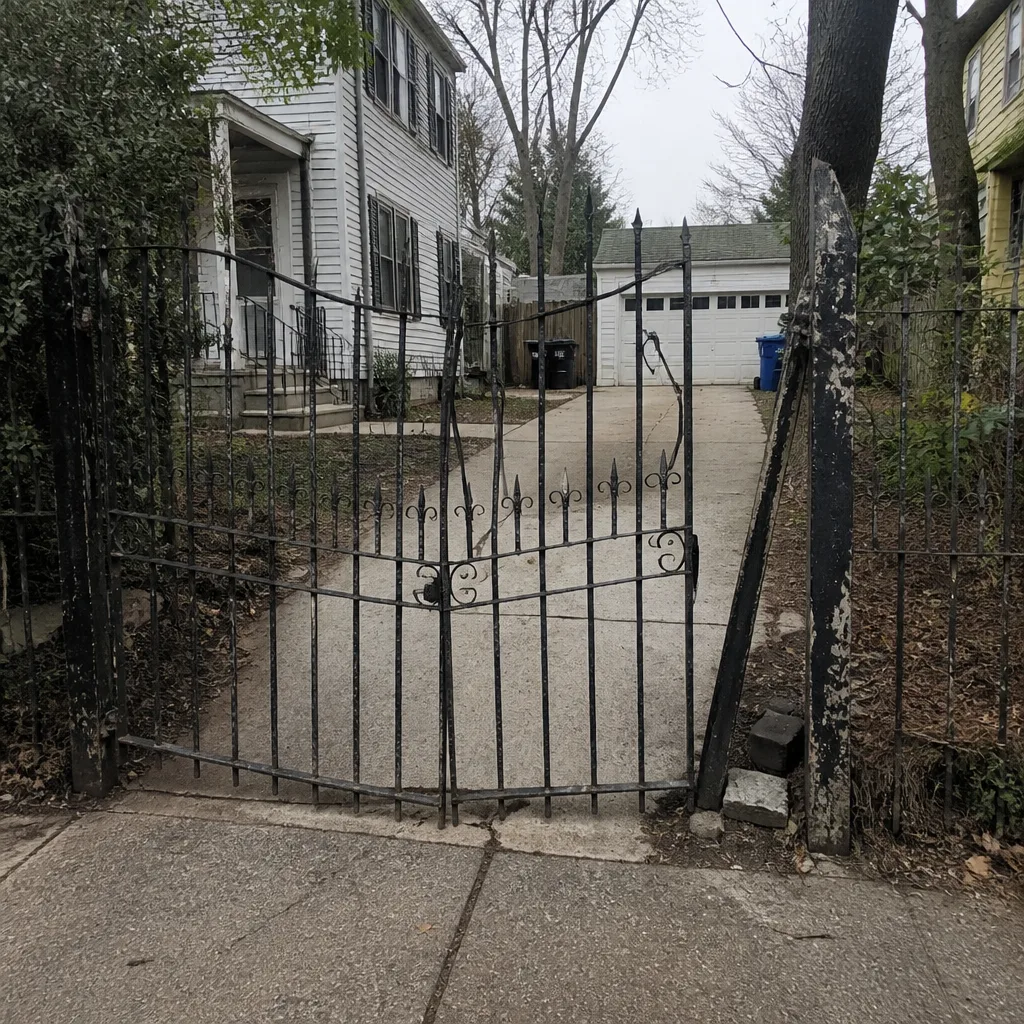 Before
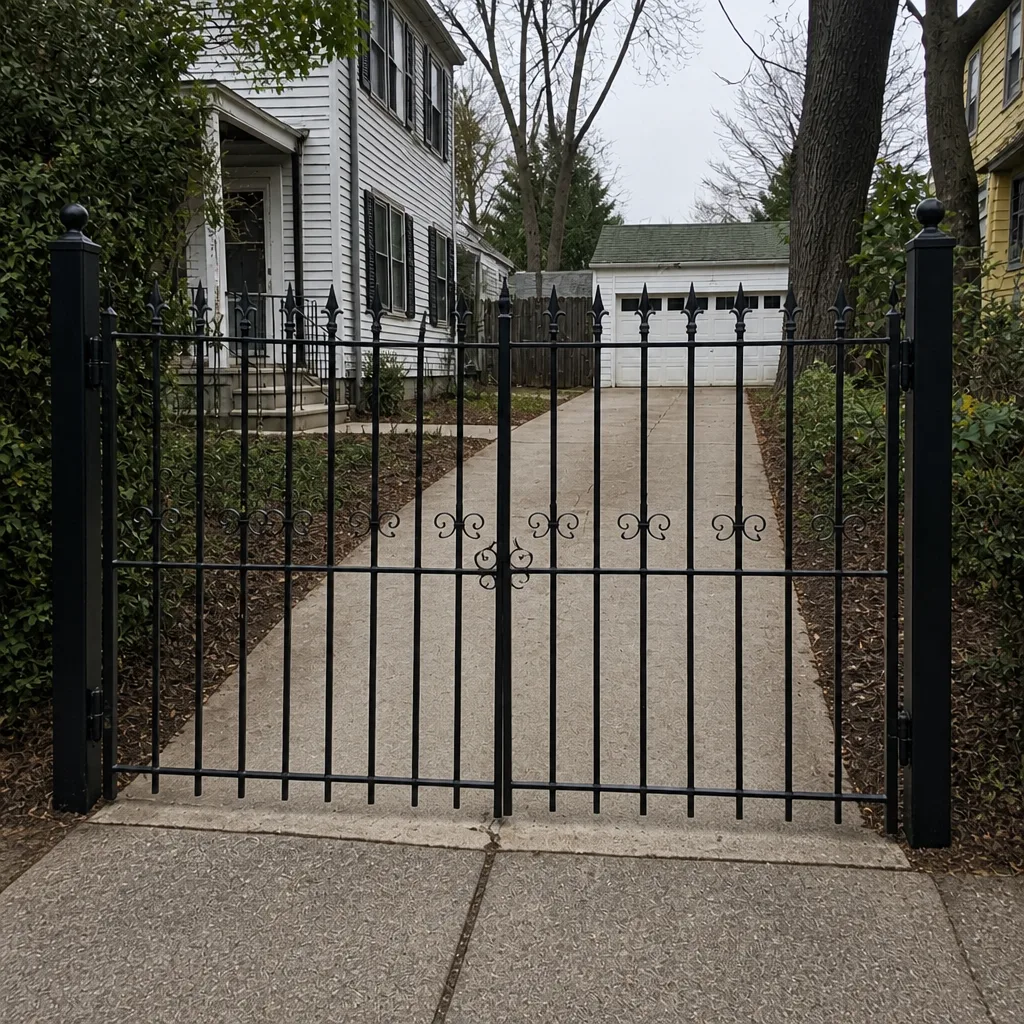 After
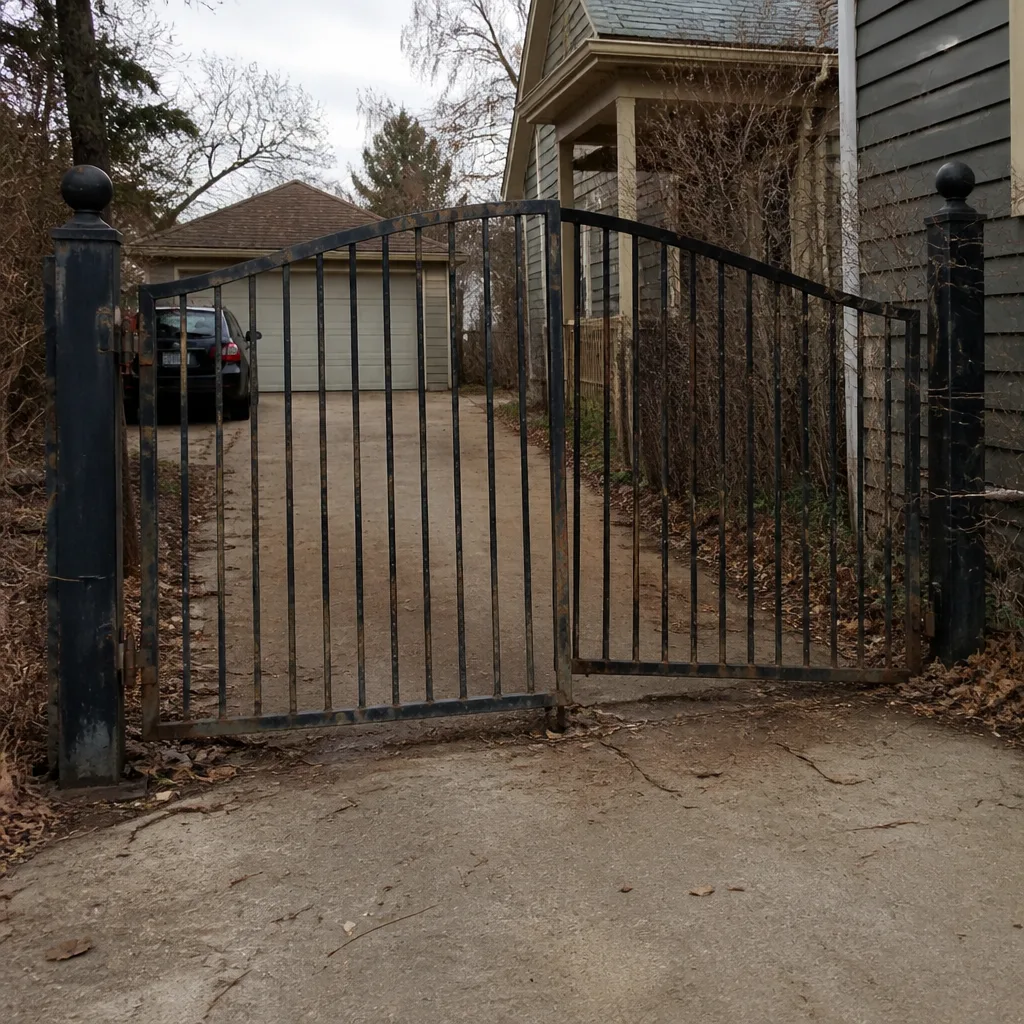 Before
 After
 Before
 After
When to Call a Professional
Call a technician when the problem is in the operator’s sealed housing, the electrical wiring, the control board, the limit switches, or the gate frame and posts. Also call if you’ve tried the safe DIY steps and the gate still fails, or if the gate fails again within weeks of a fix – that’s the chain telling you the cause is deeper. Call immediately for any of the five stop-now symptoms: sparking or burning smell, a gate that moves on its own, a bent hinge or post, exposed wiring, or a gate that won’t reverse. Gate Repair Evanston offers free estimates in Evanston – call (855) 658-5171. We answer 24/7, with fast dispatch from 7am to 7pm, Sunday through Friday.
Frequently Asked Questions
Cold weather exposes weaknesses that mild weather hides. A backup battery that holds a charge at 45°F can fail at 15°F, ice in the track creates binding the motor can’t overcome, and freeze-thaw heave shifts a post just enough to throw off a photo eye or a latch. If your gate fails only in cold snaps, suspect the battery and the track first. Call (855) 658-5171 for a diagnosis – estimates are free.
Gate repair is priced per job by a written estimate, and the price is quoted and agreed before any work starts. A photo-eye realignment, a hinge adjustment, or a remote re-pair is a shorter visit; a motor replacement, a control board fault, or a structural post repair is a longer one. The written estimate sets the final price. Call (855) 658-5171 for a free estimate.
You can safely try the outside-the-housing steps: clear debris and ice, check the breaker, check the remote battery, wipe the photo-eye lenses, and push the gate by hand with the operator disengaged. Anything inside the sealed operator housing, the electrical wiring, the control board, the limits, or a structural post or frame is a technician job. If you’re not sure, call and describe the symptom.
We work on the brand you already have, across nine major gate systems including LiftMaster, FAAC, BFT, Linear, Viking, Ghost Controls, DoorKing, Elite, and Mighty Mule. That includes the DIY-installed residential units like Ghost Controls and Mighty Mule that general contractors often won’t touch, and light-commercial DoorKing slide and swing operators. We’re gate-only specialists, so the diagnosis is faster and the repair is done right the first time.
Usually not, as long as you stay outside the operator’s sealed housing. Cleaning, battery replacement, remote re-pairing, and photo-eye realignment are typically fine. Opening the housing to adjust limit switches, control boards, or internal wiring, or using aftermarket parts, can void the warranty. When in doubt, call before opening the housing – it’s the safer path.
Stop using the gate immediately. A gate that won’t reverse on a blocked path has lost its safety device, and running it risks serious injury. Keep people and pets away from the travel path, and call a technician to diagnose the photo eye, safety edge, or control board. Call (855) 658-5171 – we answer 24/7, with fast dispatch from 7am to 7pm, Sunday through Friday.
The Bottom Line
Most gate failures in Evanston are a chain, not a single break. Match the symptom to one of the five root-cause categories – mechanical, electrical, sensor, software, or weather – before you touch anything. Do the safe DIY steps outside the sealed operator housing, and hand off anything inside it. Treat a gate that won’t reverse, a bent hinge or post, exposed wiring, sparking, or a gate that moves on its own as a stop-now call. And if a fix didn’t hold for more than a few weeks, the chain is still there – the cause is deeper than the symptom. Diagnose the chain, and the gate stays back up.
Written by the team at Gate Repair Evanston.
Call (855) 658-5171 for a free estimate. We answer 24/7, with fast dispatch from 7am to 7pm, Sunday through Friday.