
Last updated November 25, 2026
 Wrought iron
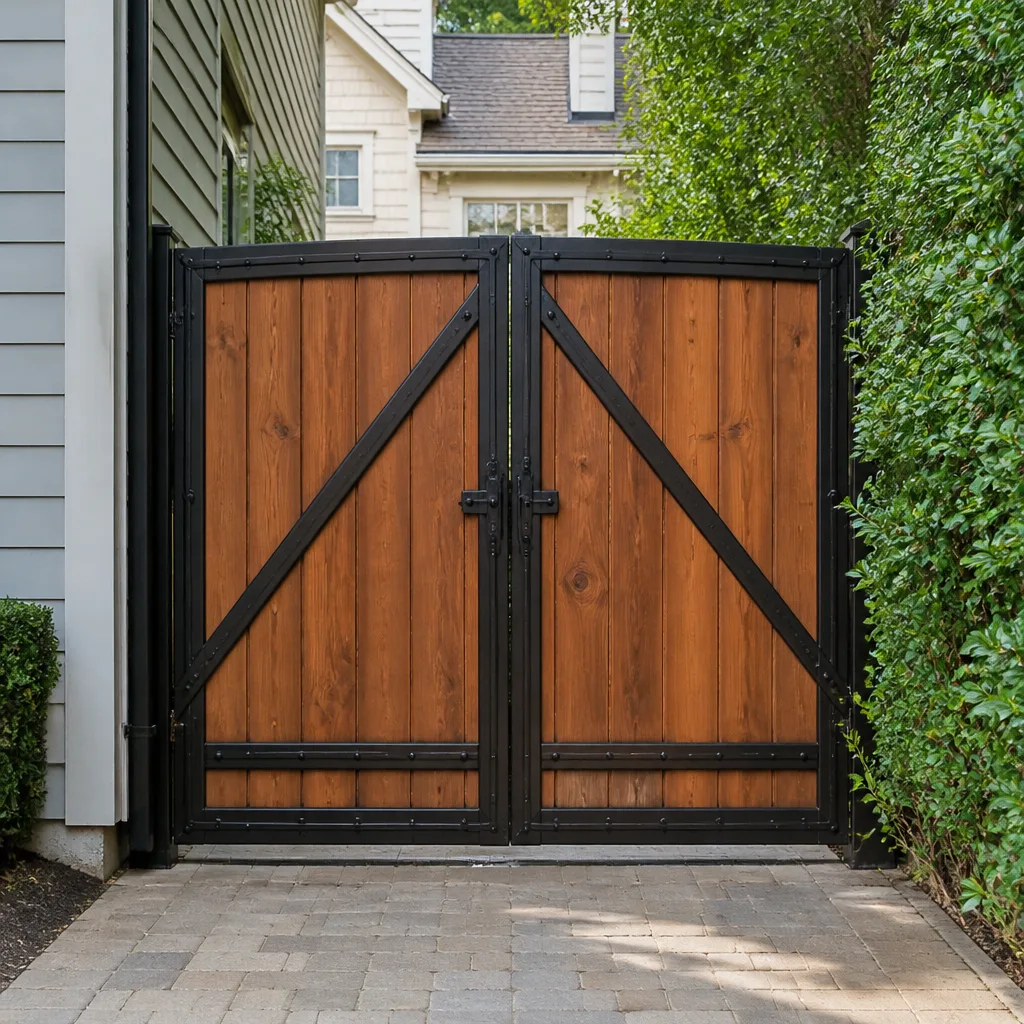 Wood & steel frame
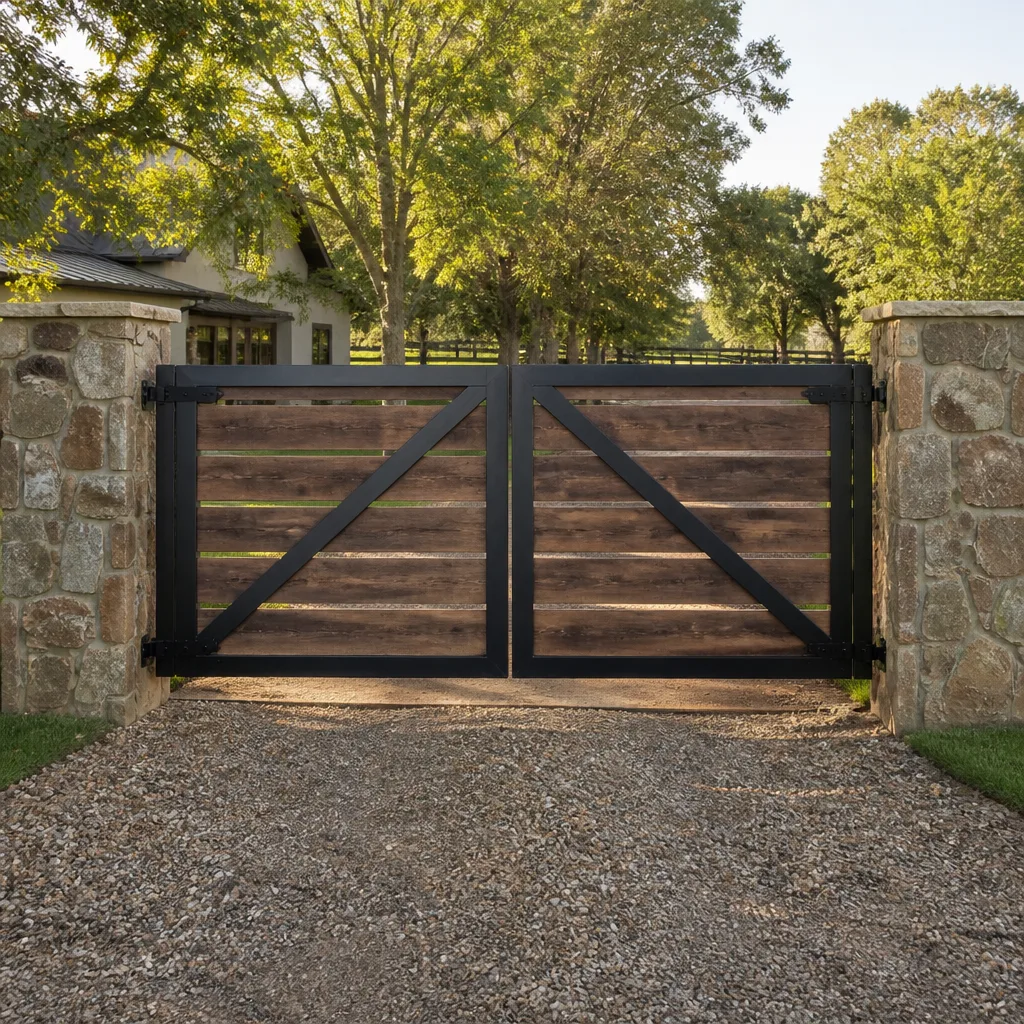 Farm & ranch
 Sliding driveway gates
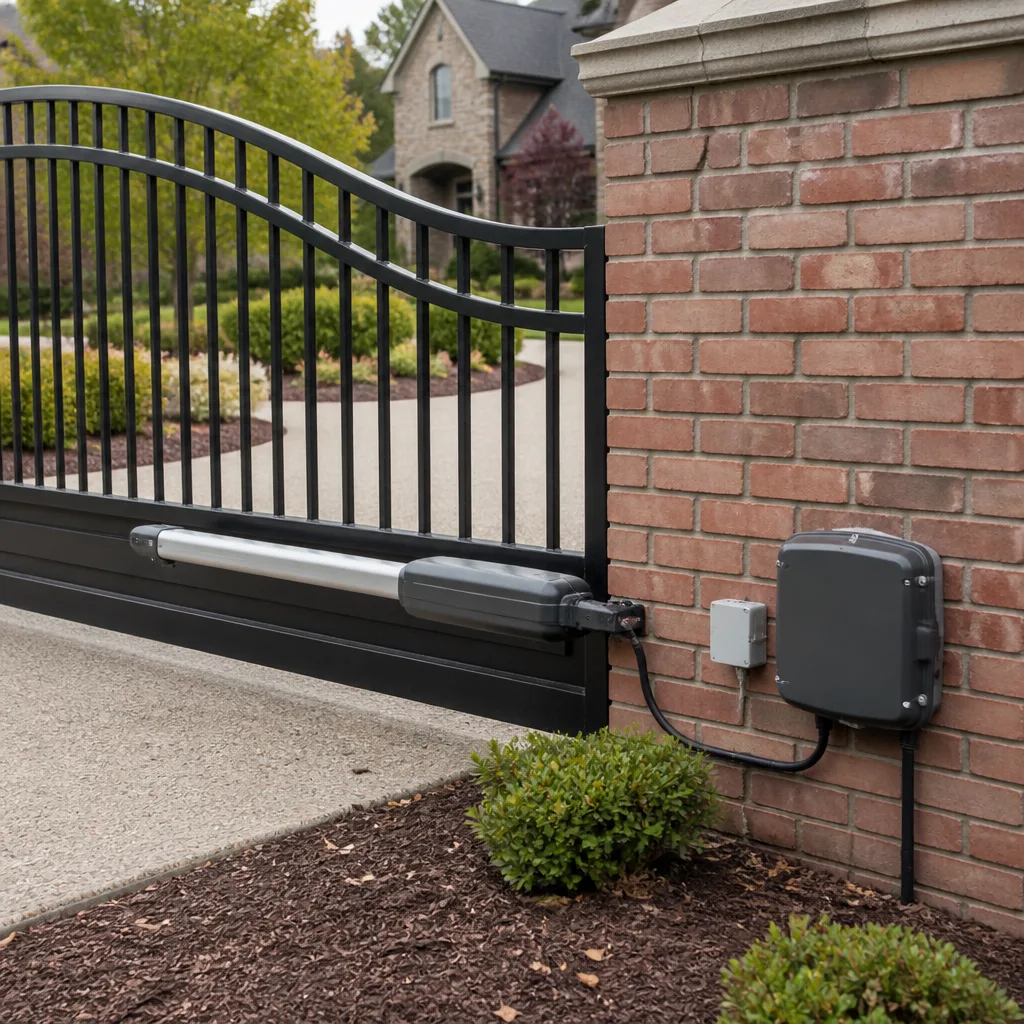 LiftMaster operators
Free on-site gate assessment - hinges, posts, and your LiftMaster or Nice gate operator checked before anything is quoted
The assessment is free and the quote is the invoice.
Get your free estimateGate Repair Maintenance Checklist for Evanston Homeowners
Most gate maintenance checklists tell you to lubricate the hinges once a year and call it done. In Evanston, that advice is a season too slow. Freeze-thaw cycles along the lakefront can turn a smooth-swinging gate into a stuck one in a single winter, and the humidity that settles over the North Shore in July works on metal and wiring in ways a generic annual checklist never accounts for. This guide is built around Evanston’s actual weather calendar, not a national average. You’ll get a month-by-month schedule, the lubricants that survive a lake-adjacent winter, a post-thaw method for checking post plumb, and the warranty rules that trip up homeowners who skip the wrong task.
Styles & brands we work with
- Wrought iron
- Wood & steel frame
- Farm & ranch
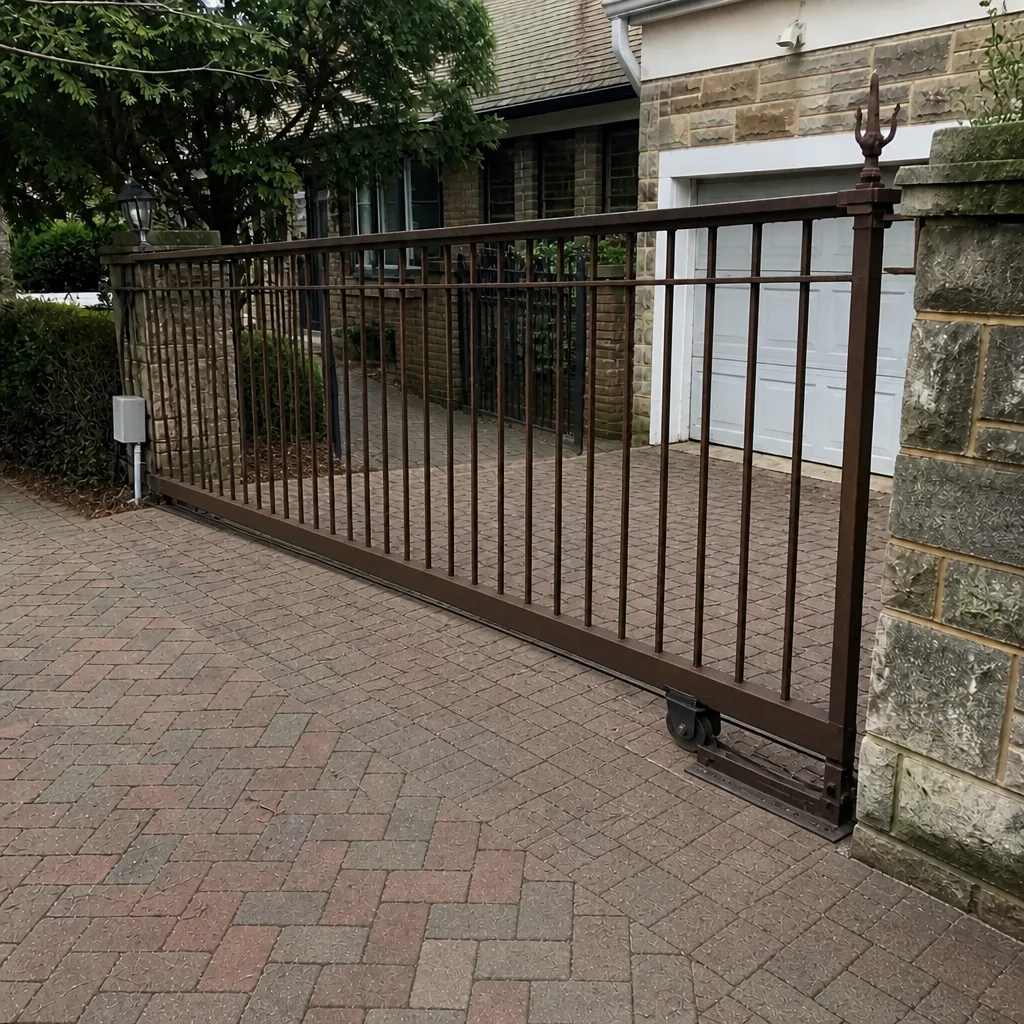
- Sliding driveway gates
- LiftMaster operators
Quick Answer
A gate maintenance checklist for Evanston homeowners should be timed to the local weather cycle, not a generic annual schedule: prep hardware and clear the track before the first hard freeze, inspect for frost heave and ice damage mid-winter, check post plumb and weld integrity after the spring thaw, and address humidity-driven corrosion and electrical issues through the summer. Skipping any of these four checkpoints is the most common reason a powered gate fails mid-season.
Table of Contents
- Why Evanston Gates Need a Different Checklist
- The Evanston Month-by-Month Gate Checklist
- Lubricants That Hold Up in Evanston Humidity and Cold
- Post-Winter Ground Movement and Post Plumb Inspection
- Property Manager vs. Homeowner Checklists
- Three Tasks That Void Gate Warranties If Skipped
- Electric Gate Maintenance: Motors, Operators, and Access Control
- Common Mistakes to Avoid
- When to Call a Professional
- Frequently Asked Questions
- The Bottom Line
Why Evanston Gates Need a Different Checklist
Evanston sits directly on Lake Michigan, and that proximity shapes the maintenance calendar in ways that inland suburbs don’t share. The lake moderates temperature but also drives humidity into every gap in a gate’s hardware. Metal that stays dry for most of the year in a landlocked town will run a slow film of moisture here for weeks at a time in summer. Then winter arrives and that moisture freezes inside hinges, latches, and the actuator gears of an automatic opener.
The freeze-thaw pattern matters more than the total snowfall. Evanston winters swing above and below freezing repeatedly, which means water works its way into joints, freezes, expands, thaws, and refreezes. Each cycle widens a gap by a fraction and loosens a fastener by a turn. A gate that felt rigid in November can feel loose by March even if nothing ever hit it.
Spring brings the second stress: ground movement. The soil under a gate post heaves during winter and settles unevenly as it thaws. A post that was perfectly plumb when installed can lean a degree or two by April. For a manual swing gate, that’s an annoyance. For a powered slide gate or a swing operator, it throws the whole geometry off and starts loading parts that were never designed to take the strain.
Summer humidity finishes the job on anything water-sensitive. Keypads fog internally. Control boards collect condensation. Exposed steel on older gates shows surface rust where the original coating has worn through.
A maintenance checklist built for Evanston has to address all four stresses in the order they arrive. That’s what the rest of this guide does. If you’d rather hand the whole schedule to a specialist, our Gate Repair Evanston page covers the repair and inspection side in more detail.
The Evanston Month-by-Month Gate Checklist
Here’s the maintenance calendar we walk homeowners through for gate systems across Evanston, from the lakefront blocks near the Dempster Street beach to the tree-heavy residential streets west of Green Bay Road. The events are seasonal, so the months below are a guide to sequence, not exact dates.
Pre-Freeze Prep (Late Fall)
- Clear the track or the swing arc of leaves, twigs, and grit. Trapped debris holds moisture and becomes a frozen obstruction.
- Lubricate hinges, latches, rollers, and the operator’s moving parts with a cold-stable product (see the lubricant section below).
- Inspect seals and gaskets on the operator housing and any control box. Any gap where water can enter should be sealed before the first freeze.
- Test the gate’s safety reverse and limits so you know it’s working before ice makes testing harder.
- Check that the gate drains: no pooled water near posts or along the track line.
Mid-Winter Check
- Look for frost heave: has the gate started dragging, catching, or lifting at one end?
- Clear ice from the track with a plastic scraper, never a metal tool that scores the rail.
- Listen to the operator. A new grind or a slower start can mean cold-thickened grease or a failing component.
- Check that the safety edges and photo-eye sensors are clear of snow and ice buildup.
Post-Thaw Inspection (Early Spring)
- Measure post plumb (method below).
- Walk the welds and the post bases. Look for hairline cracks or rust streaks that signal a stress point.
- Re-check every fastener and re-torque anything that loosened over the winter.
- Test the full cycle of the operator: open, close, reverse, limits, and access control entry.
- Inspect the ground at each post for settling or washout.
Summer Humidity Response
- Wipe down exposed steel and touch up any worn coating before rust spreads.
- Check the keypad and any exterior control housing for internal condensation.
- Re-lubricate with a product that resists washout rather than gumming up in the heat.
- Test the operator’s control board area for moisture if it sits in a shaded or poorly ventilated spot.
This calendar is the backbone of a working maintenance routine. If you’re in a hurry and a gate has already stopped working, the fastest path is a gate repair call rather than a maintenance pass.
Lubricants That Hold Up in Evanston Humidity and Cold
The wrong lubricant is worse than no lubricant. In Evanston’s climate you’re asking a product to do two contradictory jobs: stay put through humid summer weeks, and stay fluid when the temperature drops below freezing. Many products that feel great on a warm day turn to wax or glue by January.
What Works Here
- Synthetic grease with a wide temperature range on hinge pins, latches, and operator gears. Synthetic bases resist washout and stay pliable in cold.
- Dry film or PTFE-based lubricant on sliding tracks and exposed surfaces where you don’t want grit sticking. Leaves a slick film without attracting debris.
- Lithium or molybdenum grease on high-load points like gate hinges and pivot points that carry weight.
What to Avoid
- Thin household oil or spray silicone on anything exposed. It washes away in humidity and offers little cold protection.
- Waxy or “dry” sprays that gum in cold. These can freeze hinge action solid.
- WD-40-style light penetrants as a primary lubricant. Useful for freeing a stuck fastener, not for ongoing protection.
The key habit is matching the product to the point. Track and slide surfaces want low-residue film. Weight-bearing pins and gear contact want a grease that clings. Reapply before winter, not during it, so the coating is in place before the first freeze.
Post-Winter Ground Movement and Post Plumb Inspection
This is the step most homeowners skip, and it’s the one that catches the expensive failures early. Frost heave and spring settling move gate posts by small amounts, and small amounts compound into cracked welds, a misaligned gate, and stripped gears in the actuator.
How to Check Post Plumb
- Place a spirit level against a straight edge of each gate post, on two perpendicular faces.
- Note the bubble position. A post that reads off-level on both faces has shifted; if only one face is off, the post is leaning in one direction.
- Compare to where the post sat after the last check. A change of even a small amount is the signal to look closer, not necessarily to act.
- Inspect the ground at the base of each post for any visible settling or washout.
- Open and close a manual gate fully by hand and watch for drag, binding, or sudden drops.
Why It Matters
A post that has moved forces the gate weight onto a different line. On manual gates, that shows as binding hinges and strained latches. On automated gates, the operator compensates for the misalignment without complaint until a gear strips or a limit switch drifts. A five-minute plumb check in spring saves that repair. When you don’t want to crawl the line yourself, our technicians have up to 12 years of experience assessing gate geometry after winter and will inspect post integrity, fastener torque, and weld condition as part of a service visit.
If a post has clearly moved, that’s a call, not a do-it-yourself fix. Resetting a gate post goes into the foundation, and the operator has to be re-aligned afterward or the whole drive system stays under stress.
Property Manager vs. Homeowner Checklists
A single-family homeowner on a quiet Evanston street and a property manager running a multi-unit or light-commercial gate have different failure risks, so their checklists look different too. The calendar is the same, but the depth and the documentation change.
Single-Family Homeowner Checklist
- One thorough pass before winter, one spring post-thaw pass, and a quick mid-winter look.
- Emphasis on the manual hardware: hinges, latches, rollers, and track.
- Operator and access control tested at least twice a year and after any storm.
- Keep a written record of every inspection and any part replaced.
Property Manager Checklist
- Higher-frequency inspections because the gate runs ten to a hundred times a day, not twice a day.
- Cycle-count awareness: the operator, latches, and safety edges wear faster and need scheduled replacement, not just repair.
- Access control records matter. Keypad, intercom, and entry logs help you spot a gate that’s failing slowly before a tenant reports it.
- Documented warranty compliance. Every inspection should be logged because a manufacturer will pull the service record before honoring an operator claim.
- Clear escalation rules for each failure: what maintenance staff can handle and what triggers a service call.
The core difference is risk exposure. A homeowner with a failed gate has a nuisance. A property manager with a failed gate has a security gap, a tenant complaint, and possibly a liability question. That’s why property managers should be on a documented schedule and have a specialist relationship on file. Gate repair for both residential and light-commercial systems is the focus of what we do.
Three Tasks That Void Gate Warranties If Skipped
Manufacturers write maintenance into their warranty language for a reason, and skipping these tasks can leave you paying for a repair they would otherwise cover. Document each one with a date and a note, and keep the record with your gate’s paperwork.
1. Lubrication According to the Manufacturer’s Schedule
Every operator brand sets its own lubrication interval and specifies the type of lubricant. Skipping it, or using the wrong product, is one of the easiest ways for a manufacturer to deny a claim on a seized component. Log the date and the product used.
2. Safety Device Testing
Safety edges, photo-eye sensors, and reverse functions are safety-critical, and manufacturers require routine testing. A failure to test and document is a warranty problem when the safety device misbehaves. Test, note the result, and keep the record.
3. Professional Service Where the Manual Requires It
Some operator manuals specify an annual professional inspection or service. If your brand’s manual says so, treat that as a warranty condition, not a suggestion. Have the visit documented by the service provider.
The pattern across all three: the task isn’t the issue, documentation is. Keep a simple logbook by the gate or in your property file. When a brand like Viking, Ghost Controls, or DoorKing is involved, that record is what supports your claim.
Electric Gate Maintenance: Motors, Operators, and Access Control
Electric gates carry maintenance needs that manual gates don’t, and in Evanston’s climate the electrical side is where humidity does its quiet damage. Your operator and its gate motor & opener are the parts that turn a small mechanical problem into a full stoppage when they fail.
Motor and Operator Checks
- Listen for new sounds: grinding, stuttering starts, or a slower cycle than usual.
- Check the operator housing seals before winter. Moisture inside the housing is the top cause of control board failure in this climate.
- Test the manual release at the start of every season so it works when you actually need it.
- Verify the limits and reverse function each season, not once a year.
Access Control and Keypad Checks
- Wipe keypad and intercom housings and check for internal condensation in humid months.
- Test every entry method: keypad, remote, intercom, and any backup entry you rely on.
- Change access codes on a schedule and remove codes for anyone no longer authorized.
- Test the intercom audio and the camera or entry release if your system includes them.
Access control is a maintenance topic, not just an installation one. A keypad that is slowly filling with moisture will fail at the worst possible time. Testing every entry method each season catches that early. Our gate access control service covers keypad, intercom, and entry system maintenance and repair alongside the physical gate hardware.
Safety comes first on the electrical side. Do not open operator housings, control boxes, or any wiring enclosure unless you’re trained to work with line voltage. In our experience, the majority of electrical gate failures that turn serious start with a homeowner trying to troubleshoot a control board or a power feed. Leave the power side to a qualified technician and keep the mechanical maintenance on your own checklist.
Common Mistakes to Avoid
- Following a national maintenance calendar instead of a local one. A generic “lubricate annually” schedule misses the pre-freeze window that Evanston winters demand. Time the work to the season, not the calendar year.
- Using a light spray oil as ongoing protection. In Evanston’s humidity it washes off quickly and leaves the hinge exposed to a winter freeze. Use a cold-stable synthetic grease on weight-bearing points.
- Skipping the post-thaw plumb check. This is the single biggest cause of preventable operator failures in spring. A gate that has shifted will strip actuator gears within a season of daily use.
- Clearing ice from the track with a metal tool. A metal scraper scores the rail surface and creates a rust point. Use a plastic scraper and clear the track before a freeze sets in.
- Testing safety devices only when something goes wrong. A safety edge or photo-eye that goes untested for months is a liability and a warranty risk. Test each season and log the result.
- Opening the operator or control box to “have a look.” Line voltage and control board components don’t forgive mistakes. Keep mechanical tasks on your checklist and call for anything inside a powered enclosure.
- Having no service record for a property you manage. Property managers who don’t document inspections have no defense when a warranty claim on a DoorKing or Elite operator is questioned. Keep a dated log.
When to Call a Professional
Some maintenance you can handle safely, and some you shouldn’t touch. Call a professional if a gate post has clearly moved or the gate is dragging, if the operator is making new noises or running slower, if any safety device fails a test, if a keypad or intercom is behaving inconsistently, if you see cracks at a weld or post base, or if any part of the electrical side needs attention. Those are the signals that a small issue has become a repair, and delaying the call usually makes the repair bigger.
We’re gate-only specialists, so we carry depth on the brands you’re most likely to own: Viking, Ghost Controls, DoorKing, and Elite are all ones we service regularly. We also work on LiftMaster, FAAC, BFT, Linear, and Mighty Mule, and we handle the mechanical, electrical, and digital sides of a gate on the same call. Gate Repair Evanston offers free estimates in Evanston. Call (855) 658-5171.
Frequently Asked Questions
A gate in Evanston should be inspected on a seasonal calendar, with a pre-freeze check in fall, a mid-winter look, a post-thaw inspection in spring, and a summer humidity check. That works out to roughly four touch points a year for a residential manual gate, and more frequent documented inspections for a powered or light-commercial gate that runs dozens of cycles a day. Call (855) 658-5171 for a free estimate if you want a specialist to walk the line with you.
Use a synthetic grease rated for a wide temperature range on weight-bearing points like hinge pins and operator gears, and a dry film or PTFE-based lubricant on sliding surfaces. Avoid thin spray oils and waxy products that gum up in cold. The test is the season: a product that stays smooth in January and doesn’t wash away in July is the right one. Call (855) 658-5171 for guidance on your specific hardware.
A slightly leaning post is not an emergency, but it is a signal to inspect further, because a leaning post loads the gate in the wrong direction and can strip gears in a powered system. Check plumb with a level after the spring thaw, and watch for drag or binding during a manual swing. If the post has clearly moved, call for an on-site look. Call (855) 658-5171 for a free estimate.
Skipping manufacturer-specified lubrication, failing to test and document safety devices, and missing a required professional service are the three tasks most likely to void a warranty claim. The safety-critical part is documentation. Keep a dated log of every inspection and every lubricant or part used. Call (855) 658-5171 and our technicians, who have up to 12 years of experience, can set up a documented maintenance schedule for your gate.
A homeowner checklist is lighter and less frequent, because a residential gate cycles a few times a day; a property manager checklist is more frequent, documented, and cycle-aware because a commercial gate cycles dozens to hundreds of times a day. Property managers also need access control records and clear escalation rules. Call (855) 658-5171 for a free estimate on a commercial or multi-unit gate.
No, if the repair involves the operator housing, control board, wiring, or access control electronics. Those parts carry line voltage and the mistakes are costly. Mechanical tasks like lubrication and track clearing are safe to do, but anything powered should go to a trained technician. Call (855) 658-5171 for electric gate repair and diagnostics in Evanston.
The Bottom Line
A gate maintenance checklist only protects your gate if it’s timed to the weather it actually faces. In Evanston, that means prep before the freeze, watch through the winter, check plumb after the thaw, and fight humidity through the summer. The other half of the job is documentation: log your lubrication, safety-device tests, and any professional service so a warranty claim holds up. Do the mechanical work yourself if you’re comfortable, and call a specialist the moment a post shifts, an operator misbehaves, or anything electrical needs attention.
Call (855) 658-5171 for a free estimate. We answer 24/7, and fast dispatch from 7am to 7pm, Sunday through Friday, gets a technician to your gate when you need one. We’re gate-only specialists, which means every technician works on gates and nothing else, and we carry depth across the brands you’re most likely to own.
Written by the team at Gate Repair Evanston.
See the difference
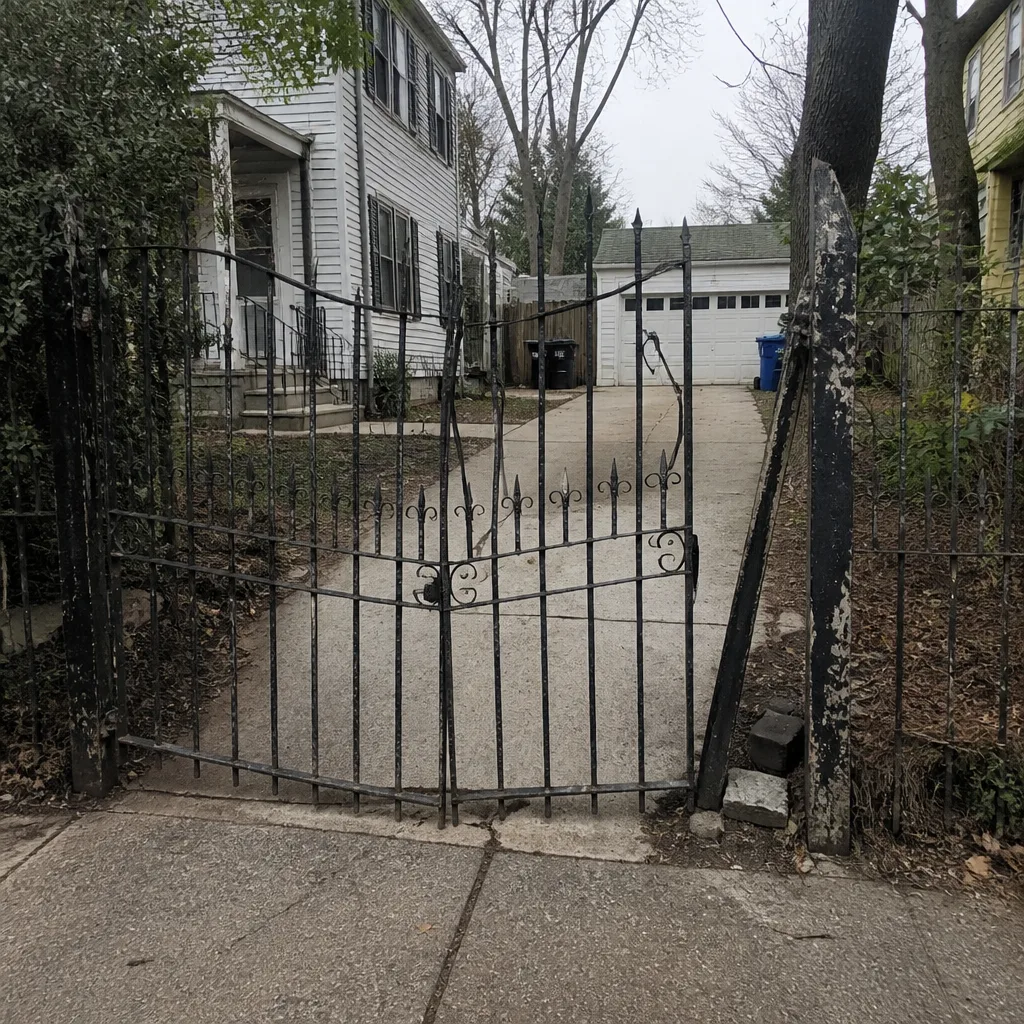 Before
 After
 Before
 After
 Before
 After